 Bird Album
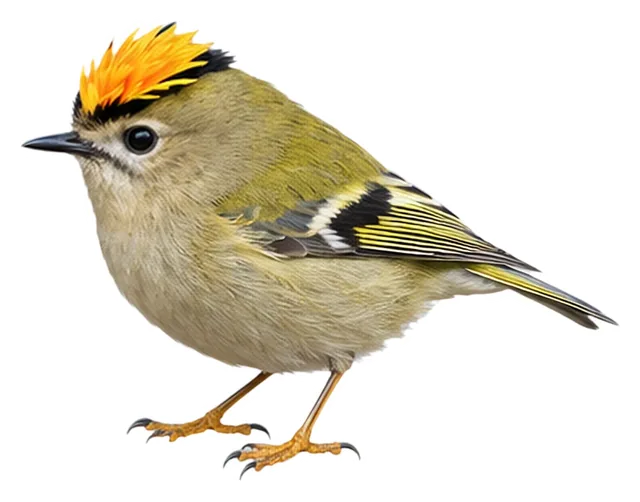
Goldcrest
Regulus regulus (Linnaeus, 1758)
8.5–9.5 cmLength14 cmWingspan5.5 gWeight
This tiny bird has a yellow crest on the crown, orange in the center in the male, resembling a chrysanthemum on its head.
Busiest months: October · Most records: United Kingdom, China, Sweden
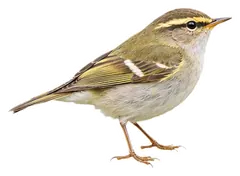
Looks like Yellow-browed Warbler
How to identify
Field marks
- Male’s crown golden-orange in the center, lemon-yellow at the sides
- Plain face without prominent markings
- Olive upperparts; grayish-white underparts tinged with yellow
- Two pale wing patches
Male, female and young
Sexes similar apart from crown color: the center of the female’s crown is lemon-yellow rather than orange-yellow. Juveniles lack the colored crest.
Voice
The contact call is a thin, drawn-out, high-pitched “zee”, given every one to four seconds. The male’s song is a very high, thin, two-note “cedar”, repeated five to seven times.
Similar species
Where and when it's recorded

Goldcrest has been recorded at 1,557 of the 8,171 birding hotspots we track, in 73 countries and regions.
Records by month Northern Hemisphere
Where it's recorded most
- Titchwell Marsh RSPB ReserveUnited Kingdom1,497 records
- Rutland WaterUnited Kingdom1,485 records
- St Mary'sUnited Kingdom1,423 records
More places
- South Downs NP – Pulborough Brooks RSPB ReserveUnited Kingdom1,421 records
- Spurn Bird Observatory Recording AreaUnited Kingdom1,406 records
- Thursley CommonUnited Kingdom1,389 records
- Amwell HMWT NRUnited Kingdom1,296 records
- Minsmere RSPB ReserveUnited Kingdom1,271 records
- Brent ReservoirUnited Kingdom1,143 records
- Lynford ArboretumUnited Kingdom1,014 records
Countries and regions with the most records
eBird records via GBIF up to 2024-12-31. A record means someone listed it; more records partly mean more birders, not more birds.
About
The goldcrest (Regulus regulus) is a very small passerine bird in the kinglet family. Its colourful golden crest feathers, as well as being called the "king of the birds" in European folklore, gives rise to its English and scientific names. The scientific name, R. regulus, means 'petty king' or prince.
Excerpt from Wikipedia, CC BY-SA 4.0 · authors · Read more on Wikipedia
Questions
How big is the Goldcrest?
The Goldcrest is about 8.5–9.5 cm long, with a wingspan of 14 cm and weighs around 5.5 g.
Where does the Goldcrest live?
Its breeding range: Palearctic: widespread. It is most often recorded in United Kingdom, China and Sweden.
When is the best time to see the Goldcrest?
At the hotspots we track, it is recorded most in October (Northern Hemisphere).
Is the Goldcrest endangered?
The IUCN Red List classifies the Goldcrest as Least Concern.
What does the Goldcrest eat?
Main food: Insects & other invertebrates.
What family is the Goldcrest in?
It belongs to the family Goldcrests, Kinglets (Regulidae), order Passerines (Passeriformes).
At a glance
- Length
- 8.5–9.5 cm
- Wingspan
- 14 cm
- Weight
- 5.5 g
- Habitat
- Forest
- Diet
- Insects & other invertebrates
- Lifestyle
- Perches in trees
- Migration
- Migratory
- Conservation
- Least Concern
More measurements
- Wing
- 53 mm
- Tail
- 39 mm
- Bill
- 11 mm
- Tarsus
- 15 mm
Averages from the AVONET dataset; length from field guides where available.
Range
Palearctic: widespread
Breeding range, IOC World Bird List 15.2
Subspecies · 3
- Regulus regulus sikkimensis e Himalayas to nc China
- Regulus regulus yunnanensis c, sc China and ne Myanmar
- Regulus regulus japonensis se Siberia, ne China, Korea and Japan
Classification
- Order
- Passerines Passeriformes
- Family
- Goldcrests, Kinglets Regulidae
- Genus
- Regulus
Other birds in the genus Regulus
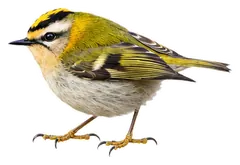 Common FirecrestRegulus ignicapilla
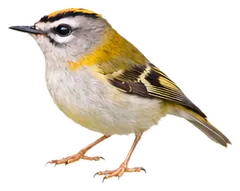 Madeira FirecrestRegulus madeirensis
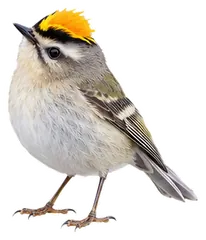 Golden-crowned KingletRegulus satrapa
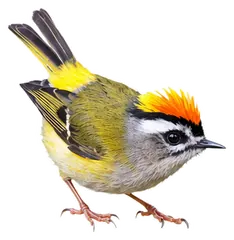 FlamecrestRegulus goodfellowi
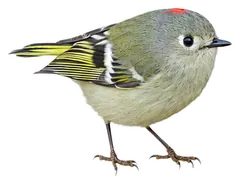 Ruby-crowned KingletCorthylio calendula
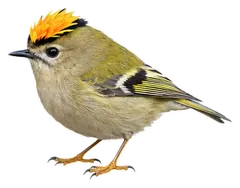
Download illustration
Free to use with credit: “Illustration: Bird Album (birdalbum.com)”. Drawn by AI from a reference photo by Roy Lowry. ↗
Heard it but can't see it? Mingji identifies birds by sound and photo, on your phone.