 Bird Album
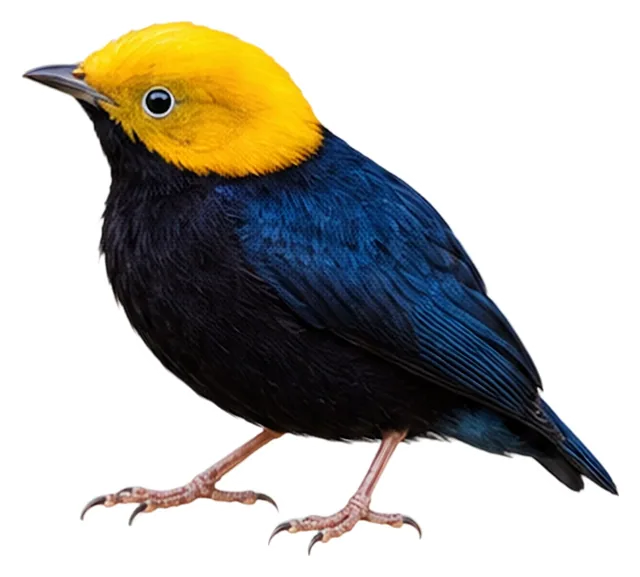
Golden-headed Manakin
Ceratopipra erythrocephala (Linnaeus, 1758)
13 gWeight
The golden-headed manakin (Ceratopipra erythrocephala) is a small passerine bird which breeds in tropical Central and South America in both wet and dry forests, secondary growth and plantations.
Busiest months: November–January · Most records: Trinidad & Tobago, Colombia, Peru
Where and when it's recorded

Golden-headed Manakin has been recorded at 133 of the 8,171 birding hotspots we track, in 10 countries and regions.
Records by month Northern Hemisphere
Where it's recorded most
- Asa Wright Nature CenterTrinidad & Tobago3,367 records
- RN BellavistaColombia800 records
- Canopy CampPanama743 records
More places
- RN Cañon del Río ClaroColombia603 records
- Bosque BavariaColombia585 records
- Asociacion para La Conservacion de Aves y La Biodiversidad Koepcke's HermitPeru541 records
- Águila Arpía ProAves ReserveColombia540 records
- Sani LodgeEcuador520 records
- Blanchisseuse RoadTrinidad & Tobago458 records
- Atta Lodge / Iwokrama Canopy WalkwayGuyana306 records
Countries and regions with the most records
eBird records via GBIF up to 2024-12-31. A record means someone listed it; more records partly mean more birders, not more birds.
About
The golden-headed manakin (Ceratopipra erythrocephala) is a small passerine bird which breeds in tropical Central and South America in both wet and dry forests, secondary growth and plantations. It is a small manakin, about 9.4 centimetres (3.7 in) long. Males are entirely black apart from a golden head, yellow bill, white and red thighs and pink legs.
Excerpt from Wikipedia, CC BY-SA 4.0 · authors · Read more on Wikipedia
Questions
How big is the Golden-headed Manakin?
The Golden-headed Manakin weighs around 13 g.
Where does the Golden-headed Manakin live?
Its breeding range: Middle America, South America: Panama, northern South America, northern Amazonia. It is most often recorded in Trinidad & Tobago, Colombia and Peru.
When is the best time to see the Golden-headed Manakin?
At the hotspots we track, it is recorded most in January, November and December (Northern Hemisphere).
Is the Golden-headed Manakin endangered?
The IUCN Red List classifies the Golden-headed Manakin as Least Concern.
What does the Golden-headed Manakin eat?
Main food: Fruit.
What family is the Golden-headed Manakin in?
It belongs to the family Manakins (Pipridae), order Passerines (Passeriformes).
At a glance
- Weight
- 13 g
- Habitat
- Forest
- Diet
- Fruit
- Lifestyle
- Perches in trees
- Migration
- Resident (barely migrates)
- Conservation
- Least Concern
More measurements
- Wing
- 59 mm
- Tail
- 21 mm
- Bill
- 12 mm
- Tarsus
- 15 mm
Averages from the AVONET dataset; length from field guides where available.
Range
Middle America, South America: Panama, northern South America, northern Amazonia
Breeding range, IOC World Bird List 15.2
Classification
- Order
- Passerines Passeriformes
- Family
- Manakins Pipridae
- Genus
- Ceratopipra
Other birds in the genus Ceratopipra
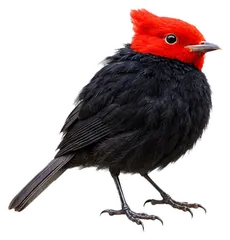 Scarlet-horned ManakinCeratopipra cornuta
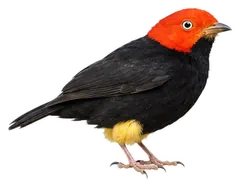 Red-capped ManakinCeratopipra mentalis
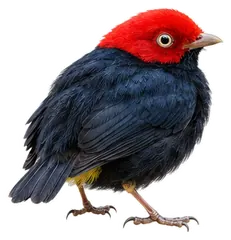 Round-tailed ManakinCeratopipra chloromeros
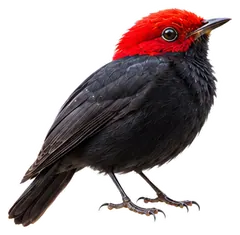 Red-headed ManakinCeratopipra rubrocapilla
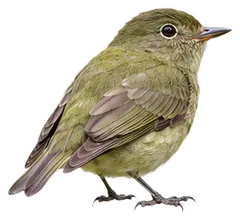 Dwarf Tyrant-ManakinTyranneutes stolzmanni
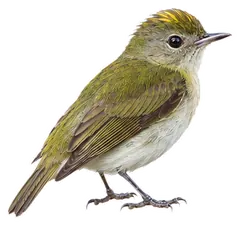 Tiny Tyrant-ManakinTyranneutes virescens
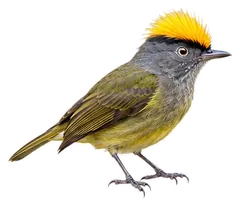 Saffron-crested Tyrant-ManakinNeopelma chrysocephalum
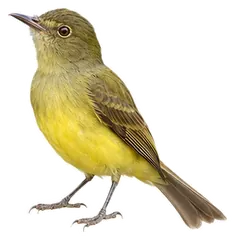 Sulphur-bellied Tyrant-ManakinNeopelma sulphureiventer
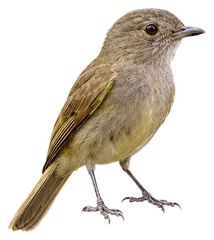 Pale-bellied Tyrant-ManakinNeopelma pallescens
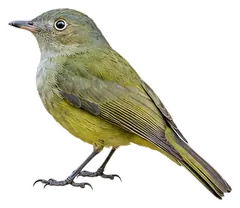 Wied's Tyrant-ManakinNeopelma aurifrons
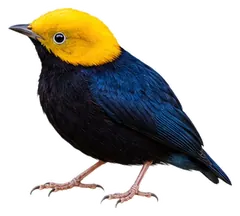
Download illustration
Free to use with credit: “Illustration: Bird Album (birdalbum.com)”. Drawn by AI from a reference photo by Phil Kahler. ↗
Heard it but can't see it? Mingji identifies birds by sound and photo, on your phone.
In other languages
- EnglishGolden-headed Manakin
- 简体中文金头娇鹟
- 繁體中文金頭侏儒鳥
- 日本語キガシラマイコドリ
- DeutschGelbkopfpipra
- FrançaisManakin à tête d’or
- EspañolSaltarín cabecidorado
- Portuguêscabeça-de-ouro
- ItalianoManachino testadorata
- NederlandsGoudkopmanakin
- РусскийЖелтоголовая пипра
- Svenskagyllenhuvad manakin
- DanskGyldenhovedet Manakin
- Polskigorzyk złotogłowy