 Bird Album
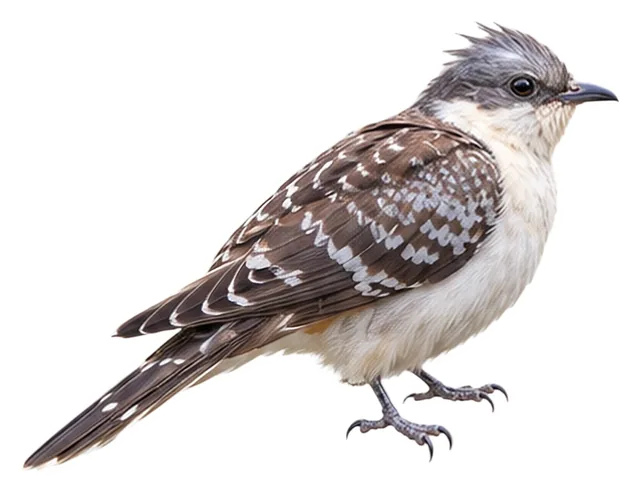
Great Spotted Cuckoo
Clamator glandarius (Linnaeus, 1758)
143 gWeight
The great spotted cuckoo (Clamator glandarius) is a member of the cuckoo order of birds, the Cuculiformes, which also includes the roadrunners, the anis and the coucals.
Busiest months: March–April · Most records: Spain, Israel, Portugal
Where and when it's recorded

Great Spotted Cuckoo has been recorded at 487 of the 8,171 birding hotspots we track, in 52 countries and regions.
Records by month Northern Hemisphere
Where it's recorded most
- Spata fieldsGreece324 records
- Yeruham LakeIsrael234 records
- Agia VarvaraCyprus192 records
More places
- Kfar AdumimPalestinian Territories185 records
- Tablillas del Záncara – Junta de los RíosSpain142 records
- Ein Hamifratz FishpondsIsrael130 records
- Fuente de Piedra – Centro de VisitantesSpain129 records
- Laguna del Camino de VillafrancaSpain127 records
- ZPE Castro Verde – área geralPortugal113 records
- Ma'ayan Tzvi FishpondsIsrael107 records
Countries and regions with the most records
eBird records via GBIF up to 2024-12-31. A record means someone listed it; more records partly mean more birders, not more birds.
About
The great spotted cuckoo (Clamator glandarius) is a member of the cuckoo order of birds, the Cuculiformes, which also includes the roadrunners, the anis and the coucals.
Excerpt from Wikipedia, CC BY-SA 4.0 · authors · Read more on Wikipedia
Questions
How big is the Great Spotted Cuckoo?
The Great Spotted Cuckoo weighs around 143 g.
Where does the Great Spotted Cuckoo live?
Its breeding range: Africa, Palearctic: southern Europe through Africa. It is most often recorded in Spain, Israel and Portugal.
When is the best time to see the Great Spotted Cuckoo?
At the hotspots we track, it is recorded most in March and April (Northern Hemisphere).
Is the Great Spotted Cuckoo endangered?
The IUCN Red List classifies the Great Spotted Cuckoo as Least Concern.
What does the Great Spotted Cuckoo eat?
Main food: Insects & other invertebrates.
What family is the Great Spotted Cuckoo in?
It belongs to the family Cuckoos (Cuculidae), order Cuculiformes.
At a glance
- Weight
- 143 g
- Habitat
- Shrubland
- Diet
- Insects & other invertebrates
- Lifestyle
- Perches in trees
- Migration
- Migratory
- Conservation
- Least Concern
More measurements
- Wing
- 194 mm
- Tail
- 197 mm
- Bill
- 30 mm
- Tarsus
- 33 mm
Averages from the AVONET dataset; length from field guides where available.
Range
Africa, Palearctic: southern Europe through Africa
Breeding range, IOC World Bird List 15.2
Classification
- Order
- Cuculiformes
- Family
- Cuckoos Cuculidae
- Genus
- Clamator
Other birds in the genus Clamator
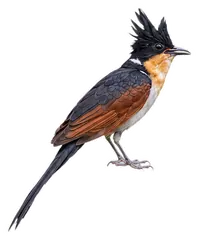 Chestnut-winged CuckooClamator coromandus
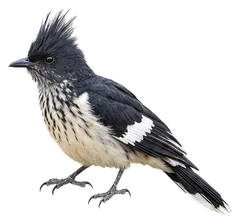 Levaillant's CuckooClamator levaillantii
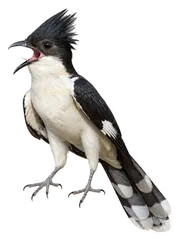 Jacobin CuckooClamator jacobinus
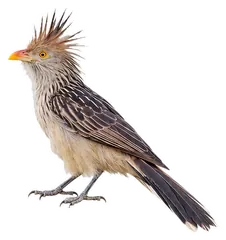 Guira CuckooGuira guira
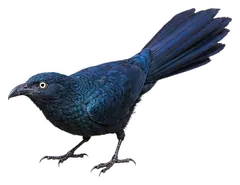 Greater AniCrotophaga major
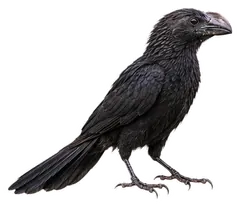 Smooth-billed AniCrotophaga ani
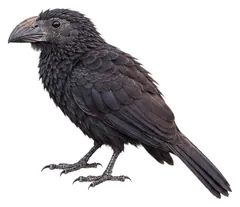 Groove-billed AniCrotophaga sulcirostris
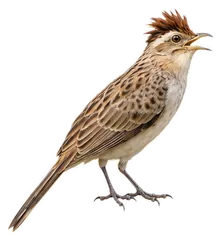 Striped CuckooTapera naevia
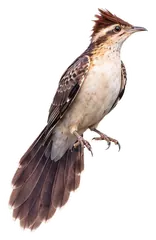 Pheasant CuckooDromococcyx phasianellus
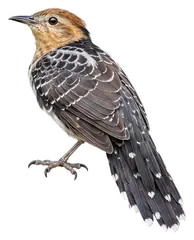 Pavonine CuckooDromococcyx pavoninus
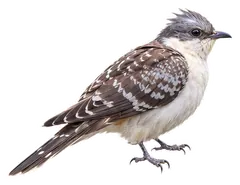
Download illustration
Free to use with credit: “Illustration: Bird Album (birdalbum.com)”. Drawn by AI from reference photos. ↗
Heard it but can't see it? Mingji identifies birds by sound and photo, on your phone.