 Bird Album
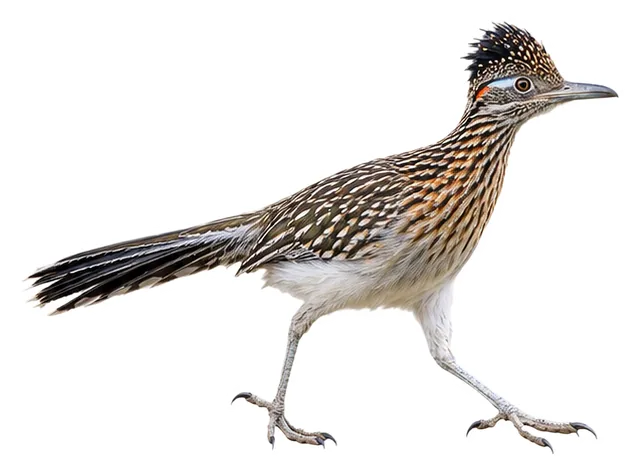
Greater Roadrunner
Geococcyx californianus (Lesson, RP, 1829)
56 cmLength376 gWeight
The greater roadrunner (Geococcyx californianus) is a long-legged bird in the cuckoo family, Cuculidae, from the Aridoamerica region in the Southwestern United States and Mexico.
Busiest months: March–April · Most records: United States, Mexico
Where and when it's recorded
Busiest months: March–April · Most records: United States, Mexico

Greater Roadrunner has been recorded at 130 of the 8,276 birding hotspots we track, in 2 countries and regions.
Records by month Northern Hemisphere
Where it's recorded most
- Sweetwater WetlandsUnited States9,357 records
- Rio Grande Nature Center SPUnited States6,146 records
- Bosque del Apache NWRUnited States5,384 records
More places
- Henderson Bird Viewing PreserveUnited States4,038 records
- Falcon State Park—SE portion (Starr Co.)United States3,344 records
- Laguna Atascosa NWRUnited States3,196 records
- Hagerman NWRUnited States3,007 records
- Sabino Dam and downstream riparianUnited States2,958 records
- Bentsen-Rio Grande Val. SP WBC (Mission)United States2,952 records
- Piute PondsUnited States2,748 records
Countries and regions with the most records
eBird records via GBIF up to 2024-12-31. A record means someone listed it; more records partly mean more birders, not more birds.
About
The greater roadrunner (Geococcyx californianus) is a long-legged bird in the cuckoo family, Cuculidae, from the Aridoamerica region in the Southwestern United States and Mexico. The scientific name means "Californian earth-cuckoo". Along with the lesser roadrunner, it is one of two species in the genus Geococcyx.
Excerpt from Wikipedia, CC BY-SA 4.0 · authors · Read more on Wikipedia
Questions
How big is the Greater Roadrunner?
The Greater Roadrunner is about 56 cm long and weighs around 376 g.
Where does the Greater Roadrunner live?
Its breeding range: North America, Middle America: southwestern USA and Mexico. It is most often recorded in United States and Mexico.
When is the best time to see the Greater Roadrunner?
At the hotspots we track, it is recorded most in March and April (Northern Hemisphere).
Is the Greater Roadrunner endangered?
The IUCN Red List classifies the Greater Roadrunner as Least Concern.
What does the Greater Roadrunner eat?
Main food: Insects & other invertebrates.
What family is the Greater Roadrunner in?
It belongs to the family Cuckoos (Cuculidae), order Cuculiformes.
At a glance
- Length
- 56 cm
- Weight
- 376 g
- Habitat
- Shrubland
- Diet
- Insects & other invertebrates
- Lifestyle
- Active on the ground
- Migration
- Resident (barely migrates)
- Conservation
- Least Concern
More measurements
- Wing
- 181 mm
- Tail
- 287 mm
- Bill
- 58 mm
- Tarsus
- 60 mm
Averages from the AVONET dataset; length from field guides where available.
Range
North America, Middle America: southwestern USA and Mexico
Breeding range, IOC World Bird List 15.2
Classification
- Order
- Cuculiformes
- Family
- Cuckoos Cuculidae
- Genus
- Geococcyx
Other birds in the genus Geococcyx
 Lesser RoadrunnerGeococcyx velox
 Guira CuckooGuira guira
 Greater AniCrotophaga major
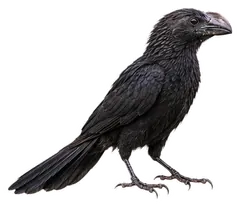 Smooth-billed AniCrotophaga ani
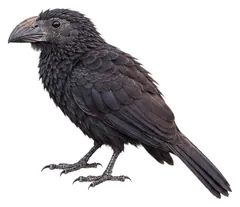 Groove-billed AniCrotophaga sulcirostris
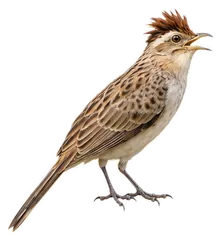 Striped CuckooTapera naevia
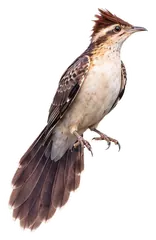 Pheasant CuckooDromococcyx phasianellus
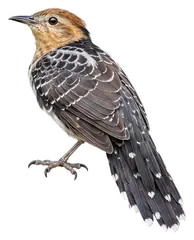 Pavonine CuckooDromococcyx pavoninus
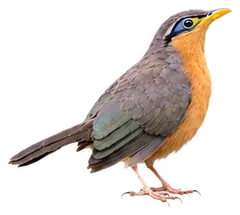 Lesser Ground CuckooMorococcyx erythropygus
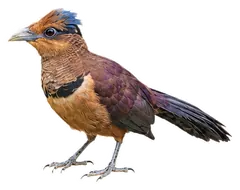 Rufous-vented Ground CuckooNeomorphus geoffroyi
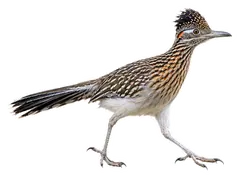
Download illustration
Free to use with credit: “Illustration: Bird Album (birdalbum.com)”. Drawn by AI from a reference photo by Dan LaVorgna. ↗
Heard it but can't see it? Mingji identifies birds by sound and photo, on your phone.