 Bird Album
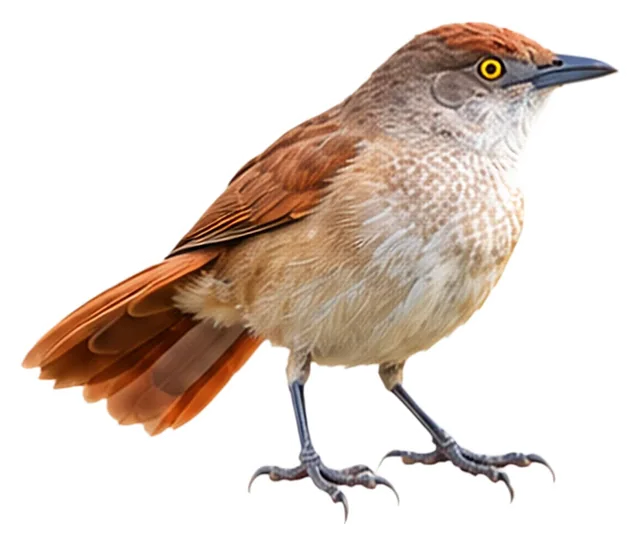
Greater Thornbird
Phacellodomus ruber (Vieillot, 1817)
19–21 cmLength41 gWeight
The greater thornbird (Phacellodomus ruber) is a species of bird in the Furnariinae subfamily of the ovenbird family Furnariidae.
Busiest months: September–October · Most records: Argentina, Brazil, Paraguay
Where and when it's recorded

Greater Thornbird has been recorded at 109 of the 8,171 birding hotspots we track, in 5 countries and regions.
Records by month Southern Hemisphere
Where it's recorded most
- Gran Asunción – Parque Guasu MetropolitanoParaguay1,078 records
- PN Iberá – Portal Laguna IberáArgentina728 records
- PN Pre-DeltaArgentina609 records
More places
- Pantanal – P. Jofre boat on Rio Cuiabá & tributariesBrazil580 records
- Reserva Natural Urbana del OesteArgentina457 records
- Reserva Natural Don LuisArgentina409 records
- Bahia de AsuncionParaguay398 records
- Poconé – SouthWild PantanalBrazil358 records
- Pantanal – Porto JofreBrazil339 records
- Playa - Ex Calera San AntonioParaguay308 records
Countries and regions with the most records
eBird records via GBIF up to 2024-12-31. A record means someone listed it; more records partly mean more birders, not more birds.
About
The greater thornbird (Phacellodomus ruber) is a species of bird in the Furnariinae subfamily of the ovenbird family Furnariidae. It is found in Argentina, Bolivia, Brazil, Paraguay, and Uruguay.
Excerpt from Wikipedia, CC BY-SA 4.0 · authors · Read more on Wikipedia
Questions
How big is the Greater Thornbird?
The Greater Thornbird is about 19–21 cm long and weighs around 41 g.
Where does the Greater Thornbird live?
Its breeding range: South America: western Bolivia to central Brazil, Paraguay and northern Argentina. It is most often recorded in Argentina, Brazil and Paraguay.
When is the best time to see the Greater Thornbird?
At the hotspots we track, it is recorded most in September and October (Southern Hemisphere).
Is the Greater Thornbird endangered?
The IUCN Red List classifies the Greater Thornbird as Least Concern.
What does the Greater Thornbird eat?
Main food: Insects & other invertebrates.
What family is the Greater Thornbird in?
It belongs to the family Ovenbirds (Furnariidae), order Passerines (Passeriformes).
At a glance
- Length
- 19–21 cm
- Weight
- 41 g
- Habitat
- Shrubland
- Diet
- Insects & other invertebrates
- Lifestyle
- Varied
- Migration
- Resident (barely migrates)
- Conservation
- Least Concern
More measurements
- Wing
- 73 mm
- Tail
- 86 mm
- Bill
- 20 mm
- Tarsus
- 23 mm
Averages from the AVONET dataset; length from field guides where available.
Range
South America: western Bolivia to central Brazil, Paraguay and northern Argentina
Breeding range, IOC World Bird List 15.2
Classification
- Order
- Passerines Passeriformes
- Family
- Ovenbirds Furnariidae
- Genus
- Phacellodomus
Other birds in the genus Phacellodomus
 Rufous-fronted ThornbirdPhacellodomus rufifrons
 Plain ThornbirdPhacellodomus inornatus
 Streak-fronted ThornbirdPhacellodomus striaticeps
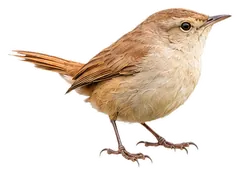 Little ThornbirdPhacellodomus sibilatrix
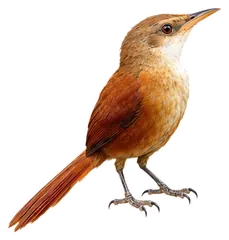 Chestnut-backed ThornbirdPhacellodomus dorsalis
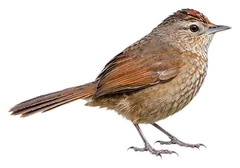 Spot-breasted ThornbirdPhacellodomus maculipectus
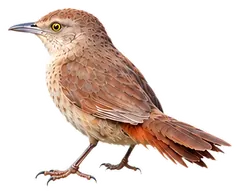 Freckle-breasted ThornbirdPhacellodomus striaticollis
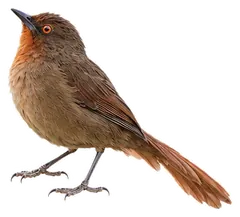 Orange-eyed ThornbirdPhacellodomus erythrophthalmus
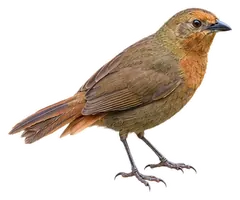 Orange-breasted ThornbirdPhacellodomus ferrugineigula
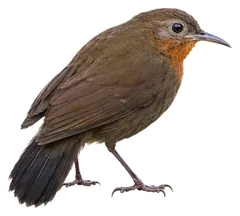 Tawny-throated LeaftosserSclerurus mexicanus
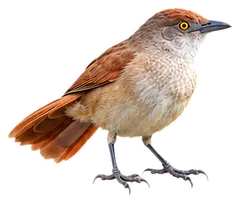
Download illustration
Free to use with credit: “Illustration: Bird Album (birdalbum.com)”. Drawn by AI from a reference photo by Leonardo Zoat. ↗
Heard it but can't see it? Mingji identifies birds by sound and photo, on your phone.