 Bird Album
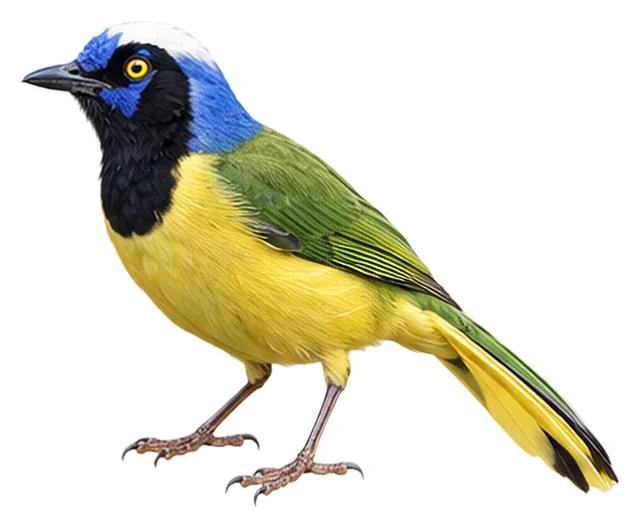
Green Jay
Cyanocorax yncas (Boddaert, 1783)
30–30 cmLength78 gWeight
The Inca jay (Cyanocorax yncas) is a bird species of the New World jays, which is native to the Andes of South America.
Busiest months: January and November · Most records: United States, Ecuador, Colombia
How to identify
Field marks
- Black throat bib extends onto the sides of the head, with one black stripe through the eye and another above it
- Crown can appear mostly white; forecrown and nape blue
- Breast and underparts usually bright yellow
- Upperparts emerald green
Voice
The most common call is “rassh-rassh-rassh”; another resembles an alarm bell.
Where and when it's recorded
Busiest months: January and November · Most records: United States, Ecuador, Colombia

Green Jay has been recorded at 274 of the 8,276 birding hotspots we track, in 10 countries and regions.
Records by month Northern Hemisphere
Where it's recorded most
- Estero Llano Grande SP WBCUnited States23,974 records
- Bentsen-Rio Grande Val. SP WBC (Mission)United States17,048 records
- Santa Ana NWRUnited States14,985 records
More places
- Resaca de la Palma SP WBC (Brownsville)United States9,606 records
- Salineño Wildlife PreserveUnited States8,241 records
- Quinta Mazatlan WBCUnited States7,817 records
- Sabal Palm SanctuaryUnited States6,502 records
- National Butterfly Center – General & area North of LeveeUnited States6,464 records
- Hugh Ramsey Park (Harlingen Arroyo Colorado) WBCUnited States6,051 records
- Cabañas San IsidroEcuador5,724 records
Countries and regions with the most records
eBird records via GBIF up to 2024-12-31. A record means someone listed it; more records partly mean more birders, not more birds.
About
The Inca jay (Cyanocorax yncas) is a bird species of the New World jays, which is native to the Andes of South America. It is widely known as querrequerre in Spanish, an onomatopoeic name derived from the bird's call.
Excerpt from Wikipedia, CC BY-SA 4.0 · authors · Read more on Wikipedia
Questions
How big is the Green Jay?
The Green Jay is about 30–30 cm long and weighs around 78 g.
Where does the Green Jay live?
Its breeding range: Middle America: southern Texas to Honduras. It is most often recorded in United States, Ecuador and Colombia.
When is the best time to see the Green Jay?
At the hotspots we track, it is recorded most in January and November (Northern Hemisphere).
Is the Green Jay endangered?
The IUCN Red List classifies the Green Jay as Least Concern.
What does the Green Jay eat?
Main food: Omnivore.
What family is the Green Jay in?
It belongs to the family Crows, Jays (Corvidae), order Passerines (Passeriformes).
At a glance
- Length
- 30–30 cm
- Weight
- 78 g
- Habitat
- Forest
- Diet
- Omnivore
- Lifestyle
- Perches in trees
- Migration
- Resident (barely migrates)
- Conservation
- Least Concern
More measurements
- Wing
- 122 mm
- Tail
- 139 mm
- Bill
- 30 mm
- Tarsus
- 39 mm
Averages from the AVONET dataset; length from field guides where available.
Range
Middle America: southern Texas to Honduras
Breeding range, IOC World Bird List 15.2
Classification
- Order
- Passerines Passeriformes
- Family
- Crows, Jays Corvidae
- Genus
- Cyanocorax
Other birds in the genus Cyanocorax
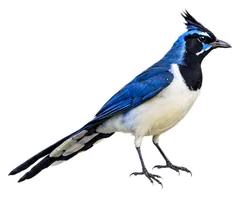 Black-throated Magpie-JayCyanocorax colliei
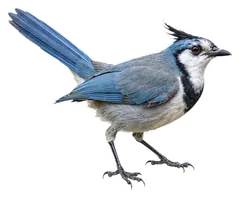 White-throated Magpie-JayCyanocorax formosus
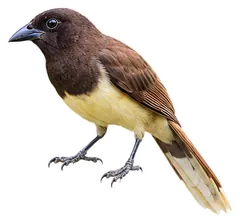 Brown JayCyanocorax morio
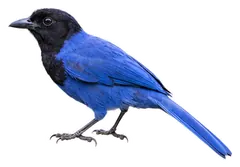 Azure JayCyanocorax coeruleus
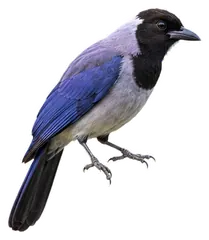 Violaceous JayCyanocorax violaceus
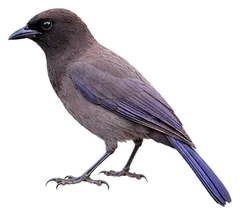 Purplish JayCyanocorax cyanomelas
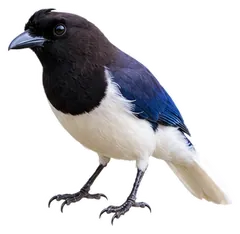 Curl-crested JayCyanocorax cristatellus
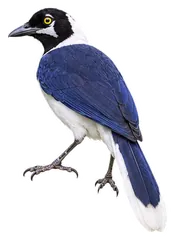 White-tailed JayCyanocorax mystacalis
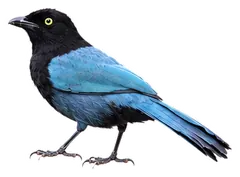 Bushy-crested JayCyanocorax melanocyaneus
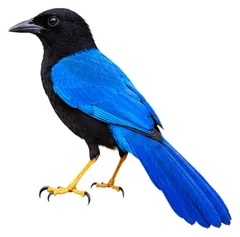 Yucatan JayCyanocorax yucatanicus
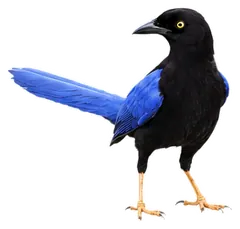 Purplish-backed JayCyanocorax beecheii
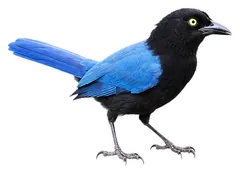 San Blas JayCyanocorax sanblasianus
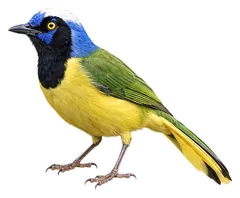
Download illustration
Free to use with credit: “Illustration: Bird Album (birdalbum.com)”. Drawn by AI from a reference photo by Esteban Poveda. ↗
Heard it but can't see it? Mingji identifies birds by sound and photo, on your phone.