 Bird Album
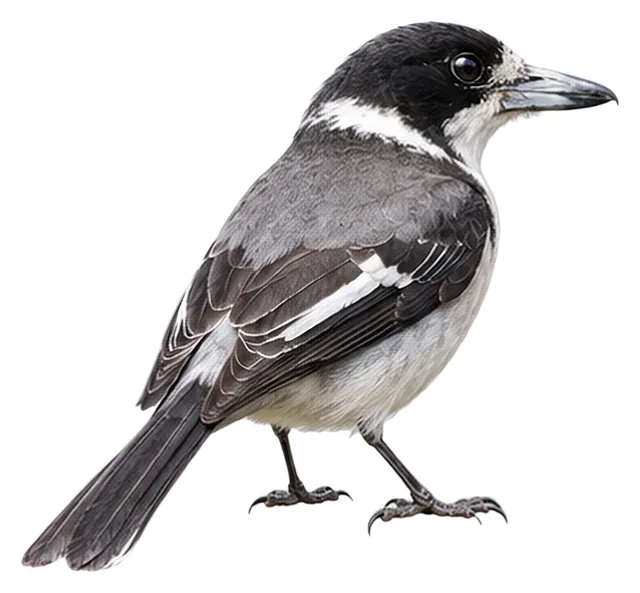
Grey Butcherbird
Cracticus torquatus (Latham, 1801)
83 gWeight
The grey butcherbird (Cracticus torquatus) is a widely distributed species endemic to Australia.
Busiest months: January, March–May and August–November · Most records: Australia
Where and when it's recorded

Grey Butcherbird has been recorded at 198 of the 8,171 birding hotspots we track, in 1 country or region.
Records by month Southern Hemisphere
Where it's recorded most
- Oxley Creek CommonAustralia5,034 records
- Coachwood ParkAustralia4,083 records
- Royal ParkAustralia3,340 records
More places
- Banyule Flats ReserveAustralia2,784 records
- Centennial ParkAustralia2,600 records
- Toohey MountainAustralia2,557 records
- SpringwoodAustralia2,463 records
- Bowra Wildlife SanctuaryAustralia2,343 records
- Royal Botanic Gardens MelbourneAustralia2,274 records
- Bushy Park WetlandsAustralia1,905 records
Countries and regions with the most records
eBird records via GBIF up to 2024-12-31. A record means someone listed it; more records partly mean more birders, not more birds.
About
The grey butcherbird (Cracticus torquatus) is a widely distributed species endemic to Australia. It occurs in a range of different habitats including arid, semi-arid and temperate zones. It is found across southern Australia, but is absent from the deserts of central Australia and the monsoon tropics of northern Australia.
Excerpt from Wikipedia, CC BY-SA 4.0 · authors · Read more on Wikipedia
Questions
How big is the Grey Butcherbird?
The Grey Butcherbird weighs around 83 g.
Where does the Grey Butcherbird live?
Its breeding range: Australasia: Australia (except northern). It is most often recorded in Australia.
When is the best time to see the Grey Butcherbird?
At the hotspots we track, it is recorded most in January, March, April, May, August, September, October and November (Southern Hemisphere).
Is the Grey Butcherbird endangered?
The IUCN Red List classifies the Grey Butcherbird as Least Concern.
What does the Grey Butcherbird eat?
Main food: Omnivore.
What family is the Grey Butcherbird in?
It belongs to the family Woodswallows, Butcherbirds & Allies (Artamidae), order Passerines (Passeriformes).
At a glance
- Weight
- 83 g
- Habitat
- Woodland
- Diet
- Omnivore
- Lifestyle
- Perches in trees
- Migration
- Resident (barely migrates)
- Conservation
- Least Concern
More measurements
- Wing
- 145 mm
- Tail
- 111 mm
- Bill
- 40 mm
- Tarsus
- 30 mm
Averages from the AVONET dataset; length from field guides where available.
Range
Australasia: Australia (except northern)
Breeding range, IOC World Bird List 15.2
Classification
- Order
- Passerines Passeriformes
- Family
- Woodswallows, Butcherbirds & Allies Artamidae
- Genus
- Cracticus
Other birds in the genus Cracticus
 Silver-backed ButcherbirdCracticus argenteus
 Black-backed ButcherbirdCracticus mentalis
 Pied ButcherbirdCracticus nigrogularis
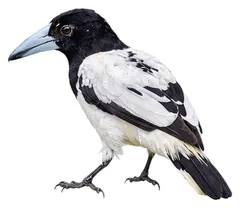 Hooded ButcherbirdCracticus cassicus
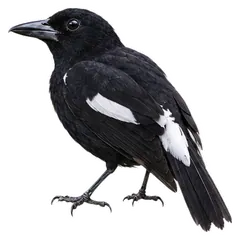 Tagula ButcherbirdCracticus louisiadensis
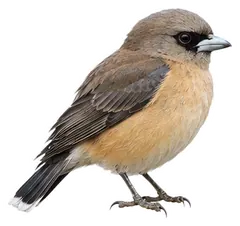 Ashy WoodswallowArtamus fuscus
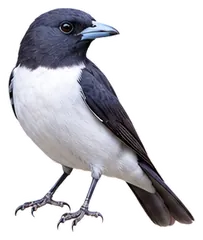 White-breasted WoodswallowArtamus leucorynchus
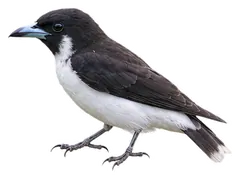 Fiji WoodswallowArtamus mentalis
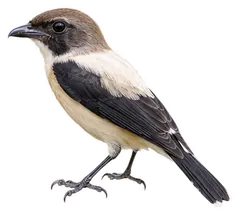 Ivory-backed WoodswallowArtamus monachus
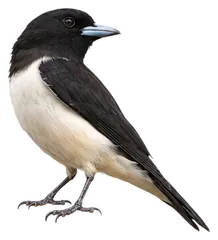 Great WoodswallowArtamus maximus
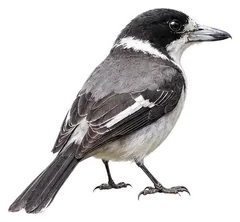
Download illustration
Free to use with credit: “Illustration: Bird Album (birdalbum.com)”. Drawn by AI from a reference photo by John Cull. ↗
Heard it but can't see it? Mingji identifies birds by sound and photo, on your phone.
In other languages
- EnglishGrey Butcherbird
- 简体中文灰钟鹊
- 繁體中文灰鐘鵲
- 日本語ハイイロモズガラス
- DeutschGraurücken-Krähenstar
- FrançaisCassican à collier
- EspañolVerdugo acollarado
- Portuguêsverdugo-cinzento
- ItalianoUccello macellaio grigio
- NederlandsGrijsrugorgelvogel
- РусскийСерая флейтовая птица
- Svenskagrå törnkråka
- DanskGrå Slagterfugl
- Polskisrokacz szary