 Bird Album
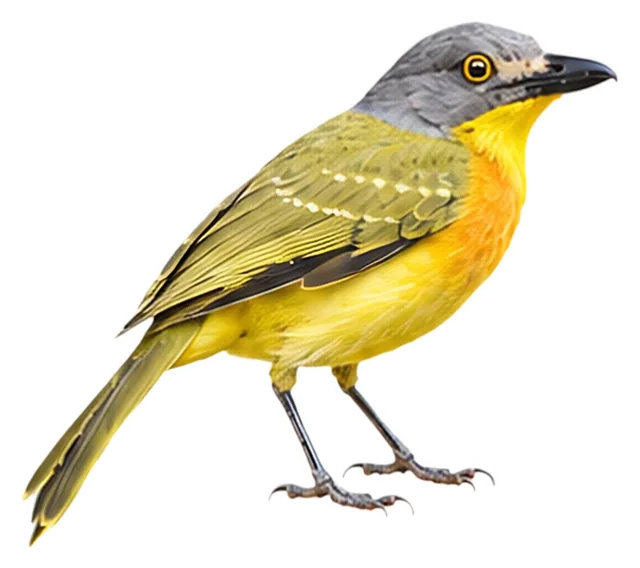
Grey-headed Bushshrike
Malaconotus blanchoti Stephens, 1826
79 gWeight
The grey-headed bushshrike (Malaconotus blanchoti), colloquially known as the ghostbird, is a species of passerine bird in the family Malaconotidae.
Busiest months: October–November · Most records: South Africa, Kenya, Zambia
Where and when it's recorded
Busiest months: October–November · Most records: South Africa, Kenya, Zambia

Grey-headed Bushshrike has been recorded at 326 of the 8,276 birding hotspots we track, in 27 countries and regions.
Records by month Southern Hemisphere
Where it's recorded most
- Kruger NP – Berg-en-Dal CampSouth Africa239 records
- Kruger NP – Satara CampSouth Africa230 records
- Mkhuze GRSouth Africa183 records
More places
- Kruger NP – Skukuza CampSouth Africa141 records
- Kruger NP – Letaba CampSouth Africa118 records
- Manyoni GR – Zebra Hills LodgeSouth Africa114 records
- Kruger NP – Lower Sabie Rest CampSouth Africa105 records
- Phinda GR – AirfieldSouth Africa98 records
- Marloth ParkSouth Africa96 records
- Sagala Lodge/Ndara RanchKenya93 records
Countries and regions with the most records
eBird records via GBIF up to 2024-12-31. A record means someone listed it; more records partly mean more birders, not more birds.
About
The grey-headed bushshrike (Malaconotus blanchoti), colloquially known as the ghostbird, is a species of passerine bird in the family Malaconotidae. It is widespread throughout sub-Saharan Africa, although relatively absent in Central Africa and the interior of southern Africa. It is the most widespread species of its genus, which consists of large bushshrikes with massive bills and mournful hooting calls.
Excerpt from Wikipedia, CC BY-SA 4.0 · authors · Read more on Wikipedia
Questions
How big is the Grey-headed Bushshrike?
The Grey-headed Bushshrike weighs around 79 g.
Where does the Grey-headed Bushshrike live?
Its breeding range: Africa: widespread. It is most often recorded in South Africa, Kenya and Zambia.
When is the best time to see the Grey-headed Bushshrike?
At the hotspots we track, it is recorded most in October and November (Southern Hemisphere).
Is the Grey-headed Bushshrike endangered?
The IUCN Red List classifies the Grey-headed Bushshrike as Least Concern.
What does the Grey-headed Bushshrike eat?
Main food: Insects & other invertebrates.
What family is the Grey-headed Bushshrike in?
It belongs to the family Bushshrikes (Malaconotidae), order Passerines (Passeriformes).
At a glance
- Weight
- 79 g
- Habitat
- Woodland
- Diet
- Insects & other invertebrates
- Lifestyle
- Perches in trees
- Migration
- Resident (barely migrates)
- Conservation
- Least Concern
More measurements
- Wing
- 117 mm
- Tail
- 106 mm
- Bill
- 33 mm
- Tarsus
- 36 mm
Averages from the AVONET dataset; length from field guides where available.
Range
Africa: widespread
Breeding range, IOC World Bird List 15.2
Classification
- Order
- Passerines Passeriformes
- Family
- Bushshrikes Malaconotidae
- Genus
- Malaconotus
Other birds in the genus Malaconotus
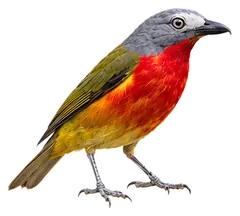 Fiery-breasted BushshrikeMalaconotus cruentus
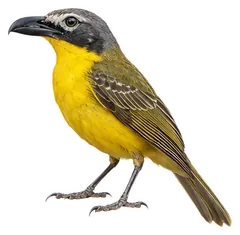 Monteiro's BushshrikeMalaconotus monteiri
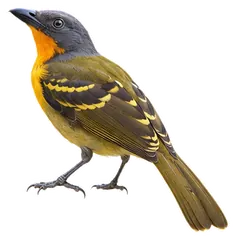 Lagden's BushshrikeMalaconotus lagdeni
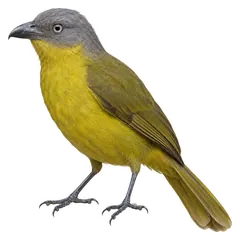 Green-breasted BushshrikeMalaconotus gladiator
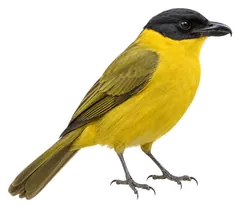 Uluguru BushshrikeMalaconotus alius
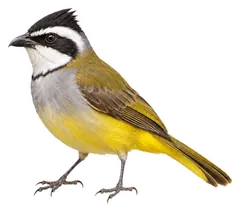 Mount Kupe BushshrikeChlorophoneus kupeensis
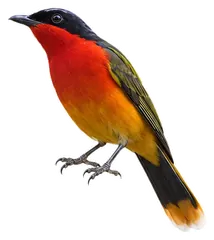 Many-colored BushshrikeChlorophoneus multicolor
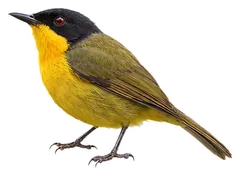 Black-fronted BushshrikeChlorophoneus nigrifrons
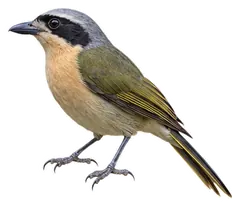 Olive BushshrikeChlorophoneus olivaceus
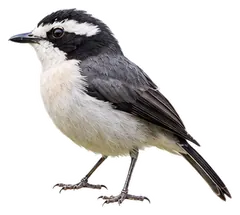 Bocage's BushshrikeChlorophoneus bocagei
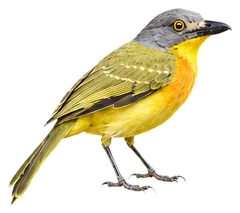
Download illustration
Free to use with credit: “Illustration: Bird Album (birdalbum.com)”. Drawn by AI from reference photos. ↗
Heard it but can't see it? Mingji identifies birds by sound and photo, on your phone.
In other languages
- EnglishGrey-headed Bushshrike
- 简体中文灰头丛鵙
- 繁體中文灰頭叢伯勞
- 日本語オオヤブモズ
- DeutschGraukopfwürger
- FrançaisGladiateur de Blanchot
- EspañolGladiador cabecigrís
- Portuguêspicanço-de-cabeça-cinzenta
- ItalianoAverla di macchia testagrigia
- NederlandsSpookklauwier
- РусскийСероголовый гладиатор
- Svenskagråhuvad busktörnskata
- DanskGråhovedet Skovtornskade
- Polskidzierzbik szarogłowy