 Bird Album
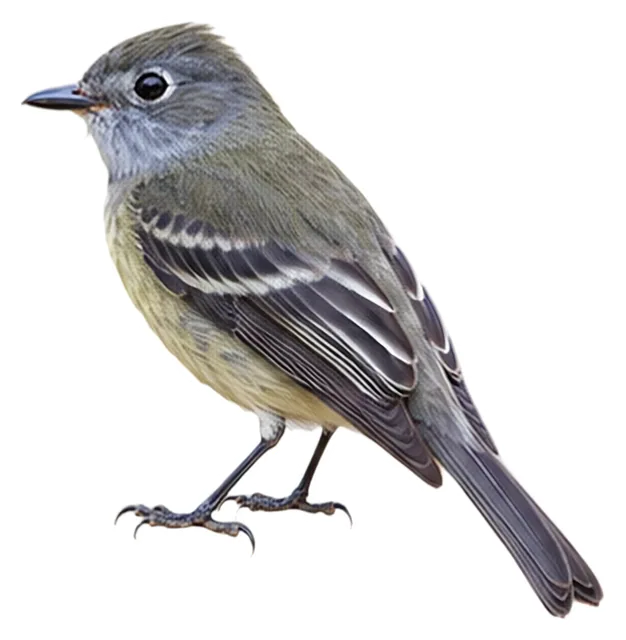
Hammond's Flycatcher
Empidonax hammondii (Xántus, J, 1858)
10 gWeight
Hammond's flycatcher (Empidonax hammondii) is a flycatcher in the family Tyrannidae.
Busiest months: April · Most records: United States, Canada, Mexico
Where and when it's recorded
Busiest months: April · Most records: United States, Canada, Mexico

Hammond's Flycatcher has been recorded at 272 of the 8,276 birding hotspots we track, in 8 countries and regions.
Records by month Northern Hemisphere
Where it's recorded most
- Rocky Point Bird ObservatoryCanada2,344 records
- Intermountain Bird Observatory at Lucky PeakUnited States2,264 records
- Ramsey Canyon PreserveUnited States1,936 records
More places
- Florida Canyon – lowerUnited States1,863 records
- Madera Canyon – Proctor Rd.United States1,486 records
- Mt. Tabor ParkUnited States1,284 records
- Patagonia Lake SP – Birding TrailUnited States1,251 records
- Anza Trail – TubacUnited States1,108 records
- Cave Creek Canyon – South ForkUnited States813 records
- Patagonia Lake State ParkUnited States730 records
Countries and regions with the most records
eBird records via GBIF up to 2024-12-31. A record means someone listed it; more records partly mean more birders, not more birds.
About
Hammond's flycatcher (Empidonax hammondii) is a flycatcher in the family Tyrannidae. This small insectivorous bird inhabits the coniferous and mixed forests of western North America. The name of this bird commemorates William Alexander Hammond who was the surgeon general of the US Army.
Excerpt from Wikipedia, CC BY-SA 4.0 · authors · Read more on Wikipedia
Questions
How big is the Hammond's Flycatcher?
The Hammond's Flycatcher weighs around 10 g.
Where does the Hammond's Flycatcher live?
Its breeding range: North America: central Alaska through western Canada to western USA. It is most often recorded in United States, Canada and Mexico.
When is the best time to see the Hammond's Flycatcher?
At the hotspots we track, it is recorded most in April (Northern Hemisphere).
Is the Hammond's Flycatcher endangered?
The IUCN Red List classifies the Hammond's Flycatcher as Least Concern.
What does the Hammond's Flycatcher eat?
Main food: Insects & other invertebrates.
What family is the Hammond's Flycatcher in?
It belongs to the family Tyrant Flycatchers, Calyptura (Tyrannidae), order Passerines (Passeriformes).
At a glance
- Weight
- 10 g
- Habitat
- Forest
- Diet
- Insects & other invertebrates
- Lifestyle
- Perches in trees
- Migration
- Migratory
- Conservation
- Least Concern
More measurements
- Wing
- 67 mm
- Tail
- 54 mm
- Bill
- 12 mm
- Tarsus
- 15 mm
Averages from the AVONET dataset; length from field guides where available.
Range
North America: central Alaska through western Canada to western USA
Breeding range, IOC World Bird List 15.2
Classification
- Order
- Passerines Passeriformes
- Family
- Tyrant Flycatchers, Calyptura Tyrannidae
- Genus
- Empidonax
Other birds in the genus Empidonax
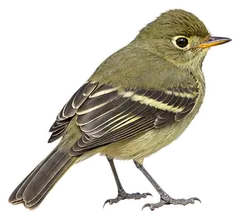 Yellow-bellied FlycatcherEmpidonax flaviventris
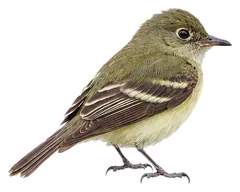 Acadian FlycatcherEmpidonax virescens
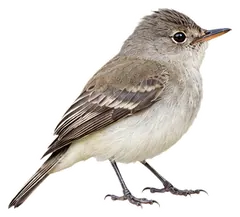 Willow FlycatcherEmpidonax traillii
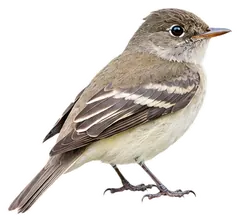 Alder FlycatcherEmpidonax alnorum
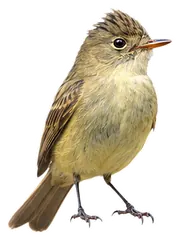 White-throated FlycatcherEmpidonax albigularis
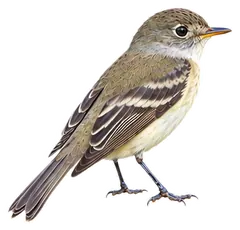 Least FlycatcherEmpidonax minimus
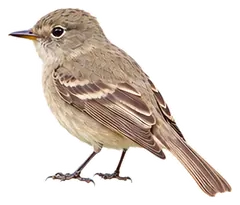 American Dusky FlycatcherEmpidonax oberholseri
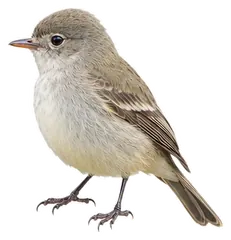 American Grey FlycatcherEmpidonax wrightii
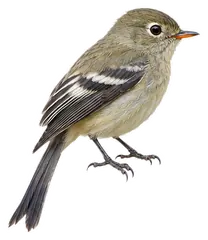 Pine FlycatcherEmpidonax affinis
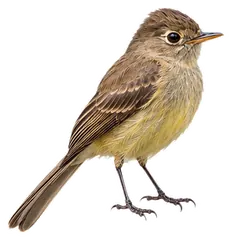 Western FlycatcherEmpidonax difficilis
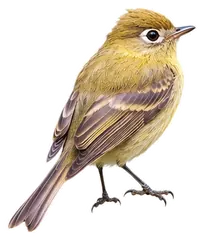 Yellowish FlycatcherEmpidonax flavescens
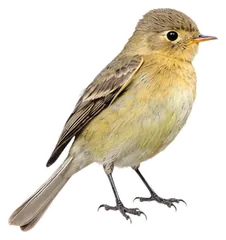 Buff-breasted FlycatcherEmpidonax fulvifrons
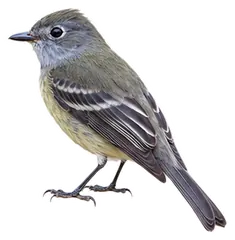
Download illustration
Free to use with credit: “Illustration: Bird Album (birdalbum.com)”. Drawn by AI from a reference photo by David Scott. ↗
Heard it but can't see it? Mingji identifies birds by sound and photo, on your phone.
In other languages
- EnglishHammond's Flycatcher
- 简体中文哈氏纹霸鹟
- 繁體中文哈姆氏蚊霸鶲
- 日本語ハモンドメジロハエトリ
- DeutschTannenschnäppertyrann
- FrançaisMoucherolle de Hammond
- EspañolMosquero de Hammond
- Portuguêspapa-mosquitos-dos-abetos
- ItalianoPigliamosche di Hammond
- NederlandsSparrenfeetiran
- РусскийЕловый мухолов
- Svenskagranempid
- DanskGranempidonax
- Polskiempidonka jodłowa