 Bird Album
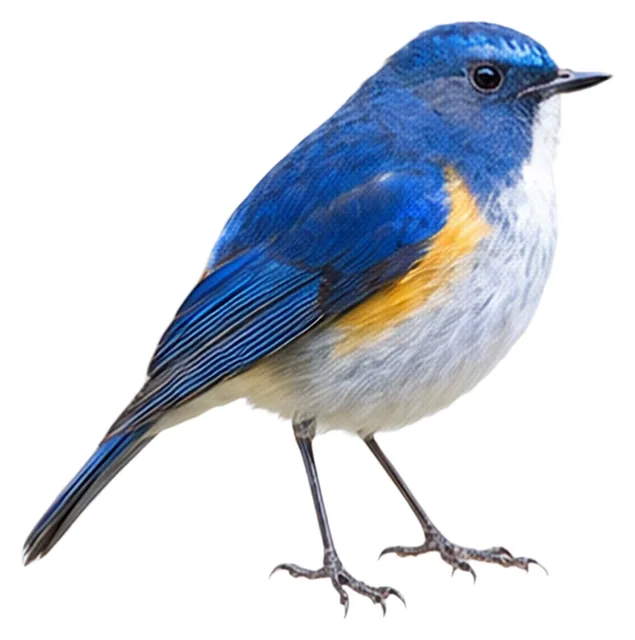
Himalayan Bluetail
Tarsiger rufilatus (Hodgson, 1845)
≈14 cmLength13 gWeight
This small bird weighs about 13 g, breeds in the Himalayas in summer and descends to lower elevations in winter.
Busiest months: January–February · Most records: China, India, Thailand
Looks like Red-flanked Bluetail
How to identify
Male, female and young
Adult male more intensely blue, and female and juvenile grayer, than Red-flanked Bluetail.
Similar species
Where and when it's recorded

Himalayan Bluetail has been recorded at 254 of the 8,171 birding hotspots we track, in 9 countries and regions.
Records by month Northern Hemisphere
Where it's recorded most
- Baihualing [General Area]China468 records
- SattalIndia395 records
- ChelelaBhutan225 records
More places
- Doi Inthanon NP – summitThailand207 records
- PangotIndia202 records
- Doi Pha Hom Pok NP – Doi Lang (E)Thailand199 records
- Mt. PhulchowkiNepal176 records
- Doi Pha Hom Pok NP – Doi Lang (W), AKA Doi San JuThailand118 records
- Laifengshan National Forest ParkChina117 records
- MengbishanChina109 records
Countries and regions with the most records
eBird records via GBIF up to 2024-12-31. A record means someone listed it; more records partly mean more birders, not more birds.
About
The Himalayan bluetail (Tarsiger rufilatus), also called the Himalayan red-flanked bush-robin or orange-flanked bush-robin, is a small passerine bird that was formerly classed as a member of the thrush family Turdidae, but is now more generally considered to be an Old World flycatcher of Muscicapidae.
Excerpt from Wikipedia, CC BY-SA 4.0 · authors · Read more on Wikipedia
Questions
How big is the Himalayan Bluetail?
The Himalayan Bluetail is about ≈14 cm long and weighs around 13 g.
Where does the Himalayan Bluetail live?
Its breeding range: Oriental: western Himalayas to central China. It is most often recorded in China, India and Thailand.
When is the best time to see the Himalayan Bluetail?
At the hotspots we track, it is recorded most in January and February (Northern Hemisphere).
Is the Himalayan Bluetail endangered?
The IUCN Red List classifies the Himalayan Bluetail as Least Concern.
What does the Himalayan Bluetail eat?
Main food: Insects & other invertebrates.
What family is the Himalayan Bluetail in?
It belongs to the family Chats, Old World Flycatchers (Muscicapidae), order Passerines (Passeriformes).
At a glance
- Length
- ≈14 cm
- Weight
- 13 g
- Habitat
- Forest
- Diet
- Insects & other invertebrates
- Lifestyle
- Varied
- Migration
- Migratory
- Conservation
- Least Concern
More measurements
- Wing
- 78 mm
- Tail
- 60 mm
- Bill
- 14 mm
- Tarsus
- 25 mm
Averages from the AVONET dataset; length from field guides where available.
Range
Oriental: western Himalayas to central China
Breeding range, IOC World Bird List 15.2
Subspecies · 1
- Tarsiger rufilatus rufilatus c Himalayas to c China
Classification
- Order
- Passerines Passeriformes
- Family
- Chats, Old World Flycatchers Muscicapidae
- Genus
- Tarsiger
Other birds in the genus Tarsiger
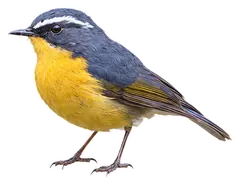 White-browed Bush RobinTarsiger indicus
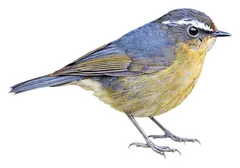 Taiwan Bush RobinTarsiger formosanus
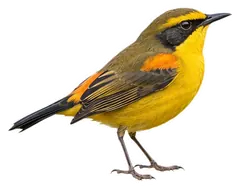 Golden Bush RobinTarsiger chrysaeus
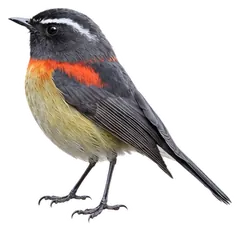 Collared Bush RobinTarsiger johnstoniae
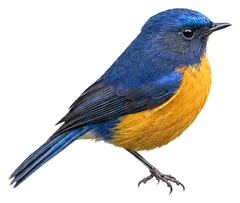 Rufous-breasted Bush RobinTarsiger hyperythrus
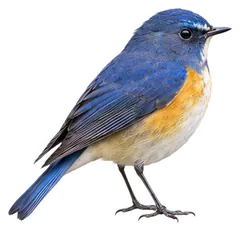 Red-flanked BluetailTarsiger cyanurus
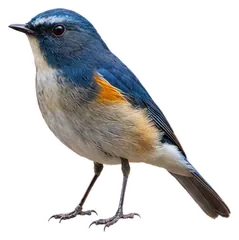 Qilian BluetailTarsiger albocoeruleus
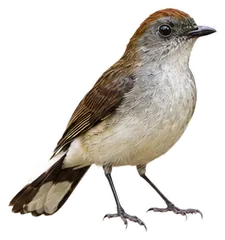 White-tailed AletheAlethe diademata
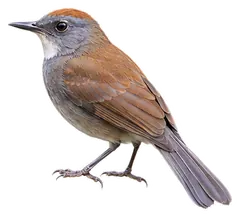 Fire-crested AletheAlethe castanea
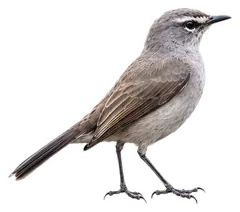 Karoo Scrub RobinTychaedon coryphoeus
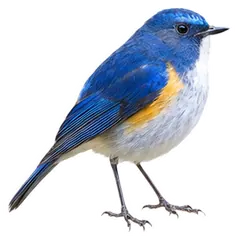
Download illustration
Free to use with credit: “Illustration: Bird Album (birdalbum.com)”. Drawn by AI from a reference photo by JJ Harrison (https://www.jjharrison.com.au/). ↗

Heard it but can't see it? Mingji identifies birds by sound and photo, on your phone.
In other languages
- EnglishHimalayan Bluetail
- 简体中文蓝眉林鸲
- 繁體中文喜瑪拉雅藍尾林鴝
- 日本語ヒマラヤルリビタキ
- DeutschHimalajablauschwanz
- FrançaisRobin de l’Himalaya
- EspañolRuiseñor del Himalaya
- Portuguêspisco-azul-do-himalaia
- ItalianoCodazzurro dell'Himalaya
- NederlandsHimalayablauwstaart
- РусскийГималайская синехвостка
- Svenskahimalayablåstjärt
- DanskHimalaya Blåstjert
- Polskimodraczek himalajski