 Bird Album
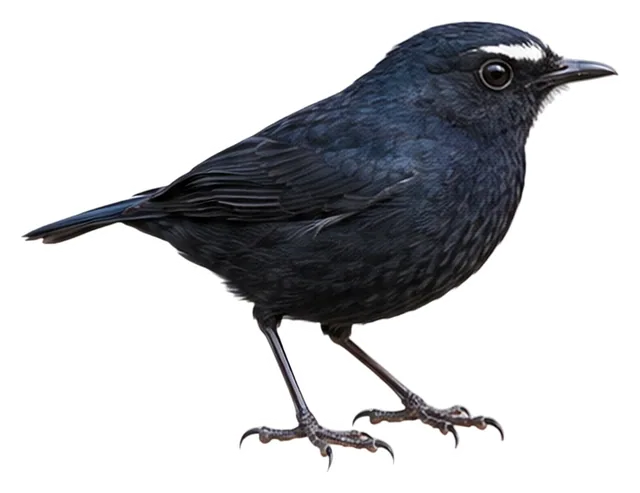
Himalayan Shortwing
Brachypteryx cruralis (Blyth, 1843)
≈14 cmLength18 gWeight
This shy small bird hides in dark, dense vegetation and favors the ground or places close to it.
Busiest months: February · Most records: Thailand, China, Nepal
How to identify
Where and when it's recorded

Himalayan Shortwing has been recorded at 96 of the 8,171 birding hotspots we track, in 8 countries and regions.
Records by month Northern Hemisphere
Where it's recorded most
- Doi Inthanon NP – summitThailand1,428 records
- Doi Inthanon NPThailand543 records
- Baihualing [General Area]China142 records
More places
- Doi Inthanon NP – Mae Ouam (Km 34.5)Thailand76 records
- Mt. Phulchowki - Lowest Few Miles of RoadNepal56 records
- Labahe NNRChina53 records
- Wawu Mountain – Summit [2800m]China36 records
- Hailuogou Glacier Forest ParkChina35 records
- Doi Inthanon NP – Jeep Track (Km 37.5)Thailand30 records
- Longcanggou [General Area]China24 records
Countries and regions with the most records
eBird records via GBIF up to 2024-12-31. A record means someone listed it; more records partly mean more birders, not more birds.
About
The Himalayan shortwing (Brachypteryx cruralis) is a species of chat. This species is now classified in the family Muscicapidae.
Excerpt from Wikipedia, CC BY-SA 4.0 · authors · Read more on Wikipedia
Questions
How big is the Himalayan Shortwing?
The Himalayan Shortwing is about ≈14 cm long and weighs around 18 g.
Where does the Himalayan Shortwing live?
Its breeding range: Oriental: central Himalayas and Myanmar to south-central, southern China, northwestern Thailand and northern Indochina. It is most often recorded in Thailand, China and Nepal.
When is the best time to see the Himalayan Shortwing?
At the hotspots we track, it is recorded most in February (Northern Hemisphere).
Is the Himalayan Shortwing endangered?
The IUCN Red List classifies the Himalayan Shortwing as Least Concern.
What does the Himalayan Shortwing eat?
Main food: Insects & other invertebrates.
What family is the Himalayan Shortwing in?
It belongs to the family Chats, Old World Flycatchers (Muscicapidae), order Passerines (Passeriformes).
At a glance
- Length
- ≈14 cm
- Weight
- 18 g
- Habitat
- Forest
- Diet
- Insects & other invertebrates
- Lifestyle
- Active on the ground
- Migration
- Resident (barely migrates)
- Conservation
- Least Concern
More measurements
- Wing
- 64 mm
- Tail
- 55 mm
- Bill
- 16 mm
- Tarsus
- 31 mm
Averages from the AVONET dataset; length from field guides where available.
Range
Oriental: central Himalayas and Myanmar to south-central, southern China, northwestern Thailand and northern Indochina
Breeding range, IOC World Bird List 15.2
Classification
- Order
- Passerines Passeriformes
- Family
- Chats, Old World Flycatchers Muscicapidae
- Genus
- Brachypteryx
Other birds in the genus Brachypteryx
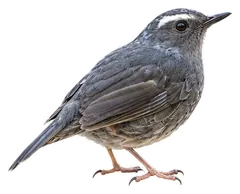 Chinese ShortwingBrachypteryx sinensis
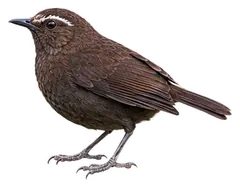 Taiwan ShortwingBrachypteryx goodfellowi
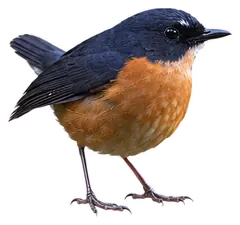 Rusty-bellied ShortwingBrachypteryx hyperythra
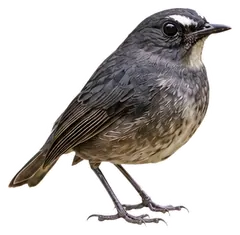 Lesser ShortwingBrachypteryx leucophris
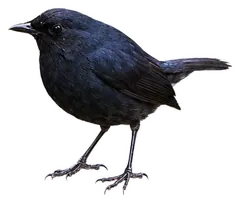 Philippine ShortwingBrachypteryx poliogyna
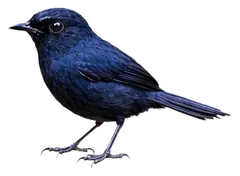 Bornean ShortwingBrachypteryx erythrogyna
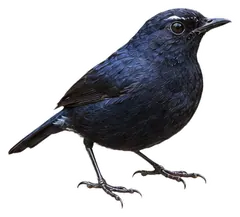 Sumatran ShortwingBrachypteryx saturata
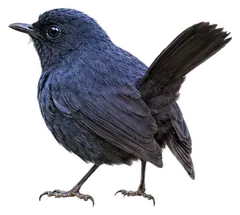 Javan ShortwingBrachypteryx montana
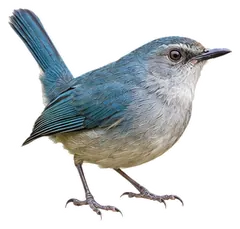 Flores ShortwingBrachypteryx floris
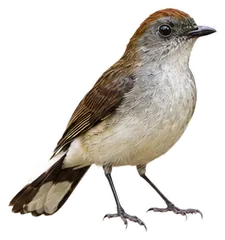 White-tailed AletheAlethe diademata
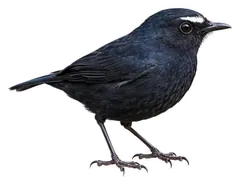
Download illustration
Free to use with credit: “Illustration: Bird Album (birdalbum.com)”. Drawn by AI from a reference photo by itazura. ↗
Heard it but can't see it? Mingji identifies birds by sound and photo, on your phone.
In other languages
- EnglishHimalayan Shortwing
- 简体中文喜山短翅鸫
- 繁體中文喜山短翅鶇
- 日本語ヒマラヤコバネヒタキ
- DeutschHimalaja-Bergkurzflügel
- FrançaisBrachyptère de l’Himalaya
- EspañolAlicorto del Himalaya
- Portuguêsasa-curta-do-himalaia
- NederlandsHimalayakortvleugel
- РусскийГималайский короткокрыл
- Svenskahimalayakortvinge
- DanskBlå Rundvinge
- Polskikusochwostka białobrewa