 Bird Album
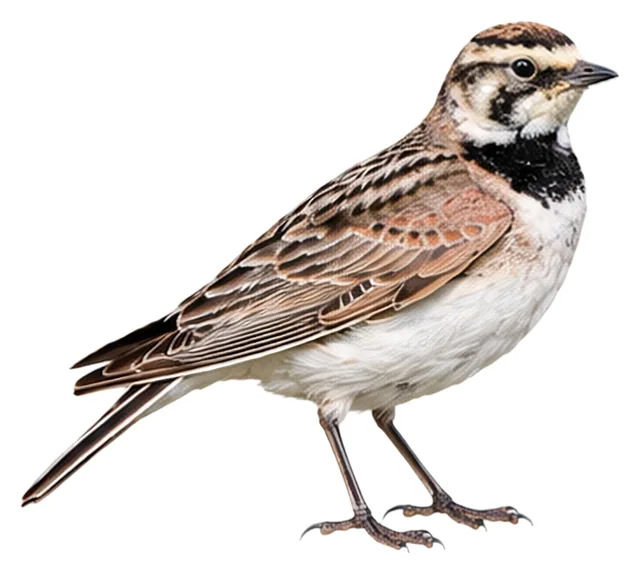
Horned Lark
Eremophila alpestris (Linnaeus, 1758)
≈18 cmLength32 cmWingspan33 gWeight
It has striking black-and-yellow facial markings, with white replacing yellow in some subspecies, and the male has black “horns” on its head in summer.
Busiest months: May and October · Most records: United States, Canada, Mongolia
How to identify
Field marks
- Striking black-and-yellow or black-and-white facial markings
- Male in summer has two tufts of black feathers on the crown, resembling horns
- Gray-brown upperparts and pale underparts
- Tail mostly black, showing strong contrast in flight
Male, female and young
Male in summer has two tufts of black feathers on the head, resembling horns.
Voice
Very weak, high, thin notes with a hissing or tinkling quality; sings in flight, with a few twitters followed by a series of rising trills.
Where and when it's recorded

Horned Lark has been recorded at 986 of the 8,171 birding hotspots we track, in 51 countries and regions.
Records by month Northern Hemisphere
Where it's recorded most
- Howard Marsh MetroparkUnited States6,723 records
- Hammonasset Beach SPUnited States6,332 records
- Willcox – Lake Cochise and Twin Lakes Golf CourseUnited States5,308 records
More places
- Eagle Bluffs CAUnited States5,216 records
- Muskegon Wastewater SystemUnited States5,163 records
- Piute PondsUnited States4,444 records
- Bolivar Flats Shorebird SanctuaryUnited States3,670 records
- Whitefish PointUnited States3,406 records
- Rocky Mountain Arsenal NWRUnited States3,134 records
- San Diego River mudflatsUnited States3,034 records
Countries and regions with the most records
eBird records via GBIF up to 2024-12-31. A record means someone listed it; more records partly mean more birders, not more birds.
About
The horned lark or shore lark (Eremophila alpestris) is a species of lark in the family Alaudidae found across the northern hemisphere. It is known as "horned lark" in North America for distinctive feathers on the heads of the male birds in summer, and as "shore lark" in Europe because it can be found on shorelines in the winter.
Excerpt from Wikipedia, CC BY-SA 4.0 · authors · Read more on Wikipedia
Questions
How big is the Horned Lark?
The Horned Lark is about ≈18 cm long, with a wingspan of 32 cm and weighs around 33 g.
Where does the Horned Lark live?
Its breeding range: North America, Middle America, Palearctic: widespread. It is most often recorded in United States, Canada and Mongolia.
When is the best time to see the Horned Lark?
At the hotspots we track, it is recorded most in May and October (Northern Hemisphere).
Is the Horned Lark endangered?
The IUCN Red List classifies the Horned Lark as Least Concern.
What does the Horned Lark eat?
Main food: Omnivore.
What family is the Horned Lark in?
It belongs to the family Larks (Alaudidae), order Passerines (Passeriformes).
At a glance
- Length
- ≈18 cm
- Wingspan
- 32 cm
- Weight
- 33 g
- Habitat
- Grassland
- Diet
- Omnivore
- Lifestyle
- Active on the ground
- Migration
- Migratory
- Conservation
- Least Concern
More measurements
- Wing
- 108 mm
- Tail
- 71 mm
- Bill
- 14 mm
- Tarsus
- 24 mm
Averages from the AVONET dataset; length from field guides where available.
Range
North America, Middle America, Palearctic: widespread
Breeding range, IOC World Bird List 15.2
Subspecies · 7
- Eremophila alpestris brandti se European Russia to w Mongolia and n China
- Eremophila alpestris argalea extreme w China
- Eremophila alpestris teleschowi w and wc China
- Eremophila alpestris przewalskii n Qinghai (wc China)
- Eremophila alpestris nigrifrons ne Qinghai (wc China)
- Eremophila alpestris elwesi s, e Tibetan Plateau
- Eremophila alpestris khamensis sw, sc China
Classification
- Order
- Passerines Passeriformes
- Family
- Larks Alaudidae
- Genus
- Eremophila
Other birds in the genus Eremophila
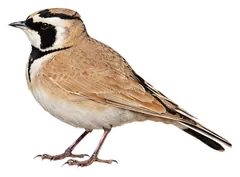 Temminck's LarkEremophila bilopha
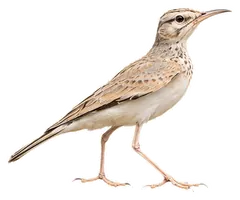 Greater Hoopoe-LarkAlaemon alaudipes
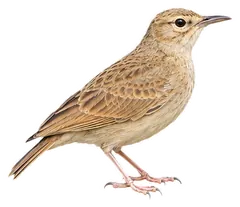 Lesser Hoopoe-LarkAlaemon hamertoni
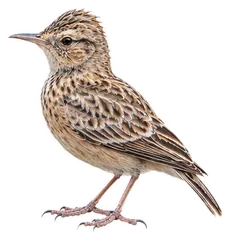 Beesley's LarkChersomanes beesleyi
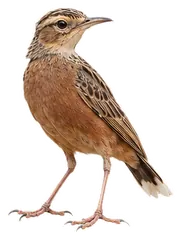 Spike-heeled LarkChersomanes albofasciata
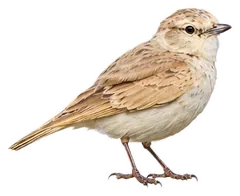 Gray's LarkAmmomanopsis grayi
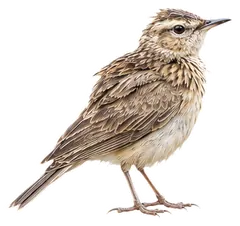 Short-clawed LarkCerthilauda chuana
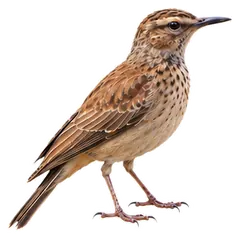 Karoo Long-billed LarkCerthilauda subcoronata
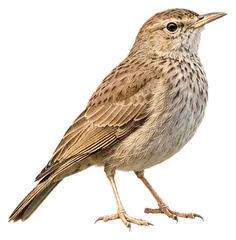 Eastern Long-billed LarkCerthilauda semitorquata
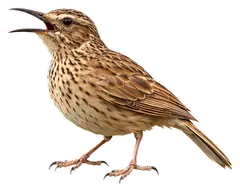 Cape Long-billed LarkCerthilauda curvirostris
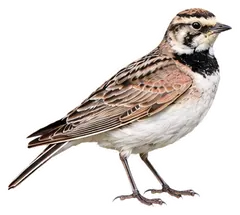
Download illustration
Free to use with credit: “Illustration: Bird Album (birdalbum.com)”. Drawn by AI from a reference photo by Stephan Sprinz. ↗

Heard it but can't see it? Mingji identifies birds by sound and photo, on your phone.