 Bird Album
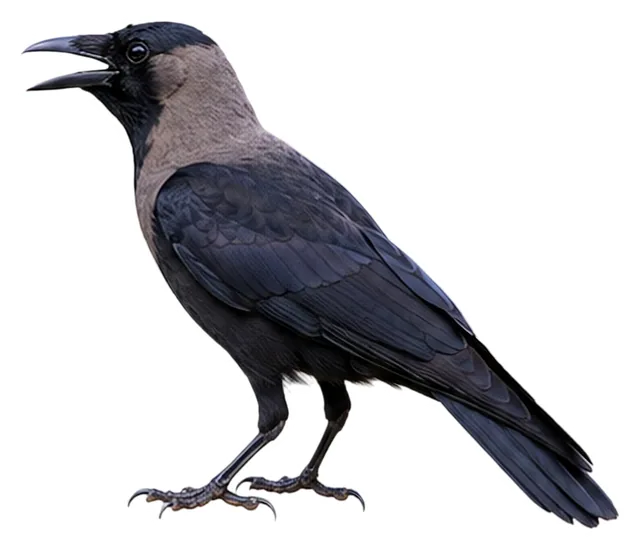
House Crow
Corvus splendens Vieillot, 1817
40 cmLength293 gWeight
It has a glossy black forehead, crown and throat and a pale gray-brown neck, and is between Western Jackdaw and Carrion Crow in size but slimmer.
Busiest months: February · Most records: India, Singapore, Israel
How to identify
Field marks
- Deep black forehead, crown and throat with a strong metallic gloss
- Pale gray-brown neck and breast
- Black wings, tail, legs and feet
Voice
A harsh “kaaw-kaaw”.
Where and when it's recorded

House Crow has been recorded at 757 of the 8,171 birding hotspots we track, in 39 countries and regions.
Records by month Northern Hemisphere
Where it's recorded most
- Tharamangalam-West Car StreetIndia8,082 records
- Krishnampudur AreaIndia7,562 records
- Panchayat Union Middle School, KrishnampudurIndia6,759 records
More places
- SunkadakatteIndia5,802 records
- International Birding and Research Center Eilat (IBRCE)Israel5,338 records
- Kerala Agricultural UniversityIndia5,027 records
- Changaram Wetlands – EzhupunnaIndia4,456 records
- IIT BombayIndia4,193 records
- Stella Maris CollegeIndia4,178 records
- Sungei Buloh Wetland ReserveSingapore3,316 records
Countries and regions with the most records
eBird records via GBIF up to 2024-12-31. A record means someone listed it; more records partly mean more birders, not more birds.
About
The house crow (Corvus splendens), also known as the Indian, greynecked, Ceylon or Colombo crow, is a common bird of the crow family that is of Asian origin but now found in many parts of the world, where they arrived assisted by shipping.
Excerpt from Wikipedia, CC BY-SA 4.0 · authors · Read more on Wikipedia
Questions
How big is the House Crow?
The House Crow is about 40 cm long and weighs around 293 g.
Where does the House Crow live?
Its breeding range: Oriental: northwestern India through southwestern Thailand. It is most often recorded in India, Singapore and Israel.
When is the best time to see the House Crow?
At the hotspots we track, it is recorded most in February (Northern Hemisphere).
Is the House Crow endangered?
The IUCN Red List classifies the House Crow as Least Concern.
What does the House Crow eat?
Main food: Omnivore.
What family is the House Crow in?
It belongs to the family Crows, Jays (Corvidae), order Passerines (Passeriformes).
At a glance
- Length
- 40 cm
- Weight
- 293 g
- Habitat
- Towns & farmland
- Diet
- Omnivore
- Lifestyle
- Active on the ground
- Migration
- Resident (barely migrates)
- Conservation
- Least Concern
More measurements
- Wing
- 258 mm
- Tail
- 152 mm
- Bill
- 50 mm
- Tarsus
- 46 mm
Averages from the AVONET dataset; length from field guides where available.
Range
Oriental: northwestern India through southwestern Thailand
Breeding range, IOC World Bird List 15.2
Subspecies · 1
- Corvus splendens insolens Myanmar, s China and sw Thailand
Classification
- Order
- Passerines Passeriformes
- Family
- Crows, Jays Corvidae
- Genus
- Corvus
Other birds in the genus Corvus
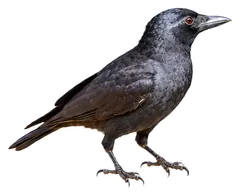 New Caledonian CrowCorvus moneduloides
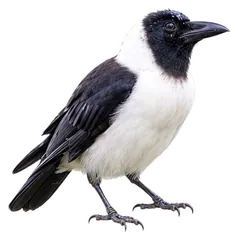 Piping CrowCorvus typicus
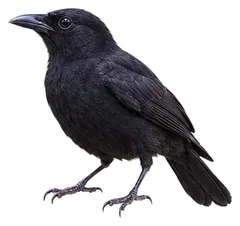 Banggai CrowCorvus unicolor
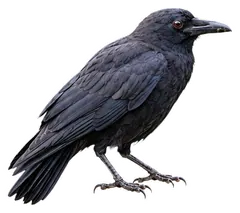 Sunda CrowCorvus enca
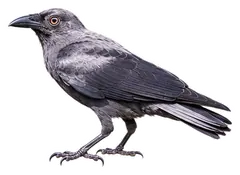 Sulawesi CrowCorvus celebensis
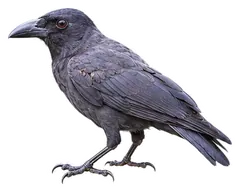 Samar CrowCorvus samarensis
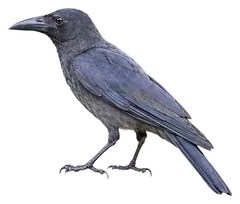 Sierra Madre CrowCorvus sierramadrensis
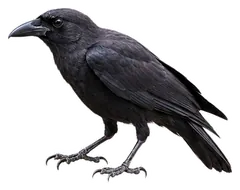 Palawan CrowCorvus pusillus
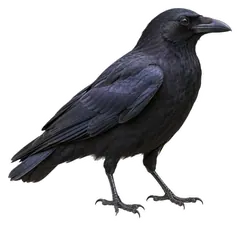 Violet CrowCorvus violaceus
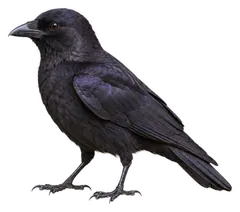 Flores CrowCorvus florensis
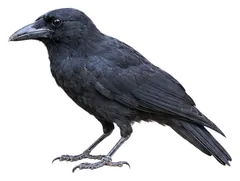 Mariana CrowCorvus kubaryi
 Long-billed CrowCorvus validus
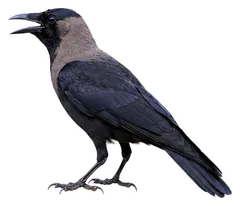
Download illustration
Free to use with credit: “Illustration: Bird Album (birdalbum.com)”. Drawn by AI from a reference photo by Steve Raduns. ↗
Heard it but can't see it? Mingji identifies birds by sound and photo, on your phone.