 Bird Album
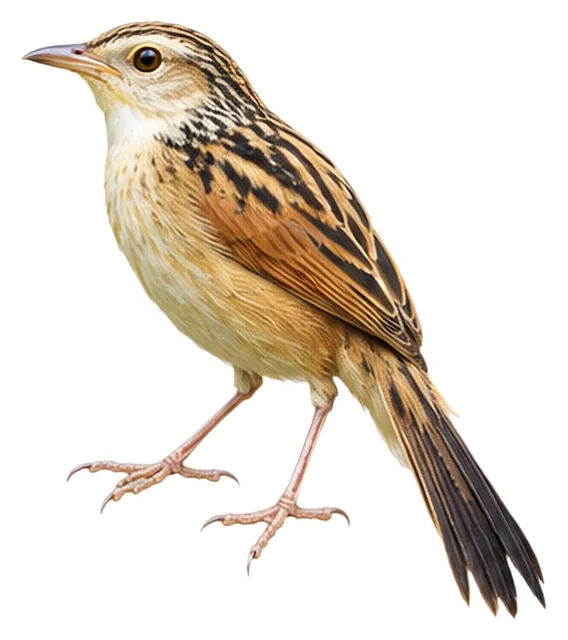
Indian Grassbird
Graminicola bengalensis Jerdon, 1863
15 gWeight
The Indian grassbird (Graminicola bengalensis) is a passerine bird in the family Pellorneidae.
Busiest months: March · Most records: India, Nepal
Where and when it's recorded
Busiest months: March · Most records: India, Nepal

Indian Grassbird has been recorded at 14 of the 8,276 birding hotspots we track, in 2 countries and regions.
Records by month Northern Hemisphere
Where it's recorded most
- Haiderpur Wetlands and Bijnor BarrageIndia262 records
- Manas NP – BanasbariIndia65 records
- Chitwan National ParkNepal43 records
More places
- Kaziranga NP & Surroundings – Central RangeIndia35 records
- Shuklaphanta National ParkNepal28 records
- Chitwan National Park - SaurahaNepal24 records
- Kaziranga NP & SurroundingsIndia20 records
- Kaziranga NP & Surroundings – Western RangeIndia9 records
- Kaziranga NP & Surroundings – Eastern RangeIndia7 records
- Chitwan National Park - Tiger Tops Jungle LodgeNepal5 records
Countries and regions with the most records
eBird records via GBIF up to 2024-12-31. A record means someone listed it; more records partly mean more birders, not more birds.
About
The Indian grassbird (Graminicola bengalensis) is a passerine bird in the family Pellorneidae. It was formerly placed in the Old World warbler family, Sylviidae, and the Old World babbler family, Timaliidae. The species is also known as the rufous-rumped grassbird.
Excerpt from Wikipedia, CC BY-SA 4.0 · authors · Read more on Wikipedia
Questions
How big is the Indian Grassbird?
The Indian Grassbird weighs around 15 g.
Where does the Indian Grassbird live?
Its breeding range: Oriental: northern, northeastern India, southern Nepal, southern Bhutan and northern Bangladesh. It is most often recorded in India and Nepal.
When is the best time to see the Indian Grassbird?
At the hotspots we track, it is recorded most in March (Northern Hemisphere).
Is the Indian Grassbird endangered?
The IUCN Red List classifies the Indian Grassbird as Near Threatened.
What does the Indian Grassbird eat?
Main food: Insects & other invertebrates.
What family is the Indian Grassbird in?
It belongs to the family Ground Babblers (Pellorneidae), order Passerines (Passeriformes).
At a glance
- Weight
- 15 g
- Habitat
- Shrubland
- Diet
- Insects & other invertebrates
- Lifestyle
- Perches in trees
- Migration
- Resident (barely migrates)
- Conservation
- Near Threatened
More measurements
- Wing
- 56 mm
- Tail
- 74 mm
- Bill
- 15 mm
- Tarsus
- 24 mm
Averages from the AVONET dataset; length from field guides where available.
Range
Oriental: northern, northeastern India, southern Nepal, southern Bhutan and northern Bangladesh
Breeding range, IOC World Bird List 15.2
Classification
- Order
- Passerines Passeriformes
- Family
- Ground Babblers Pellorneidae
- Genus
- Graminicola
Other birds in the genus Graminicola
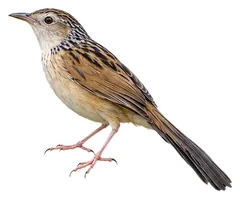 Chinese GrassbirdGraminicola striatus
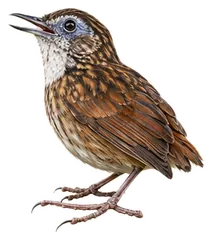 Large Wren-BabblerTurdinus macrodactylus
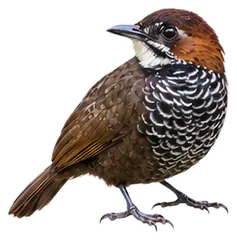 Marbled Wren-BabblerTurdinus marmoratus
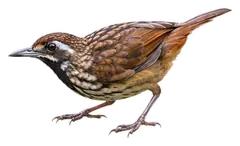 Black-throated Wren-BabblerTurdinus atrigularis
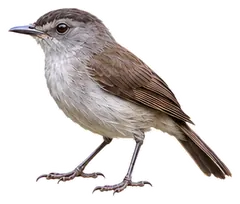 Sooty-capped BabblerMalacopteron affine
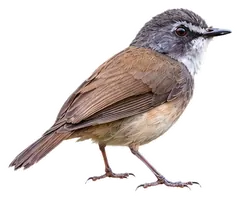 Grey-breasted BabblerMalacopteron albogulare
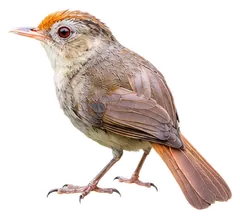 Scaly-crowned BabblerMalacopteron cinereum
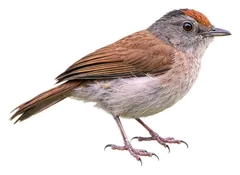 Rufous-crowned BabblerMalacopteron magnum
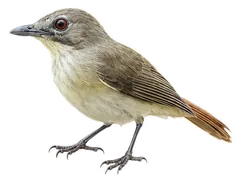 Moustached BabblerMalacopteron magnirostre
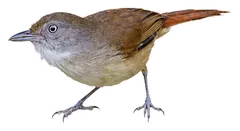 Melodious BabblerMalacopteron palawanense
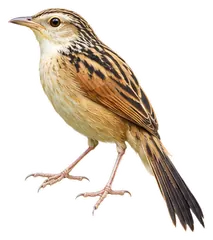
Download illustration
Free to use with credit: “Illustration: Bird Album (birdalbum.com)”. Drawn by AI from a reference photo by desertnaturalist. ↗
Heard it but can't see it? Mingji identifies birds by sound and photo, on your phone.
In other languages
- EnglishIndian Grassbird
- 简体中文南亚草鹛
- 繁體中文大草鶯
- 日本語コシアカセッカ
- DeutschIndiengrasdrossling
- FrançaisGrande Graminicole
- EspañolYerbera bengalí
- Portuguêsfelosa-do-capim-de-bengala
- ItalianoErbarolo gropparossiccia
- NederlandsIndiase Grasrietzanger
- РусскийИндийская длиннохвостка
- Svenskaindisk grästimalia
- DanskStor Græssanger
- Polskitrawiarek