 Bird Album
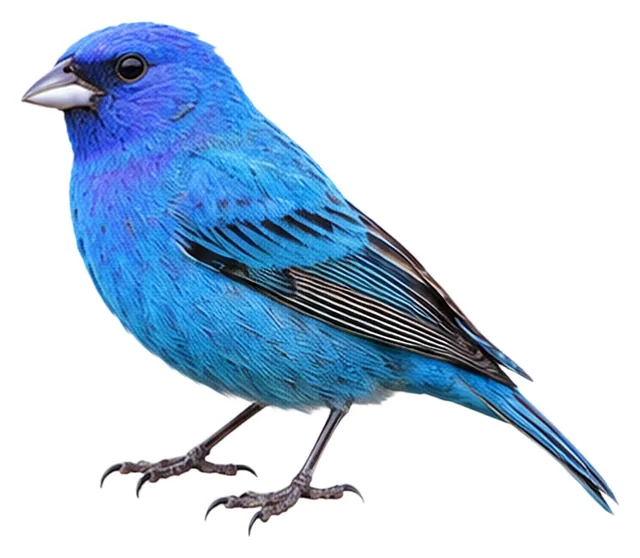
Indigo Bunting
Passerina cyanea (Linnaeus, 1766)
15 gWeight
The indigo bunting (Passerina cyanea) is a small seed-eating bird in the cardinal family, Cardinalidae.
Busiest months: May · Most records: United States, Canada, Mexico
Where and when it's recorded

Indigo Bunting has been recorded at 1,044 of the 8,171 birding hotspots we track, in 30 countries and regions.
Records by month Northern Hemisphere
Where it's recorded most
- Cape Island – Higbee Beach WMAUnited States9,563 records
- Point Pelee National ParkCanada8,405 records
- Sabine WoodsUnited States8,270 records
More places
- Bombay Hook National Wildlife RefugeUnited States7,832 records
- High Island – Smith Oaks SanctuaryUnited States7,637 records
- High Island – Boy Scout WoodsUnited States7,329 records
- South Padre Is. – WBC/Conv. Center/Laguna Madre TrailUnited States6,899 records
- Magee Marsh – BoardwalkUnited States5,940 records
- Tawas Point SPUnited States5,844 records
- Cape Island – South Cape May MeadowsUnited States5,756 records
Countries and regions with the most records
eBird records via GBIF up to 2024-12-31. A record means someone listed it; more records partly mean more birders, not more birds.
About
The indigo bunting (Passerina cyanea) is a small seed-eating bird in the cardinal family, Cardinalidae. It is migratory, ranging from southern Canada to northern Florida during the breeding season, and from southern Florida to northern South America during the winter. It often migrates by night, using the stars to navigate.
Excerpt from Wikipedia, CC BY-SA 4.0 · authors · Read more on Wikipedia
Questions
How big is the Indigo Bunting?
The Indigo Bunting weighs around 15 g.
Where does the Indigo Bunting live?
Its breeding range: North America: south-central, southeastern Canada to southwestern, south-central, southeastern USA. It is most often recorded in United States, Canada and Mexico.
When is the best time to see the Indigo Bunting?
At the hotspots we track, it is recorded most in May (Northern Hemisphere).
Is the Indigo Bunting endangered?
The IUCN Red List classifies the Indigo Bunting as Least Concern.
What does the Indigo Bunting eat?
Main food: Seeds.
What family is the Indigo Bunting in?
It belongs to the family Cardinals & Allies (Cardinalidae), order Passerines (Passeriformes).
At a glance
- Weight
- 15 g
- Habitat
- Shrubland
- Diet
- Seeds
- Lifestyle
- Active on the ground
- Migration
- Migratory
- Conservation
- Least Concern
More measurements
- Wing
- 65 mm
- Tail
- 49 mm
- Bill
- 12 mm
- Tarsus
- 17 mm
Averages from the AVONET dataset; length from field guides where available.
Range
North America: south-central, southeastern Canada to southwestern, south-central, southeastern USA
Breeding range, IOC World Bird List 15.2
Classification
- Order
- Passerines Passeriformes
- Family
- Cardinals & Allies Cardinalidae
- Genus
- Passerina
Other birds in the genus Passerina
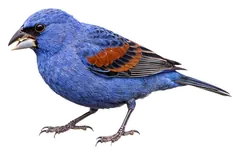 Blue GrosbeakPasserina caerulea
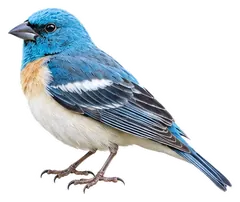 Lazuli BuntingPasserina amoena
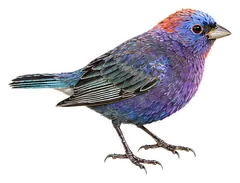 Varied BuntingPasserina versicolor
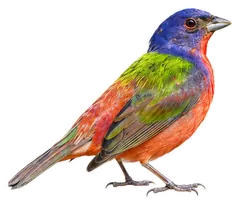 Painted BuntingPasserina ciris
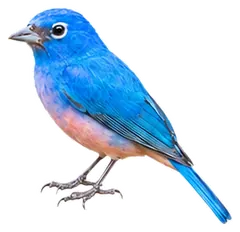 Rose-bellied BuntingPasserina rositae
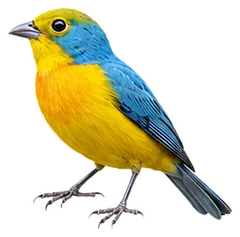 Orange-breasted BuntingPasserina leclancherii
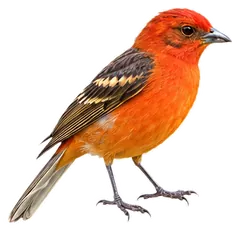 Flame-colored TanagerPiranga bidentata
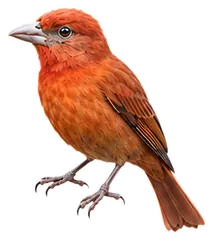 Tooth-billed TanagerPiranga lutea
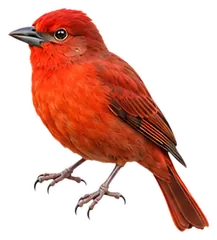 Red TanagerPiranga flava
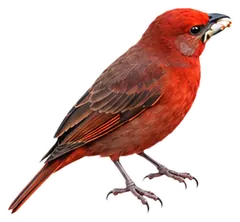 Hepatic TanagerPiranga hepatica
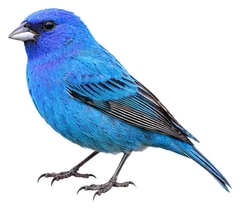
Download illustration
Free to use with credit: “Illustration: Bird Album (birdalbum.com)”. Drawn by AI from a reference photo by Gareth Rasberry. ↗
Heard it but can't see it? Mingji identifies birds by sound and photo, on your phone.