 Bird Album
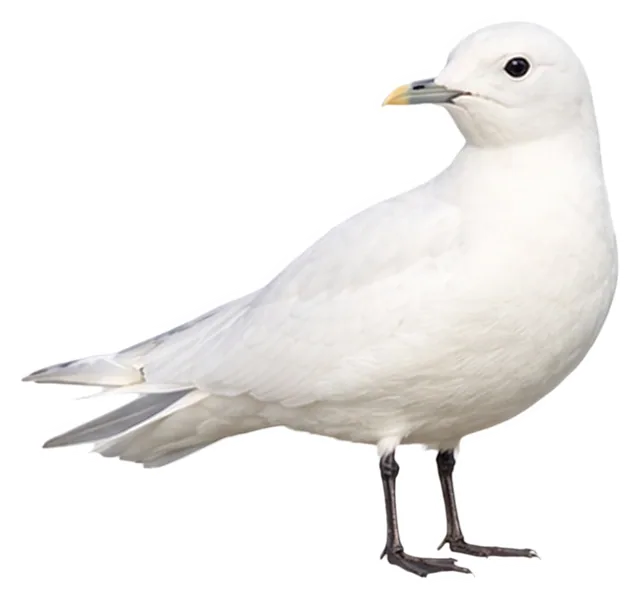
Ivory Gull
Pagophila eburnea (Phipps, 1774)
550 gWeight
The ivory gull (Pagophila eburnea) is a small gull, the only species in the genus Pagophila.
Busiest months: June · Most records: United States, Svalbard & Jan Mayen, Poland
Where and when it's recorded

Ivory Gull has been recorded at 50 of the 8,171 birding hotspots we track, in 10 countries and regions.
Records by month Northern Hemisphere
Where it's recorded most
- GambellUnited States305 records
- Władysławowo – HarborPoland157 records
- Ny-ÅlesundSvalbard & Jan Mayen96 records
More places
- LongyearbyenSvalbard & Jan Mayen60 records
- St. John's – Quidi Vidi LakeCanada47 records
- Salisbury Beach State ReservationUnited States29 records
- Toronto – Humber Bay ParkCanada19 records
- Húsavík – hafnarsvæðiIceland15 records
- Les EscouminsCanada14 records
- Amherst IslandCanada14 records
Countries and regions with the most records
eBird records via GBIF up to 2024-12-31. A record means someone listed it; more records partly mean more birders, not more birds.
About
The ivory gull (Pagophila eburnea) is a small gull, the only species in the genus Pagophila. It is a resident breeding bird in the high Arctic and has a circumpolar distribution through Greenland, northernmost North America, and Eurasia.
Excerpt from Wikipedia, CC BY-SA 4.0 · authors · Read more on Wikipedia
Questions
How big is the Ivory Gull?
The Ivory Gull weighs around 550 g.
Where does the Ivory Gull live?
Its breeding range: Palearctic, North America: high Arctic islands from Greenland, Svalbard (north of Norway), Franz Josef Land to Herald Island (east of Wrangel Island, north of Chukotka Peninsula; northern Russia) and northern Canada. It is most often recorded in United States, Svalbard & Jan Mayen and Poland.
When is the best time to see the Ivory Gull?
At the hotspots we track, it is recorded most in June (Northern Hemisphere).
Is the Ivory Gull endangered?
The IUCN Red List classifies the Ivory Gull as Near Threatened.
What does the Ivory Gull eat?
Main food: Fish, shrimp & shellfish.
What family is the Ivory Gull in?
It belongs to the family Gulls, Terns, Skimmers (Laridae), order Charadriiformes.
At a glance
- Weight
- 550 g
- Habitat
- Ocean
- Diet
- Fish, shrimp & shellfish
- Lifestyle
- Feeds in the air
- Migration
- Partial migrant
- Conservation
- Near Threatened
More measurements
- Wing
- 333 mm
- Tail
- 137 mm
- Bill
- 45 mm
- Tarsus
- 39 mm
Averages from the AVONET dataset; length from field guides where available.
Range
Palearctic, North America: high Arctic islands from Greenland, Svalbard (north of Norway), Franz Josef Land to Herald Island (east of Wrangel Island, north of Chukotka Peninsula; northern Russia) and northern Canada
Breeding range, IOC World Bird List 15.2
Classification
- Order
- Charadriiformes
- Family
- Gulls, Terns, Skimmers Laridae
- Genus
- Pagophila
More from the family Gulls, Terns, Skimmers
 African SkimmerRynchops flavirostris
 Indian SkimmerRynchops albicollis
 Black SkimmerRynchops niger
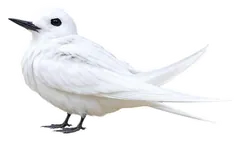 Atlantic White TernGygis alba
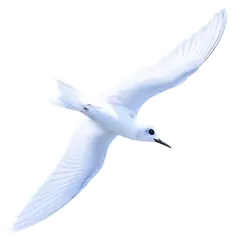 Little White TernGygis microrhyncha
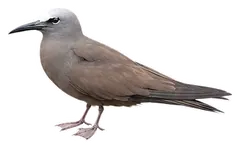 Brown NoddyAnous stolidus
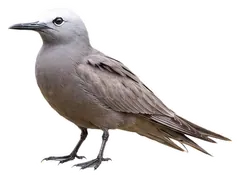 Lesser NoddyAnous tenuirostris
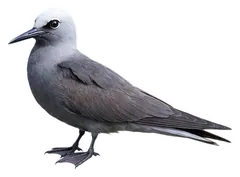 Black NoddyAnous minutus
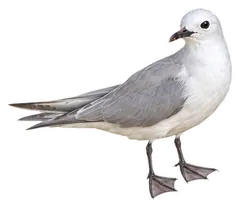 Grey NoddyAnous albivitta
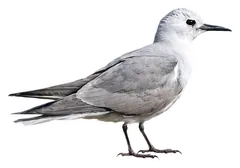 Blue NoddyAnous ceruleus
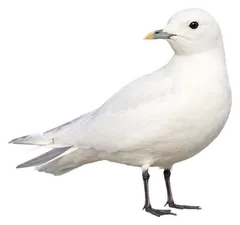
Download illustration
Free to use with credit: “Illustration: Bird Album (birdalbum.com)”. Drawn by AI from a reference photo by Steve Collins. ↗
Heard it but can't see it? Mingji identifies birds by sound and photo, on your phone.