 Bird Album
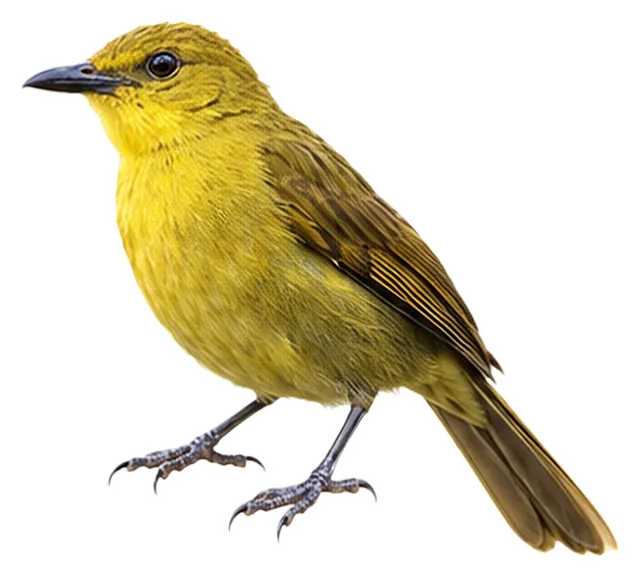
Joyful Greenbul
Chlorocichla laetissima (Sharpe, 1899)
50 gWeight
The joyful greenbul (Chlorocichla laetissima) or joyful bulbul, is a species of songbird in the bulbul family, Pycnonotidae.
Busiest months: November · Most records: Kenya, Uganda, Congo - Kinshasa
Where and when it's recorded

Joyful Greenbul has been recorded at 22 of the 8,171 birding hotspots we track, in 3 countries and regions.
Records by month Northern Hemisphere
Where it's recorded most
- Kakamega Forest NR – Rondo Retreat CentreKenya791 records
- Kakamega Forest NRKenya519 records
- Kakamega Forest NR – Ikuywa RiverKenya275 records
More places
- Kakamega Forest NR – Zimmerman Plot/Isecheno Forest StationKenya205 records
- Bigodi SwampUganda60 records
- Kibale NPUganda55 records
- Angama LodgeKenya42 records
- Chimpanzee Forest LodgeUganda13 records
- Bigodi Ecotourism Research CentreUganda10 records
- Bwindi-Impenetrable NP – RuhijaUganda4 records
Countries and regions with the most records
eBird records via GBIF up to 2024-12-31. A record means someone listed it; more records partly mean more birders, not more birds.
About
The joyful greenbul (Chlorocichla laetissima) or joyful bulbul, is a species of songbird in the bulbul family, Pycnonotidae. It is found in east-central Africa. Its natural habitats are boreal forests and subtropical or tropical moist montane forests.
Excerpt from Wikipedia, CC BY-SA 4.0 · authors · Read more on Wikipedia
Questions
How big is the Joyful Greenbul?
The Joyful Greenbul weighs around 50 g.
Where does the Joyful Greenbul live?
Its breeding range: Africa: east-central. It is most often recorded in Kenya, Uganda and Congo - Kinshasa.
When is the best time to see the Joyful Greenbul?
At the hotspots we track, it is recorded most in November (Northern Hemisphere).
Is the Joyful Greenbul endangered?
The IUCN Red List classifies the Joyful Greenbul as Least Concern.
What does the Joyful Greenbul eat?
Main food: Omnivore.
What family is the Joyful Greenbul in?
It belongs to the family Bulbuls (Pycnonotidae), order Passerines (Passeriformes).
At a glance
- Weight
- 50 g
- Habitat
- Forest
- Diet
- Omnivore
- Lifestyle
- Perches in trees
- Migration
- Resident (barely migrates)
- Conservation
- Least Concern
More measurements
- Wing
- 105 mm
- Tail
- 101 mm
- Bill
- 22 mm
- Tarsus
- 22 mm
Averages from the AVONET dataset; length from field guides where available.
Range
Africa: east-central
Breeding range, IOC World Bird List 15.2
Classification
- Order
- Passerines Passeriformes
- Family
- Bulbuls Pycnonotidae
- Genus
- Chlorocichla
Other birds in the genus Chlorocichla
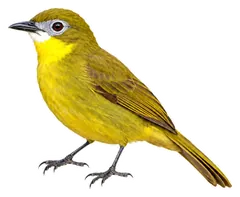 Prigogine's GreenbulChlorocichla prigoginei
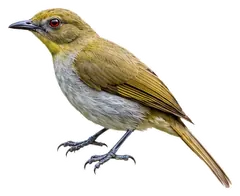 Falkenstein's GreenbulChlorocichla falkensteini
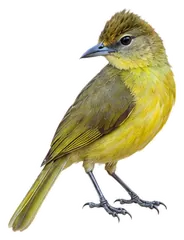 Yellow-bellied GreenbulChlorocichla flaviventris
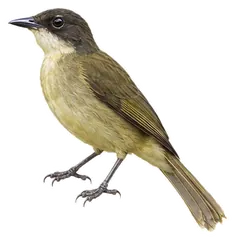 Simple GreenbulChlorocichla simplex
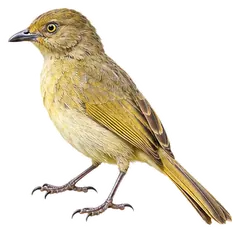 Sombre GreenbulAndropadus importunus
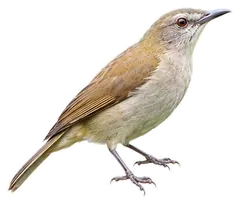 Slender-billed GreenbulStelgidillas gracilirostris
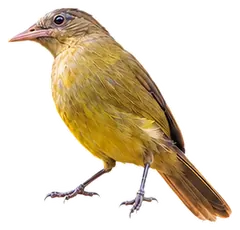 Golden GreenbulCalyptocichla serinus
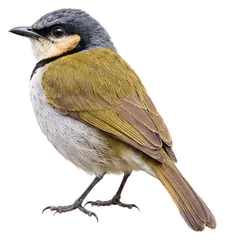 Black-collared BulbulNeolestes torquatus
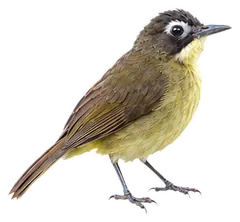 Red-tailed BristlebillBleda syndactylus
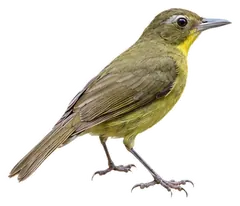 Green-tailed BristlebillBleda eximius
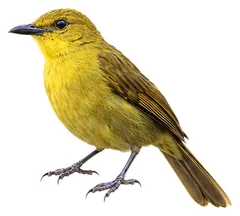
Download illustration
Free to use with credit: “Illustration: Bird Album (birdalbum.com)”. Drawn by AI from a reference photo by Dave Curtis. ↗
Heard it but can't see it? Mingji identifies birds by sound and photo, on your phone.