 Bird Album
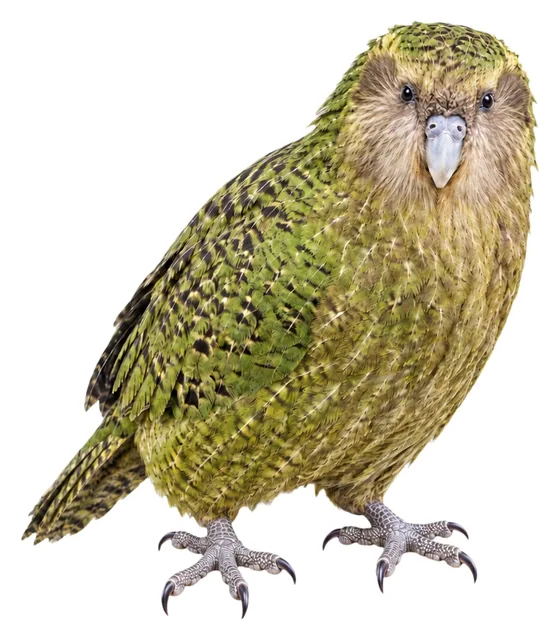
Kakapo
Strigops habroptilus Gray, GR, 1845
This flightless parrot has a round face like that of an owl.
Most records: New Zealand
How to identify
Field marks
- Round face with a facial disc of fine feathers
- Upperparts moss-green with blackish-brown markings
- Legs short; feet large; wings and tail relatively short
Male, female and young
Male distinctly heavier; juvenile usually darker green with less yellow, and with tail, wings and bill also shorter.
Voice
Male gives low-frequency booming sounds during courtship.
Where and when it's recorded

Kakapo has been recorded at 1 of the 8,171 birding hotspots we track, in 1 country or region.
Records by month Southern Hemisphere
Where it's recorded most
- Rakiura NP – Ulva IslandNew Zealand1 record
Countries and regions with the most records
eBird records via GBIF up to 2024-12-31. A record means someone listed it; more records partly mean more birders, not more birds.
About
The kākāpō (Māori:; pl.: kākāpō; Strigops habroptilus), sometimes known as the owl-parrot, is a species of large, nocturnal, ground-dwelling parrot of the superfamily Strigopoidea. It is endemic to New Zealand.
Excerpt from Wikipedia, CC BY-SA 4.0 · authors · Read more on Wikipedia
Questions
Where does the Kakapo live?
Its breeding range: Australasia: now mostly Codfish Island (=Whenua Hou, west of Stewart Island); formerly North, South and Stewart islands (New Zealand). It is most often recorded in New Zealand.
What family is the Kakapo in?
It belongs to the family New Zealand Parrots (Strigopidae), order Parrot (Psittaciformes).
Range
Australasia: now mostly Codfish Island (=Whenua Hou, west of Stewart Island); formerly North, South and Stewart islands (New Zealand)
Breeding range, IOC World Bird List 15.2
Classification
- Order
- Parrot Psittaciformes
- Family
- New Zealand Parrots Strigopidae
- Genus
- Strigops
More from the family New Zealand Parrots
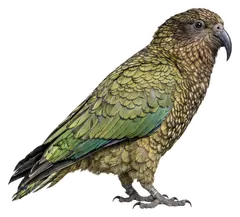 KeaNestor notabilis
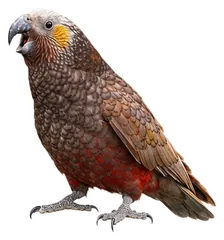 New Zealand KakaNestor meridionalis
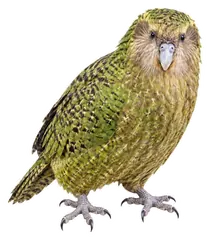
Download illustration
Free to use with credit: “Illustration: Bird Album (birdalbum.com)”. Drawn by AI from a reference photo by Department of Conservation. ↗

Heard it but can't see it? Mingji identifies birds by sound and photo, on your phone.