 Bird Album
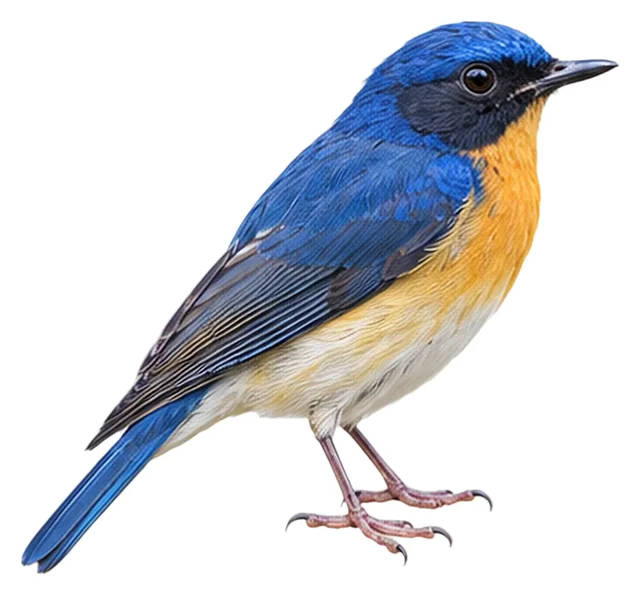
Large Blue Flycatcher
Cyornis magnirostris Blyth, 1849
≈14 cmLength14 gWeight
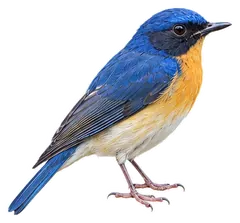
The adult male has a blue head and wings, with an orange-red wash on the throat.
Busiest months: November–December · Most records: Thailand, Cambodia
How to identify
Field marks
- Adult male has a pale blue forehead
- Adult male has black cheeks and a deep blue crown
- Adult male has an orange-red throat and chin
- Adult male has deep blue wings and tail with a slight purplish tinge
Male, female and young
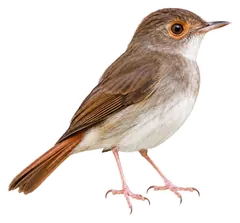
Adult female has a grayish crown and upperparts, with reddish-brown washes on the rump, tail, and wing edges.
Voice
Short, clear, high-pitched whistles.
Where and when it's recorded
Busiest months: November–December · Most records: Thailand, Cambodia

Large Blue Flycatcher has been recorded at 14 of the 8,276 birding hotspots we track, in 2 countries and regions.
Records by month Northern Hemisphere
Where it's recorded most
- Sri Phang-nga NPThailand71 records
- Teochew CemeteryThailand71 records
- Department of Public RelationsThailand35 records
More places
- Sri Phang-nga NP – headquarters vicinityThailand24 records
- Rot Fai ParkThailand22 records
- Chulalongkorn UniversityThailand21 records
- Rot Fai, Queen Sirikit & Chatuchak ParksThailand8 records
- H.M. Queen Sirikit ParkThailand8 records
- Phutthamonthon ParkThailand6 records
- Man Nai IslandThailand5 records
Countries and regions with the most records
eBird records via GBIF up to 2024-12-31. A record means someone listed it; more records partly mean more birders, not more birds.
About
The large blue flycatcher (Cyornis magnirostris) is a medium-sized bird species characterized by distinctive sexual dimorphism along with most others of the Flycatcher family. This species of bird is in the family Muscicapidae. It is found in the eastern Himalayas, from Nepal to Bangladesh.
Excerpt from Wikipedia, CC BY-SA 4.0 · authors · Read more on Wikipedia
Questions
How big is the Large Blue Flycatcher?
The Large Blue Flycatcher is about ≈14 cm long and weighs around 14 g.
Where does the Large Blue Flycatcher live?
Its breeding range: Oriental: eastern Himalayas. It is most often recorded in Thailand and Cambodia.
When is the best time to see the Large Blue Flycatcher?
At the hotspots we track, it is recorded most in November and December (Northern Hemisphere).
Is the Large Blue Flycatcher endangered?
The IUCN Red List classifies the Large Blue Flycatcher as Near Threatened.
What does the Large Blue Flycatcher eat?
Main food: Insects & other invertebrates.
What family is the Large Blue Flycatcher in?
It belongs to the family Chats, Old World Flycatchers (Muscicapidae), order Passerines (Passeriformes).
At a glance
- Length
- ≈14 cm
- Weight
- 14 g
- Habitat
- Forest
- Diet
- Insects & other invertebrates
- Lifestyle
- Perches in trees
- Migration
- Resident (barely migrates)
- Conservation
- Near Threatened
More measurements
- Wing
- 78 mm
- Tail
- 64 mm
- Bill
- 14 mm
- Tarsus
- 19 mm
Averages from the AVONET dataset; length from field guides where available.
Range
Oriental: eastern Himalayas
Breeding range, IOC World Bird List 15.2
Classification
- Order
- Passerines Passeriformes
- Family
- Chats, Old World Flycatchers Muscicapidae
- Genus
- Cyornis
Other birds in the genus Cyornis
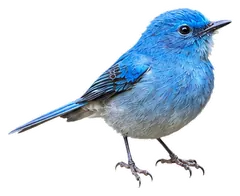 Pale Blue FlycatcherCyornis unicolor
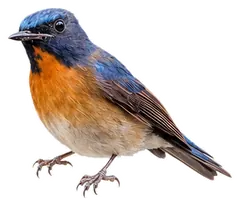 Chinese Blue FlycatcherCyornis glaucicomans
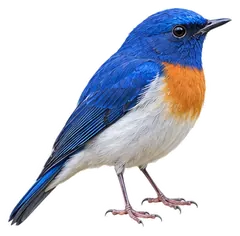 Blue-throated Blue FlycatcherCyornis rubeculoides
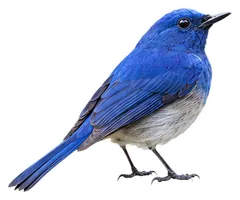 Hainan Blue FlycatcherCyornis hainanus
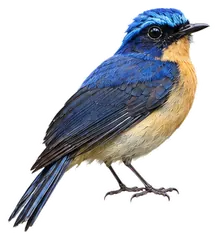 Bornean Blue FlycatcherCyornis superbus
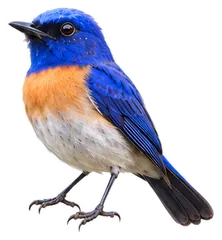 Malaysian Blue FlycatcherCyornis turcosus
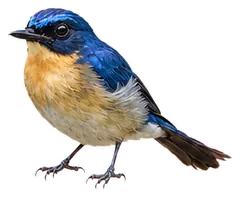 Palawan Blue FlycatcherCyornis lemprieri
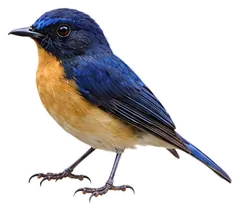 Sunda Blue FlycatcherCyornis caerulatus
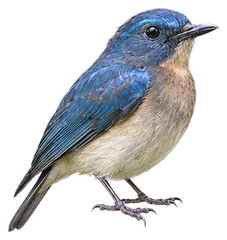 Blue-breasted Blue FlycatcherCyornis herioti
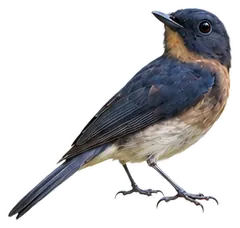 Rufous-breasted Blue FlycatcherCyornis camarinensis
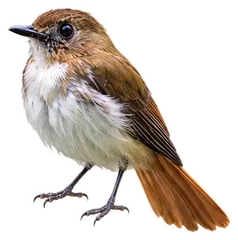 Philippine Jungle FlycatcherCyornis ruficauda
 Sulu Jungle FlycatcherCyornis ocularis
Download illustration
Free to use with credit: “Illustration: Bird Album (birdalbum.com)”. Drawn by AI from a reference photo by Sam Hambly. ↗
Heard it but can't see it? Mingji identifies birds by sound and photo, on your phone.
In other languages
- EnglishLarge Blue Flycatcher
- 简体中文大蓝仙鹟
- 繁體中文大藍仙鶲
- 日本語オオヒメアオヒタキ
- DeutschDickschnabel-Blauschnäpper
- FrançaisGobemouche à bec fort
- EspañolPapamoscas de Arunachal Pradesh
- Portuguêspapa-moscas-azul-do-arunachal-pradexe
- NederlandsLangsnavelniltava
- РусскийБольшеклювая нильтава
- Svenskaarunachalflugsnappare
- DanskStor Blå Niltava
- Polskidżunglówka himalajska