 Bird Album
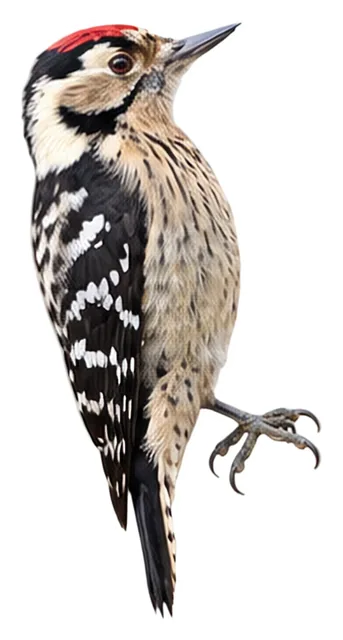
Lesser Spotted Woodpecker
Dryobates minor (Linnaeus, 1758)
14–16 cmLength26 cmWingspan20 gWeight
This small woodpecker usually keeps to the tops of tall trees and has broad barring on the wings.
Busiest months: March–April and September · Most records: Spain, Portugal, Poland
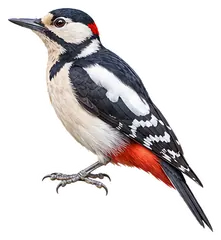
Looks like Great Spotted Woodpecker
How to identify
Field marks
- Broad, conspicuous barring on the wings; narrower barring on the lower back
- Male has a crimson crown and brown forehead
- Black supercilium, with another black stripe from the base of the bill to the neck
- White underparts with streaks on the flanks
Male, female and young
The male has a crimson crown and the female a white crown; juveniles of both sexes have some crimson on the head.
Voice
A repeated “keek”, loud for such a small bird; it also produces trilling drumming in place of song.
Similar species
Where and when it's recorded

Lesser Spotted Woodpecker has been recorded at 746 of the 8,171 birding hotspots we track, in 47 countries and regions.
Records by month Northern Hemisphere
Where it's recorded most
- Validebağ Korusu – Genel AlanTürkiye827 records
- Sureste PNat – Soto de las JuntasSpain491 records
- Zamora – Río DueroSpain473 records
More places
- Txingudi – PlaiaundiSpain466 records
- Herdade da Mitra – LabOrPortugal396 records
- Ponichala ReserveGeorgia356 records
- Espoo – Laajalahti MaariFinland284 records
- RN Paul do Boquilobo – área geralPortugal224 records
- Zaragoza – Parque del AguaSpain217 records
- Muravyevka ParkRussia216 records
Countries and regions with the most records
eBird records via GBIF up to 2024-12-31. A record means someone listed it; more records partly mean more birders, not more birds.
About
The lesser spotted woodpecker (Dryobates minor) is a member of the woodpecker family Picidae. It was formerly assigned to the genus Dendrocopos (sometimes incorrectly spelt as Dendrocopus). Some taxonomic authorities continue to list the species there.
Excerpt from Wikipedia, CC BY-SA 4.0 · authors · Read more on Wikipedia
Questions
How big is the Lesser Spotted Woodpecker?
The Lesser Spotted Woodpecker is about 14–16 cm long, with a wingspan of 26 cm and weighs around 20 g.
Where does the Lesser Spotted Woodpecker live?
Its breeding range: Palearctic: widespread. It is most often recorded in Spain, Portugal and Poland.
When is the best time to see the Lesser Spotted Woodpecker?
At the hotspots we track, it is recorded most in March, April and September (Northern Hemisphere).
Is the Lesser Spotted Woodpecker endangered?
The IUCN Red List classifies the Lesser Spotted Woodpecker as Least Concern.
What does the Lesser Spotted Woodpecker eat?
Main food: Insects & other invertebrates.
What family is the Lesser Spotted Woodpecker in?
It belongs to the family Woodpeckers (Picidae), order Piciformes.
At a glance
- Length
- 14–16 cm
- Wingspan
- 26 cm
- Weight
- 20 g
- Habitat
- Forest
- Diet
- Insects & other invertebrates
- Lifestyle
- Perches in trees
- Migration
- Resident (barely migrates)
- Conservation
- Least Concern
More measurements
- Wing
- 90 mm
- Tail
- 60 mm
- Bill
- 16 mm
- Tarsus
- 14 mm
Averages from the AVONET dataset; length from field guides where available.
Range
Palearctic: widespread
Breeding range, IOC World Bird List 15.2
Subspecies · 1
- Dryobates minor amurensis ne China, Siberia, Korean Pen. and Hokkaido (Japan)
Classification
- Order
- Piciformes
- Family
- Woodpeckers Picidae
- Genus
- Dryobates
Other birds in the genus Dryobates
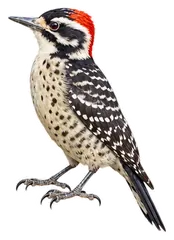 Nuttall's WoodpeckerDryobates nuttallii
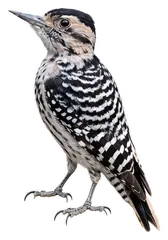 Ladder-backed WoodpeckerDryobates scalaris
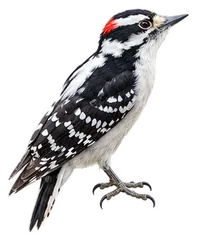 Downy WoodpeckerDryobates pubescens
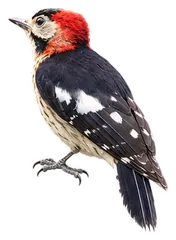 Crimson-naped WoodpeckerDryobates cathpharius
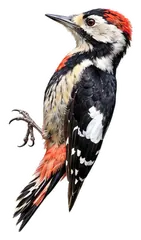 Necklaced WoodpeckerDryobates pernyii
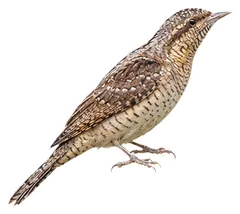 Eurasian WryneckJynx torquilla
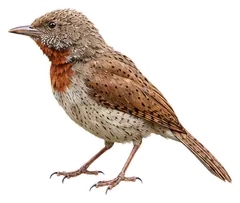 Red-throated WryneckJynx ruficollis
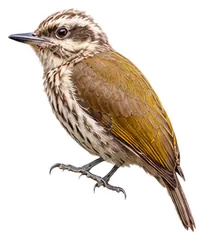 Speckled PiculetPicumnus innominatus
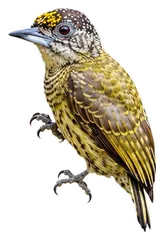 Bar-breasted PiculetPicumnus aurifrons
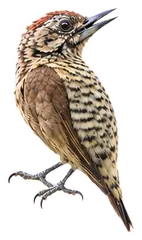 Lafresnaye's PiculetPicumnus lafresnayi
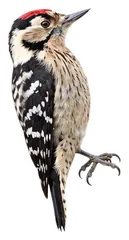
Download illustration
Free to use with credit: “Illustration: Bird Album (birdalbum.com)”. Drawn by AI from a reference photo by Erinka Kříž. ↗
Heard it but can't see it? Mingji identifies birds by sound and photo, on your phone.