 Bird Album
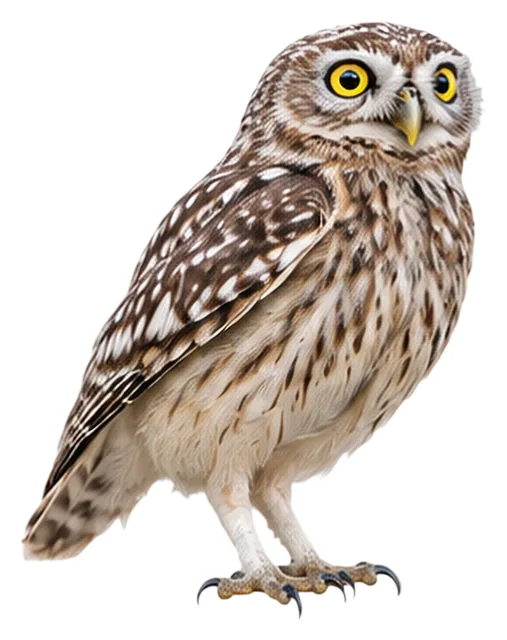
Little Owl
Athene noctua (Scopoli, 1769)
20–28 cmLength56 cmWingspan169 gWeight
This small, flat-headed, yellow-eyed owl has a white supercilium that gives it a permanent frown.
Busiest months: April–May · Most records: Spain, Portugal, United Kingdom
How to identify
Field marks
- Crown flat, facial disc flattened above the eyes, giving a frowning look
- Yellow eyes and a white supercilium give a stern expression
- Gray-brown, with white spots, streaks and barring
- Body round and plump, tail short
Male, female and young
Sexes about the same size; juvenile darker, without the adult's white crown patches.
Voice
A complaining “kiew, kiew”; occasionally also whistles or trills.
Where and when it's recorded
Busiest months: April–May · Most records: Spain, Portugal, United Kingdom

Little Owl has been recorded at 866 of the 8,276 birding hotspots we track, in 59 countries and regions.
Records by month Northern Hemisphere
Where it's recorded most
- Private estate near Green MubazzarahUnited Arab Emirates2,593 records
- Lezíria Grande de Vila Franca de Xira – área geralPortugal1,432 records
- Lagunas de Villafáfila RNat – ÁreaSpain1,159 records
More places
- Leganés – Parque PolvorancaSpain980 records
- Canons FarmUnited Kingdom818 records
- RivaTürkiye792 records
- Ria de Alvor – área geralPortugal768 records
- St Aidan's RSPB ReserveUnited Kingdom657 records
- Laguna de GalisteoSpain638 records
- Wanstead FlatsUnited Kingdom609 records
Countries and regions with the most records
eBird records via GBIF up to 2024-12-31. A record means someone listed it; more records partly mean more birders, not more birds.
About
The little owl (Athene noctua), also known as the owl of Athena or owl of Minerva, is a bird that inhabits much of the temperate and warmer parts of Europe, the Palearctic east to Korea, and North Africa. It was introduced into Britain at the end of the 19th century and into the South Island of New Zealand in the early 20th century.
Excerpt from Wikipedia, CC BY-SA 4.0 · authors · Read more on Wikipedia
Questions
How big is the Little Owl?
The Little Owl is about 20–28 cm long, with a wingspan of 56 cm and weighs around 169 g.
Where does the Little Owl live?
Its breeding range: Palearctic, Africa: widespread Palearctic and northern, northeastern Africa. It is most often recorded in Spain, Portugal and United Kingdom.
When is the best time to see the Little Owl?
At the hotspots we track, it is recorded most in April and May (Northern Hemisphere).
Is the Little Owl endangered?
The IUCN Red List classifies the Little Owl as Least Concern.
What does the Little Owl eat?
Main food: Omnivore.
What family is the Little Owl in?
It belongs to the family Owls (Strigidae), order Strigiformes.
At a glance
- Length
- 20–28 cm
- Wingspan
- 56 cm
- Weight
- 169 g
- Habitat
- Towns & farmland
- Diet
- Omnivore
- Lifestyle
- Perches in trees
- Migration
- Resident (barely migrates)
- Conservation
- Least Concern
More measurements
- Wing
- 157 mm
- Tail
- 74 mm
- Bill
- 19 mm
- Tarsus
- 33 mm
Averages from the AVONET dataset; length from field guides where available.
Range
Palearctic, Africa: widespread Palearctic and northern, northeastern Africa
Breeding range, IOC World Bird List 15.2
Subspecies · 3
- Athene noctua orientalis ne Kazakhstan and nw China
- Athene noctua impasta wc China
- Athene noctua plumipes Mongolia, sc Siberia and ne China
Classification
- Order
- Strigiformes
- Family
- Owls Strigidae
- Genus
- Athene
Other birds in the genus Athene
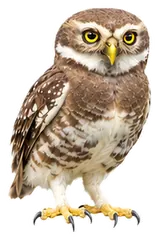 Forest OwletAthene blewitti
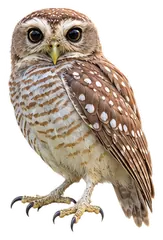 White-browed OwlAthene superciliaris
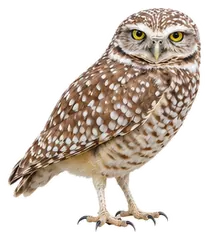 Burrowing OwlAthene cunicularia
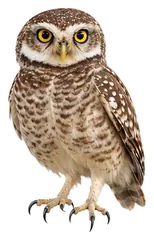 Spotted OwletAthene brama
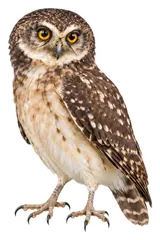 West Solomons OwlAthene jacquinoti
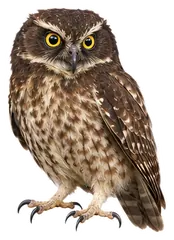 Guadalcanal OwlAthene granti
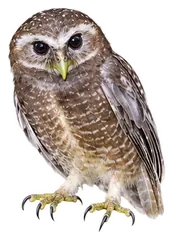 Malaita OwlAthene malaitae
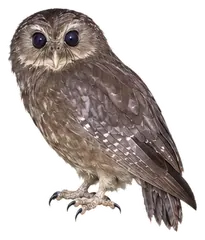 Makira OwlAthene roseoaxillaris
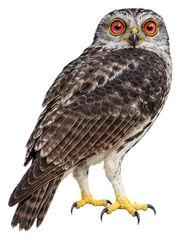 Papuan Hawk-OwlUroglaux dimorpha
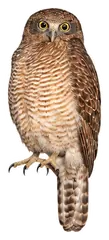 Rufous OwlNinox rufa
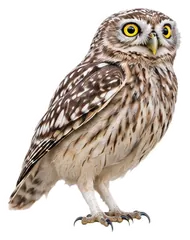
Download illustration
Free to use with credit: “Illustration: Bird Album (birdalbum.com)”. Drawn by AI from a reference photo by Максат79. ↗

Heard it but can't see it? Mingji identifies birds by sound and photo, on your phone.