 Bird Album
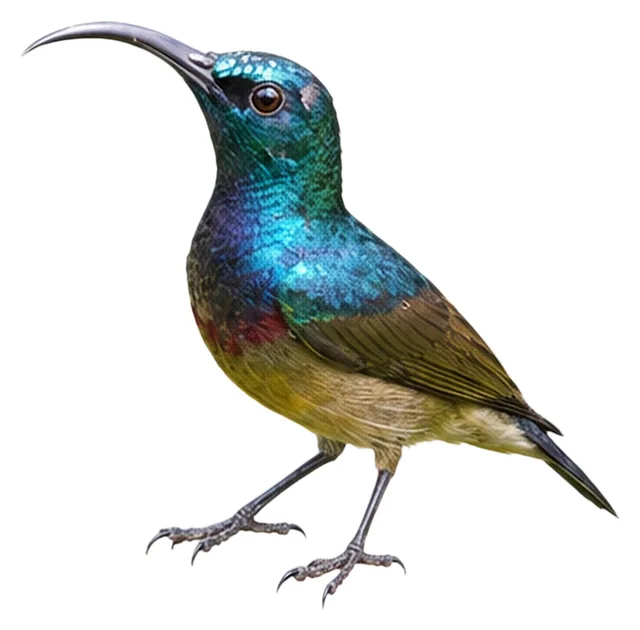
Loten's Sunbird
Cinnyris lotenius (Linnaeus, 1766)
12–13 cmLength8.8 gWeight
Loten's sunbird (Cinnyris lotenius), also known as the long-billed sunbird or maroon-breasted sunbird, is a sunbird endemic to peninsular India and Sri Lanka.
Busiest months: February · Most records: India, Sri Lanka
Where and when it's recorded

Loten's Sunbird has been recorded at 151 of the 8,171 birding hotspots we track, in 2 countries and regions.
Records by month Northern Hemisphere
Where it's recorded most
- GKVK CampusIndia1,578 records
- Rishi Valley – School CampusIndia1,328 records
- Ferns ResidencyIndia821 records
More places
- Kerala Agricultural UniversityIndia723 records
- Valley SchoolIndia673 records
- Salim Ali Centre for Ornithology and Natural HistoryIndia617 records
- Doddanekundi KereIndia596 records
- IISc BangaloreIndia559 records
- Thattekkad Bird SanctuaryIndia558 records
- Eshwar Nagar, ManipalIndia519 records
Countries and regions with the most records
eBird records via GBIF up to 2024-12-31. A record means someone listed it; more records partly mean more birders, not more birds.
About
Loten's sunbird (Cinnyris lotenius), also known as the long-billed sunbird or maroon-breasted sunbird, is a sunbird endemic to peninsular India and Sri Lanka. Named after Joan Gideon Loten, who was the Dutch governor of colonial Ceylon, it is very similar to the purple sunbird that is found in the same areas and also tends to hover at flowers for nectar, but can be distinguished by the longer bill, the maroon band on the breast and brownish wings. Like other sunbirds, it is also insectivorous and builds characteristic hanging nests.
Excerpt from Wikipedia, CC BY-SA 4.0 · authors · Read more on Wikipedia
Questions
How big is the Loten's Sunbird?
The Loten's Sunbird is about 12–13 cm long and weighs around 8.8 g.
Where does the Loten's Sunbird live?
Its breeding range: Oriental: India and Sri Lanka. It is most often recorded in India and Sri Lanka.
When is the best time to see the Loten's Sunbird?
At the hotspots we track, it is recorded most in February (Northern Hemisphere).
Is the Loten's Sunbird endangered?
The IUCN Red List classifies the Loten's Sunbird as Least Concern.
What does the Loten's Sunbird eat?
Main food: Nectar.
What family is the Loten's Sunbird in?
It belongs to the family Sunbirds (Nectariniidae), order Passerines (Passeriformes).
At a glance
- Length
- 12–13 cm
- Weight
- 8.8 g
- Habitat
- Forest
- Diet
- Nectar
- Lifestyle
- Perches in trees
- Migration
- Resident (barely migrates)
- Conservation
- Least Concern
More measurements
- Wing
- 57 mm
- Tail
- 38 mm
- Bill
- 30 mm
- Tarsus
- 15 mm
Averages from the AVONET dataset; length from field guides where available.
Range
Oriental: India and Sri Lanka
Breeding range, IOC World Bird List 15.2
Classification
- Order
- Passerines Passeriformes
- Family
- Sunbirds Nectariniidae
- Genus
- Cinnyris
Other birds in the genus Cinnyris
 Olive-bellied SunbirdCinnyris chloropygius
 Tiny SunbirdCinnyris minullus
 Eastern Miombo SunbirdCinnyris manoensis
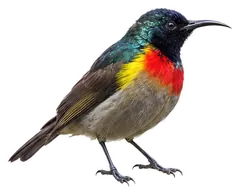 Western Miombo SunbirdCinnyris gertrudis
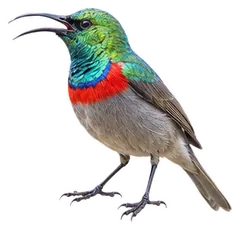 Southern Double-collared SunbirdCinnyris chalybeus
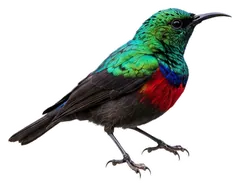 Neergaard's SunbirdCinnyris neergaardi
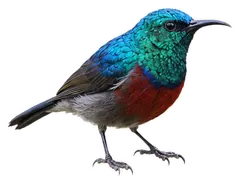 Rwenzori Double-collared SunbirdCinnyris stuhlmanni
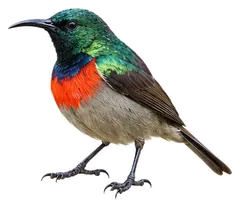 Whyte's Double-collared SunbirdCinnyris whytei
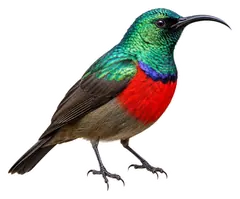 Prigogine's Double-collared SunbirdCinnyris prigoginei
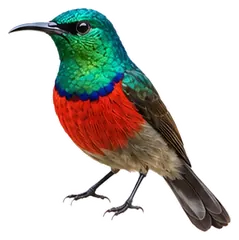 Ludwig's Double-collared SunbirdCinnyris ludovicensis
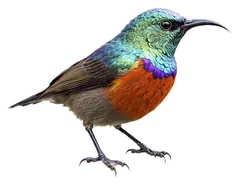 Northern Double-collared SunbirdCinnyris reichenowi
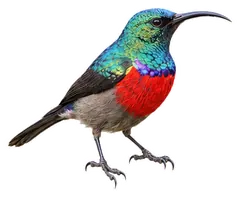 Greater Double-collared SunbirdCinnyris afer
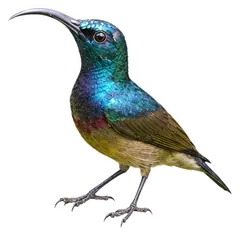
Download illustration
Free to use with credit: “Illustration: Bird Album (birdalbum.com)”. Drawn by AI from a reference photo by Abhishek Nair. ↗
Heard it but can't see it? Mingji identifies birds by sound and photo, on your phone.
In other languages
- EnglishLoten's Sunbird
- 简体中文罗氏花蜜鸟
- 繁體中文長嘴花蜜鳥
- 日本語クリムネタイヨウチョウ
- DeutschLotennektarvogel
- FrançaisSouimanga de Loten
- EspañolSuimanga de Loten
- Portuguêsnectarínia-de-bico-comprido
- ItalianoNettarinia beccolungo
- NederlandsLotens Honingzuiger
- РусскийДлинноклювая нектарница
- Svenskalångnäbbad solfågel
- DanskLangnæbbet Purpursolfugl
- Polskinektarnik długodzioby