 Bird Album
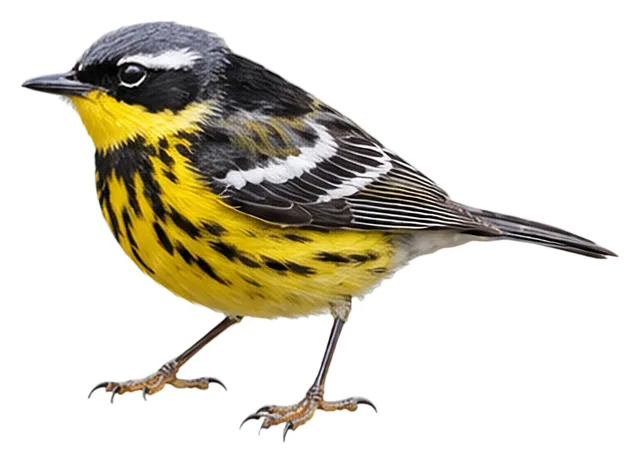
Magnolia Warbler
Setophaga magnolia (Wilson, A, 1811)
8.1 gWeight
The magnolia warbler (Setophaga magnolia) is a member of the wood warbler family Parulidae.
Busiest months: May · Most records: United States, Canada, Belize
Where and when it's recorded
Busiest months: May · Most records: United States, Canada, Belize

Magnolia Warbler has been recorded at 1,019 of the 8,276 birding hotspots we track, in 34 countries and regions.
Records by month Northern Hemisphere
Where it's recorded most
- Magee Marsh – BoardwalkUnited States25,357 records
- Montrose Point Bird Sanctuary, Lincoln Park, ChicagoUnited States13,559 records
- Point Pelee National ParkCanada12,893 records
More places
- Central ParkUnited States11,157 records
- Prospect ParkUnited States9,394 records
- Mount Auburn CemeteryUnited States6,329 records
- Central Park – The RambleUnited States5,827 records
- Tawas Point SPUnited States5,770 records
- RNF du Cap-TourmenteCanada5,072 records
- Sabine WoodsUnited States4,709 records
Countries and regions with the most records
eBird records via GBIF up to 2024-12-31. A record means someone listed it; more records partly mean more birders, not more birds.
About
The magnolia warbler (Setophaga magnolia) is a member of the wood warbler family Parulidae.
Excerpt from Wikipedia, CC BY-SA 4.0 · authors · Read more on Wikipedia
Questions
How big is the Magnolia Warbler?
The Magnolia Warbler weighs around 8.1 g.
Where does the Magnolia Warbler live?
Its breeding range: North America: central Canada to southeastern Canada and northeastern and north-central USA. It is most often recorded in United States, Canada and Belize.
When is the best time to see the Magnolia Warbler?
At the hotspots we track, it is recorded most in May (Northern Hemisphere).
Is the Magnolia Warbler endangered?
The IUCN Red List classifies the Magnolia Warbler as Least Concern.
What does the Magnolia Warbler eat?
Main food: Insects & other invertebrates.
What family is the Magnolia Warbler in?
It belongs to the family New World Warblers (Parulidae), order Passerines (Passeriformes).
At a glance
- Weight
- 8.1 g
- Habitat
- Forest
- Diet
- Insects & other invertebrates
- Lifestyle
- Perches in trees
- Migration
- Migratory
- Conservation
- Least Concern
More measurements
- Wing
- 58 mm
- Tail
- 46 mm
- Bill
- 12 mm
- Tarsus
- 18 mm
Averages from the AVONET dataset; length from field guides where available.
Range
North America: central Canada to southeastern Canada and northeastern and north-central USA
Breeding range, IOC World Bird List 15.2
Classification
- Order
- Passerines Passeriformes
- Family
- New World Warblers Parulidae
- Genus
- Setophaga
Other birds in the genus Setophaga
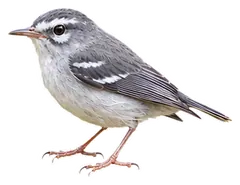 Plumbeous WarblerSetophaga plumbea
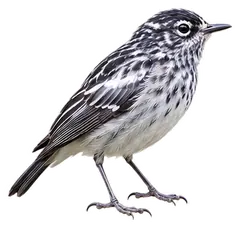 Elfin Woods WarblerSetophaga angelae
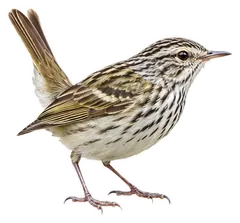 Arrowhead WarblerSetophaga pharetra
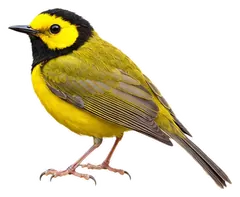 Hooded WarblerSetophaga citrina
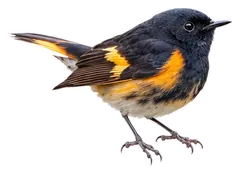 American RedstartSetophaga ruticilla
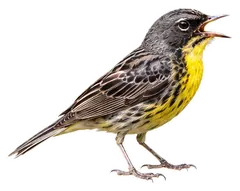 Kirtland's WarblerSetophaga kirtlandii
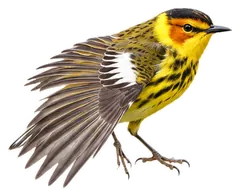 Cape May WarblerSetophaga tigrina
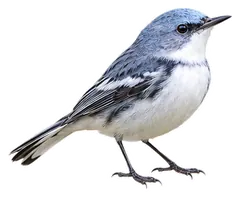 Cerulean WarblerSetophaga cerulea
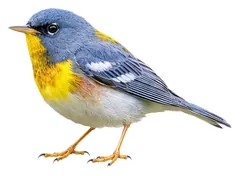 Northern ParulaSetophaga americana
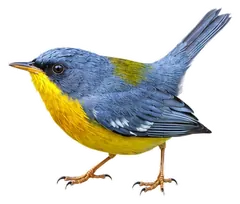 Tropical ParulaSetophaga pitiayumi
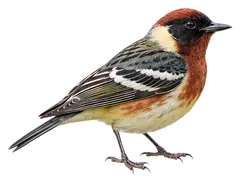 Bay-breasted WarblerSetophaga castanea
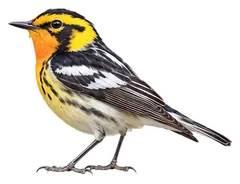 Blackburnian WarblerSetophaga fusca
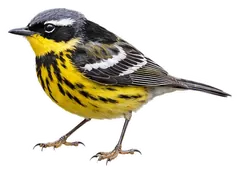
Download illustration
Free to use with credit: “Illustration: Bird Album (birdalbum.com)”. Drawn by AI from a reference photo by Austin H.. ↗
Heard it but can't see it? Mingji identifies birds by sound and photo, on your phone.
In other languages
- EnglishMagnolia Warbler
- 简体中文纹胸林莺
- 繁體中文黑紋胸林鶯
- 日本語シロオビアメリカムシクイ
- DeutschMagnolienwaldsänger
- FrançaisParuline à tête cendrée
- EspañolReinita de Magnolia
- Portuguêsmariquita-de-faces-pretas
- ItalianoDendroica delle magnolie
- NederlandsMagnoliazanger
- РусскийМагнолиевая древесница
- Svenskamagnoliaskogssångare
- DanskMagnoliesanger
- Polskilasówka magnoliowa