 Bird Album
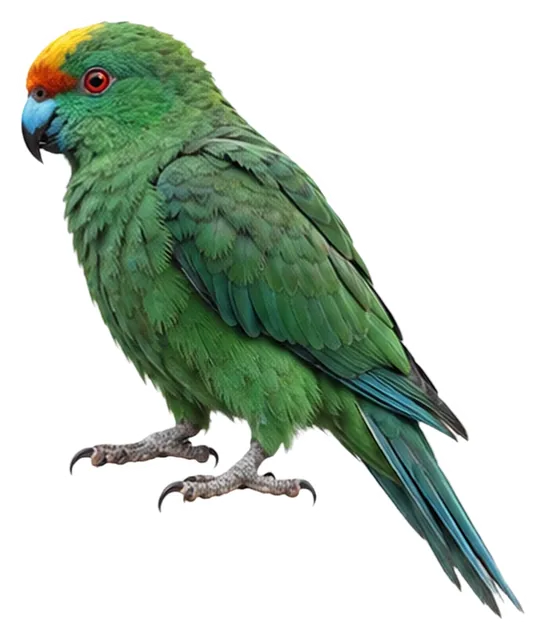
Malherbe's Parakeet
Cyanoramphus malherbi Souancé, 1857
20 cmLength47 gWeight
The orange-fronted kakariki (Cyanoramphus malherbi), also known as orange-fronted parakeet or Malherbe's parakeet, is a small parrot endemic to New Zealand.
Busiest months: November · Most records: New Zealand
Where and when it's recorded

Malherbe's Parakeet has been recorded at 3 of the 8,171 birding hotspots we track, in 1 country or region.
Records by month Southern Hemisphere
Where it's recorded most
- Blumine Island | OruawairuaNew Zealand479 records
- Queen Charlotte SoundNew Zealand15 records
- Fiordland NP – Lake Gunn Nature WalkNew Zealand1 record
Countries and regions with the most records
eBird records via GBIF up to 2024-12-31. A record means someone listed it; more records partly mean more birders, not more birds.
About
The orange-fronted kakariki (Cyanoramphus malherbi), also known as orange-fronted parakeet or Malherbe's parakeet, is a small parrot endemic to New Zealand. It is known in te reo māori as kākāriki karaka or orange-fronted kākāriki, with kākāriki translating to 'small parrot' and the colour green. The species has a similar name to the "orange-fronted parakeet" with Eupsittula canicularis, a Central American species.
Excerpt from Wikipedia, CC BY-SA 4.0 · authors · Read more on Wikipedia
Questions
How big is the Malherbe's Parakeet?
The Malherbe's Parakeet is about 20 cm long and weighs around 47 g.
Where does the Malherbe's Parakeet live?
Its breeding range: Australasia: South Island and satellites (New Zealand). It is most often recorded in New Zealand.
When is the best time to see the Malherbe's Parakeet?
At the hotspots we track, it is recorded most in November (Southern Hemisphere).
Is the Malherbe's Parakeet endangered?
The IUCN Red List classifies the Malherbe's Parakeet as Critically Endangered.
What does the Malherbe's Parakeet eat?
Main food: Omnivore.
What family is the Malherbe's Parakeet in?
It belongs to the family Old World Parrots (Psittaculidae), order Parrot (Psittaciformes).
At a glance
- Length
- 20 cm
- Weight
- 47 g
- Habitat
- Forest
- Diet
- Omnivore
- Lifestyle
- Perches in trees
- Migration
- Resident (barely migrates)
- Conservation
- Critically Endangered
More measurements
- Wing
- 99 mm
- Tail
- 110 mm
- Bill
- 14 mm
- Tarsus
- 18 mm
Averages from the AVONET dataset; length from field guides where available.
Range
Australasia: South Island and satellites (New Zealand)
Breeding range, IOC World Bird List 15.2
Classification
- Order
- Parrot Psittaciformes
- Family
- Old World Parrots Psittaculidae
- Genus
- Cyanoramphus
Other birds in the genus Cyanoramphus
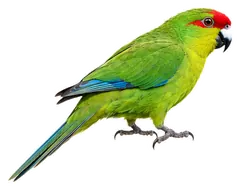 New Caledonian ParakeetCyanoramphus saisseti
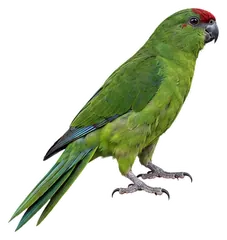 Norfolk ParakeetCyanoramphus cookii
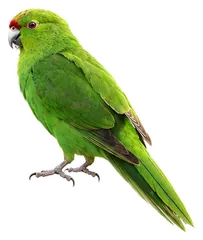 Chatham Islands ParakeetCyanoramphus forbesi
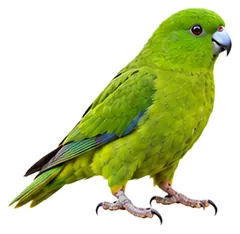 Antipodes ParakeetCyanoramphus unicolor
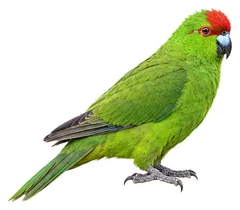 Reischek's ParakeetCyanoramphus hochstetteri
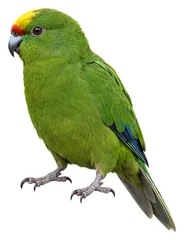 Yellow-crowned ParakeetCyanoramphus auriceps
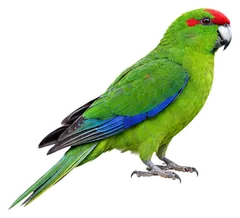 Red-crowned ParakeetCyanoramphus novaezelandiae
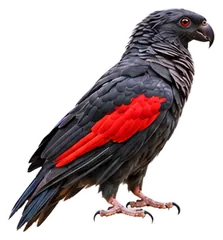 Pesquet's ParrotPsittrichas fulgidus
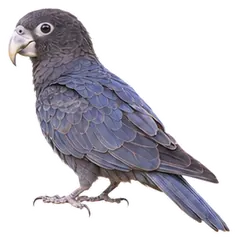 Greater Vasa ParrotCoracopsis vasa
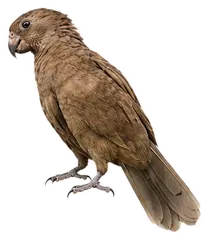 Seychelles Black ParrotCoracopsis barklyi
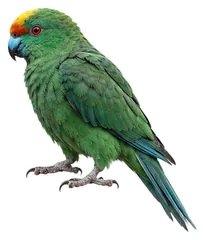
Download illustration
Free to use with credit: “Illustration: Bird Album (birdalbum.com)”. Drawn by AI from a reference photo by ppgesus. ↗
Heard it but can't see it? Mingji identifies birds by sound and photo, on your phone.
In other languages
- EnglishMalherbe's Parakeet
- 简体中文橙额鹦鹉
- 繁體中文馬氏橙額鸚鵡
- 日本語マレルブアオハシインコ
- DeutschMalherbesittich
- FrançaisPerruche de Malherbe
- EspañolPerico maorí montano
- Portuguêsperiquito-de-fronte-laranja
- ItalianoParrocchetto di Malherbe
- NederlandsOranjevoorhoofdkakariki
- РусскийОранжеволобый какарики
- Svenskaorangepannad parakit
- DanskOrangepandet Parakit
- Polskimodrolotka mała