 Bird Album
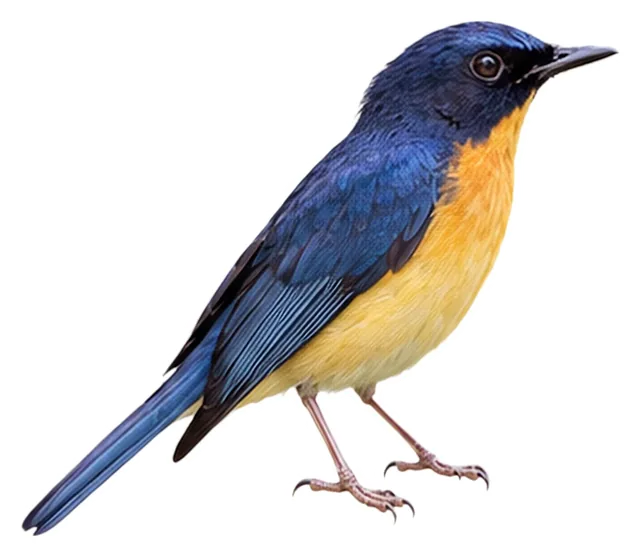
Mangrove Blue Flycatcher
Cyornis rufigastra (Raffles, 1822)
18 gWeight
The mangrove blue flycatcher (Cyornis rufigastra) is a species of bird in the family Muscicapidae.
Busiest months: March · Most records: Malaysia, Philippines, Singapore
Where and when it's recorded

Mangrove Blue Flycatcher has been recorded at 58 of the 8,171 birding hotspots we track, in 5 countries and regions.
Records by month Northern Hemisphere
Where it's recorded most
- Air Hitam Dalam Educational ForestMalaysia510 records
- Taman Alam Kuala SelangorMalaysia279 records
- La Mesa Eco Park, Quezon CityPhilippines142 records
More places
- Tabunan, Cebu CityPhilippines138 records
- Bako NPMalaysia115 records
- Victoria Valley - Valley Golf, AntipoloPhilippines77 records
- Victoria Valley Subdivision, AntipoloPhilippines76 records
- Pasir Ris ParkSingapore57 records
- Springleaf Nature ParkSingapore45 records
- Palo Alto, BarasPhilippines38 records
Countries and regions with the most records
eBird records via GBIF up to 2024-12-31. A record means someone listed it; more records partly mean more birders, not more birds.
About
The mangrove blue flycatcher (Cyornis rufigastra) is a species of bird in the family Muscicapidae.
Excerpt from Wikipedia, CC BY-SA 4.0 · authors · Read more on Wikipedia
Questions
How big is the Mangrove Blue Flycatcher?
The Mangrove Blue Flycatcher weighs around 18 g.
Where does the Mangrove Blue Flycatcher live?
Its breeding range: Oriental: Malay Peninsula to Philippines. It is most often recorded in Malaysia, Philippines and Singapore.
When is the best time to see the Mangrove Blue Flycatcher?
At the hotspots we track, it is recorded most in March (Northern Hemisphere).
Is the Mangrove Blue Flycatcher endangered?
The IUCN Red List classifies the Mangrove Blue Flycatcher as Least Concern.
What does the Mangrove Blue Flycatcher eat?
Main food: Insects & other invertebrates.
What family is the Mangrove Blue Flycatcher in?
It belongs to the family Chats, Old World Flycatchers (Muscicapidae), order Passerines (Passeriformes).
At a glance
- Weight
- 18 g
- Habitat
- Woodland
- Diet
- Insects & other invertebrates
- Lifestyle
- Perches in trees
- Migration
- Resident (barely migrates)
- Conservation
- Least Concern
More measurements
- Wing
- 70 mm
- Tail
- 56 mm
- Bill
- 14 mm
- Tarsus
- 17 mm
Averages from the AVONET dataset; length from field guides where available.
Range
Oriental: Malay Peninsula to Philippines
Breeding range, IOC World Bird List 15.2
Classification
- Order
- Passerines Passeriformes
- Family
- Chats, Old World Flycatchers Muscicapidae
- Genus
- Cyornis
Other birds in the genus Cyornis
 Pale Blue FlycatcherCyornis unicolor
 Chinese Blue FlycatcherCyornis glaucicomans
 Blue-throated Blue FlycatcherCyornis rubeculoides
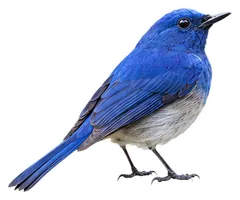 Hainan Blue FlycatcherCyornis hainanus
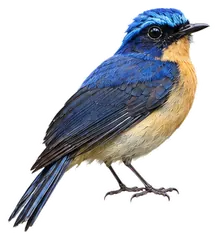 Bornean Blue FlycatcherCyornis superbus
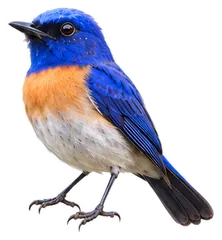 Malaysian Blue FlycatcherCyornis turcosus
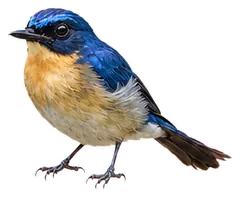 Palawan Blue FlycatcherCyornis lemprieri
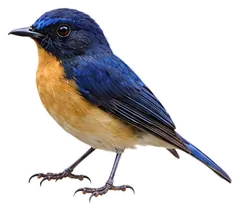 Sunda Blue FlycatcherCyornis caerulatus
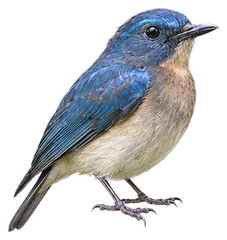 Blue-breasted Blue FlycatcherCyornis herioti
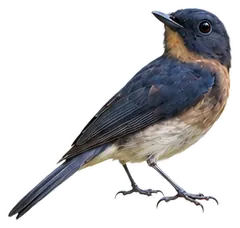 Rufous-breasted Blue FlycatcherCyornis camarinensis
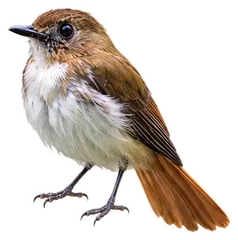 Philippine Jungle FlycatcherCyornis ruficauda
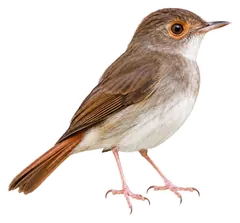 Sulu Jungle FlycatcherCyornis ocularis
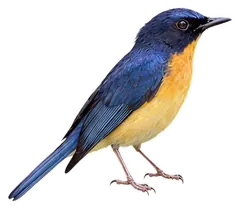
Download illustration
Free to use with credit: “Illustration: Bird Album (birdalbum.com)”. Drawn by AI from reference photos. ↗
Heard it but can't see it? Mingji identifies birds by sound and photo, on your phone.
In other languages
- EnglishMangrove Blue Flycatcher
- 简体中文红树仙鹟
- 繁體中文紅樹藍仙鶲
- 日本語マングローブヒメアオヒタキ
- DeutschMangroveblauschnäpper
- FrançaisGobemouche des mangroves
- EspañolPapamoscas de manglar
- Portuguêspapa-moscas-azul-dos-mangais
- ItalianoPigliamosche blu delle mangrovie
- NederlandsMangroveniltava
- РусскийМангровая нильтава
- Svenskamangroveflugsnappare
- DanskMangrove Niltava
- Polskidżunglówka ognistobrzucha