 Bird Album
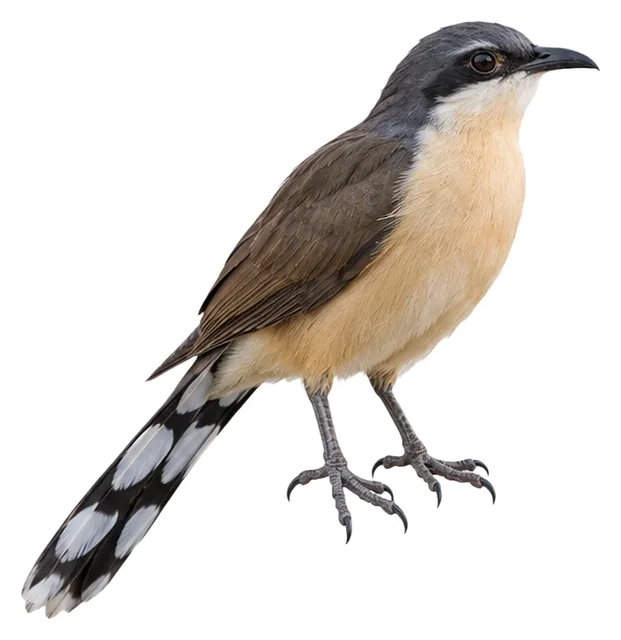
Mangrove Cuckoo
Coccyzus minor (Gmelin, JF, 1788)
64 gWeight
The mangrove cuckoo (Coccyzus minor) is a species of cuckoo that is native to the Neotropics.
Busiest months: January–March · Most records: Puerto Rico, Costa Rica, Mexico
Where and when it's recorded

Mangrove Cuckoo has been recorded at 435 of the 8,171 birding hotspots we track, in 39 countries and regions.
Records by month Northern Hemisphere
Where it's recorded most
- Bosque Estatal de CambalachePuerto Rico1,116 records
- PN Julio Enrique MonagaPuerto Rico995 records
- Hacienda La EsperanzaPuerto Rico714 records
More places
- J. N. Ding Darling NWR – Wildlife DriveUnited States680 records
- Font Hill Nature PreserveJamaica662 records
- 26 HDLPuerto Rico534 records
- MEX - Veracruz- MInatitlan - Pantano de Santa AlejandrinMexico517 records
- Bosque Estatal de PiñonesPuerto Rico498 records
- Reserva Natural de HumacaoPuerto Rico432 records
- Reserva Natural Punta GuaniquillaPuerto Rico390 records
Countries and regions with the most records
eBird records via GBIF up to 2024-12-31. A record means someone listed it; more records partly mean more birders, not more birds.
About
The mangrove cuckoo (Coccyzus minor) is a species of cuckoo that is native to the Neotropics.
Excerpt from Wikipedia, CC BY-SA 4.0 · authors · Read more on Wikipedia
Questions
How big is the Mangrove Cuckoo?
The Mangrove Cuckoo weighs around 64 g.
Where does the Mangrove Cuckoo live?
Its breeding range: North America, Middle America, South America: southern Florida, Caribbean, Middle America to northeastern Brazil. It is most often recorded in Puerto Rico, Costa Rica and Mexico.
When is the best time to see the Mangrove Cuckoo?
At the hotspots we track, it is recorded most in January, February and March (Northern Hemisphere).
Is the Mangrove Cuckoo endangered?
The IUCN Red List classifies the Mangrove Cuckoo as Least Concern.
What does the Mangrove Cuckoo eat?
Main food: Insects & other invertebrates.
What family is the Mangrove Cuckoo in?
It belongs to the family Cuckoos (Cuculidae), order Cuculiformes.
At a glance
- Weight
- 64 g
- Habitat
- Woodland
- Diet
- Insects & other invertebrates
- Lifestyle
- Perches in trees
- Migration
- Partial migrant
- Conservation
- Least Concern
More measurements
- Wing
- 135 mm
- Tail
- 155 mm
- Bill
- 31 mm
- Tarsus
- 28 mm
Averages from the AVONET dataset; length from field guides where available.
Range
North America, Middle America, South America: southern Florida, Caribbean, Middle America to northeastern Brazil
Breeding range, IOC World Bird List 15.2
Classification
- Order
- Cuculiformes
- Family
- Cuckoos Cuculidae
- Genus
- Coccyzus
Other birds in the genus Coccyzus
 Dark-billed CuckooCoccyzus melacoryphus
 Yellow-billed CuckooCoccyzus americanus
 Pearly-breasted CuckooCoccyzus euleri
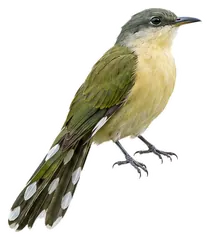 Cocos CuckooCoccyzus ferrugineus
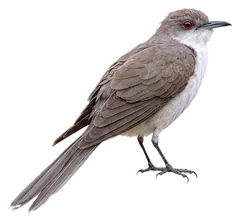 Black-billed CuckooCoccyzus erythropthalmus
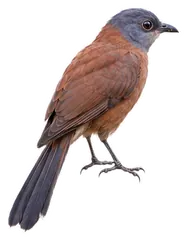 Grey-capped CuckooCoccyzus lansbergi
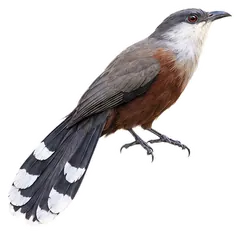 Chestnut-bellied CuckooCoccyzus pluvialis
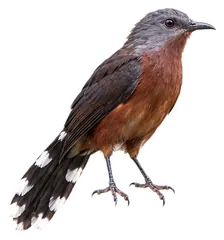 Bay-breasted CuckooCoccyzus rufigularis
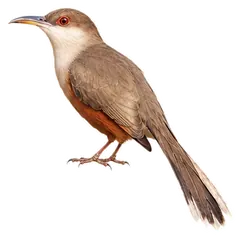 Jamaican Lizard CuckooCoccyzus vetula
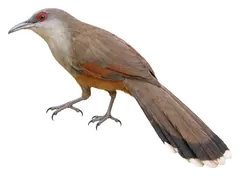 Great Lizard CuckooCoccyzus merlini
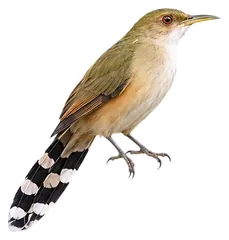 Puerto Rican Lizard CuckooCoccyzus vieilloti
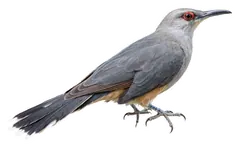 Hispaniolan Lizard CuckooCoccyzus longirostris
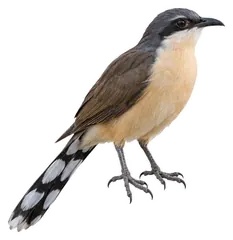
Download illustration
Free to use with credit: “Illustration: Bird Album (birdalbum.com)”. Drawn by AI from a reference photo by elliottsteele. ↗
Heard it but can't see it? Mingji identifies birds by sound and photo, on your phone.