 Bird Album
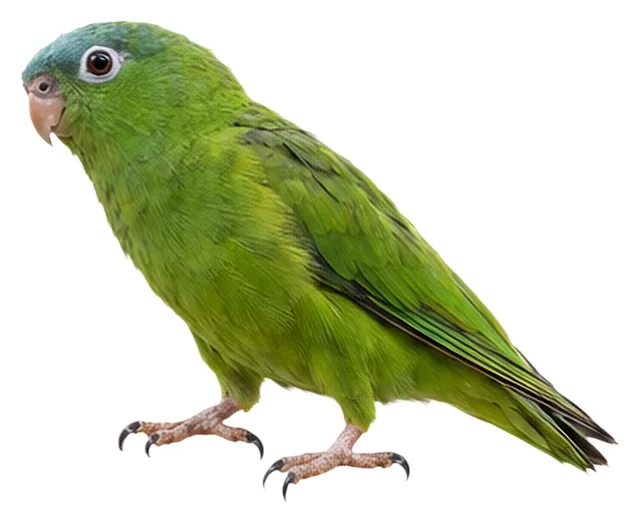
Manu Parrotlet
Nannopsittaca dachilleae O'Neill, Munn & Franke, 1991
42 gWeight
The Manu parrotlet (Nannopsittaca dachilleae) or Amazonian parrotlet is a species of parrotlet native to the western Amazon basin, from southern Peru to northwest Bolivia.
Busiest months: July and September · Most records: Peru, Brazil
Where and when it's recorded

Manu Parrotlet has been recorded at 21 of the 8,171 birding hotspots we track, in 2 countries and regions.
Records by month Southern Hemisphere
Where it's recorded most
- Blanquillo Macaw Clay LickPeru79 records
- Tambopata Research CenterPeru76 records
- Los Amigos Biological StationPeru70 records
More places
- Manu Birding LodgePeru64 records
- Explorer's InnPeru40 records
- Rio Branco – Ramal do NocaBrazil38 records
- Cocha BlancoPeru22 records
- Amazonía LodgePeru20 records
- Manú Wildlife Center – GroundsPeru18 records
- Estación Biológica de Cocha CashuPeru15 records
Countries and regions with the most records
eBird records via GBIF up to 2024-12-31. A record means someone listed it; more records partly mean more birders, not more birds.
About
The Manu parrotlet (Nannopsittaca dachilleae) or Amazonian parrotlet is a species of parrotlet native to the western Amazon basin, from southern Peru to northwest Bolivia. It is found in lowland forests near bamboo and rivers.
Excerpt from Wikipedia, CC BY-SA 4.0 · authors · Read more on Wikipedia
Questions
How big is the Manu Parrotlet?
The Manu Parrotlet weighs around 42 g.
Where does the Manu Parrotlet live?
Its breeding range: South America: southwestern Amazonia. It is most often recorded in Peru and Brazil.
When is the best time to see the Manu Parrotlet?
At the hotspots we track, it is recorded most in July and September (Southern Hemisphere).
Is the Manu Parrotlet endangered?
The IUCN Red List classifies the Manu Parrotlet as Least Concern.
What does the Manu Parrotlet eat?
Main food: Omnivore.
What family is the Manu Parrotlet in?
It belongs to the family African & New World Parrots (Psittacidae), order Parrot (Psittaciformes).
At a glance
- Weight
- 42 g
- Habitat
- Forest
- Diet
- Omnivore
- Lifestyle
- Perches in trees
- Migration
- Resident (barely migrates)
- Conservation
- Least Concern
More measurements
- Wing
- 82 mm
- Tail
- 40 mm
- Bill
- 13 mm
- Tarsus
- 11 mm
Averages from the AVONET dataset; length from field guides where available.
Range
South America: southwestern Amazonia
Breeding range, IOC World Bird List 15.2
Classification
- Order
- Parrot Psittaciformes
- Family
- African & New World Parrots Psittacidae
- Genus
- Nannopsittaca
Other birds in the genus Nannopsittaca
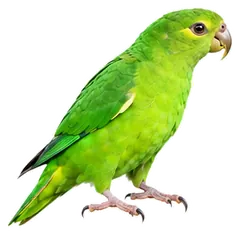 Tepui ParrotletNannopsittaca panychlora
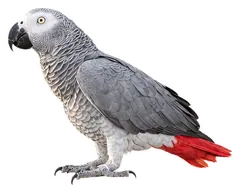 Grey ParrotPsittacus erithacus
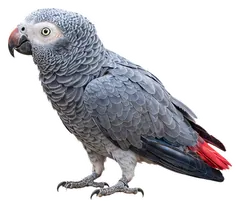 Timneh ParrotPsittacus timneh
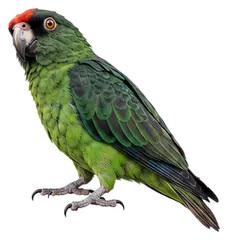 Red-fronted ParrotPoicephalus gulielmi
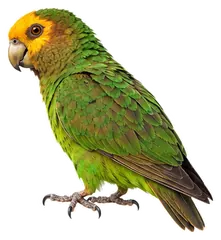 Yellow-fronted ParrotPoicephalus flavifrons
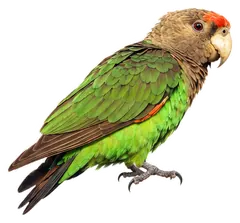 Brown-necked ParrotPoicephalus fuscicollis
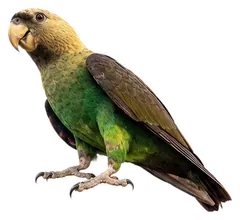 Cape ParrotPoicephalus robustus
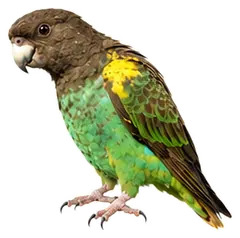 Meyer's ParrotPoicephalus meyeri
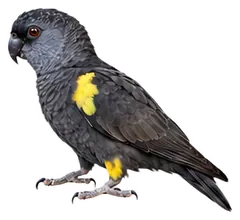 Rüppell's ParrotPoicephalus rueppellii
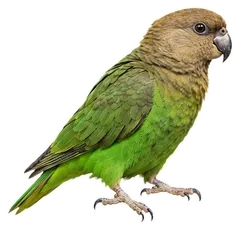 Brown-headed ParrotPoicephalus cryptoxanthus
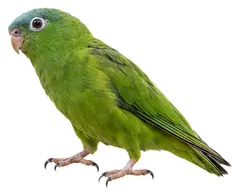
Download illustration
Free to use with credit: “Illustration: Bird Album (birdalbum.com)”. Drawn by AI from a reference photo by Gustavo Dallaqua. ↗
Heard it but can't see it? Mingji identifies birds by sound and photo, on your phone.
In other languages
- EnglishManu Parrotlet
- 简体中文亚马孙鹦哥
- 繁體中文亞馬遜鸚哥
- 日本語アマゾンスズメインコ
- DeutschAmazonassittich
- FrançaisToui de D’Achille
- EspañolCotorrita amazónica
- Portuguêsperiquito-da-amazónia
- ItalianoPappagallino amazzonico
- NederlandsAmazoneparkiet
- РусскийПеруанский попугай-крошка
- Svenskamanúdvärgparakit
- DanskAmazonparakit
- Polskistokóweczka szmaragdowa