 Bird Album
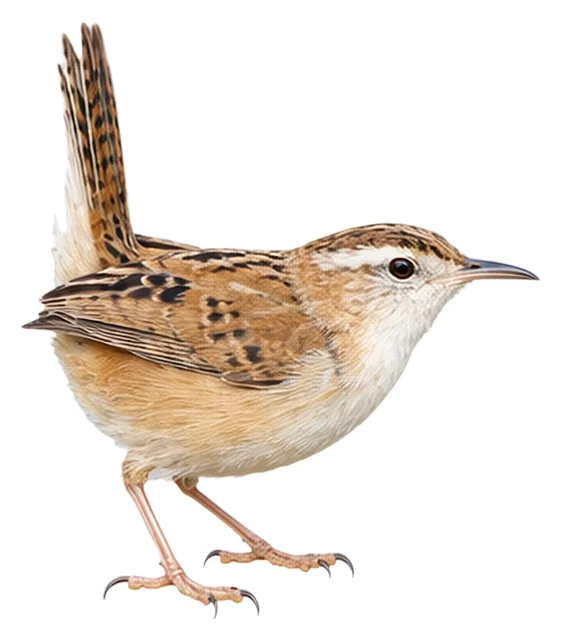
Marsh Wren
Cistothorus palustris (Wilson, A, 1810)
11 gWeight
The eastern marsh wren or marsh wren (Cistothorus palustris) is a small North American songbird of the wren family.
Busiest months: May · Most records: United States, Canada, Mexico
Where and when it's recorded

Marsh Wren has been recorded at 704 of the 8,171 birding hotspots we track, in 4 countries and regions.
Records by month Northern Hemisphere
Where it's recorded most
- Union Bay Natural Area/Montlake FillUnited States15,020 records
- Sweetwater WetlandsUnited States14,678 records
- Billy Frank Jr. Nisqually NWRUnited States13,785 records
More places
- Reifel Bird SanctuaryCanada13,096 records
- Great Meadows NWR – Concord UnitUnited States11,547 records
- Parker River NWRUnited States10,422 records
- Arcata Marsh and Wildlife SanctuaryUnited States10,258 records
- Bombay Hook National Wildlife RefugeUnited States9,737 records
- John Heinz NWR – impoundmentUnited States8,604 records
- IRWD San Joaquin Marsh & Wildlife Sanctuary, IrvineUnited States8,502 records
Countries and regions with the most records
eBird records via GBIF up to 2024-12-31. A record means someone listed it; more records partly mean more birders, not more birds.
About
The eastern marsh wren or marsh wren (Cistothorus palustris) is a small North American songbird of the wren family. It was formerly called the long-billed marsh wren to distinguish it from the sedge wren, then known as the short-billed marsh wren.
Excerpt from Wikipedia, CC BY-SA 4.0 · authors · Read more on Wikipedia
Questions
How big is the Marsh Wren?
The Marsh Wren weighs around 11 g.
Where does the Marsh Wren live?
Its breeding range: North America, Middle America: widespread, also Mexico. It is most often recorded in United States, Canada and Mexico.
When is the best time to see the Marsh Wren?
At the hotspots we track, it is recorded most in May (Northern Hemisphere).
Is the Marsh Wren endangered?
The IUCN Red List classifies the Marsh Wren as Least Concern.
What does the Marsh Wren eat?
Main food: Insects & other invertebrates.
What family is the Marsh Wren in?
It belongs to the family Wrens (Troglodytidae), order Passerines (Passeriformes).
At a glance
- Weight
- 11 g
- Habitat
- Wetland
- Diet
- Insects & other invertebrates
- Lifestyle
- Perches in trees
- Migration
- Partial migrant
- Conservation
- Least Concern
More measurements
- Wing
- 48 mm
- Tail
- 40 mm
- Bill
- 16 mm
- Tarsus
- 19 mm
Averages from the AVONET dataset; length from field guides where available.
Range
North America, Middle America: widespread, also Mexico
Breeding range, IOC World Bird List 15.2
Classification
- Order
- Passerines Passeriformes
- Family
- Wrens Troglodytidae
- Genus
- Cistothorus
Other birds in the genus Cistothorus
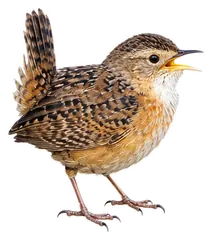 Sedge WrenCistothorus stellaris
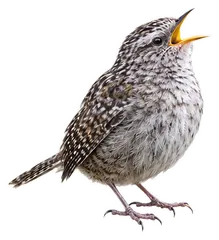 Merida WrenCistothorus meridae
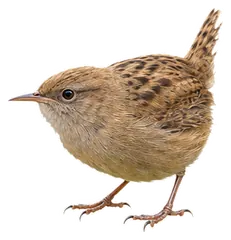 Apolinar's WrenCistothorus apolinari
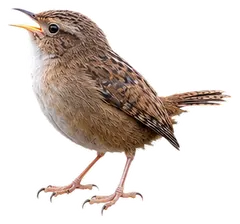 Grass WrenCistothorus platensis
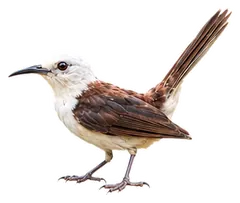 White-headed WrenCampylorhynchus albobrunneus
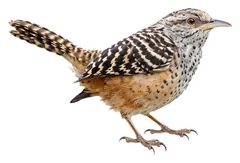 Band-backed WrenCampylorhynchus zonatus
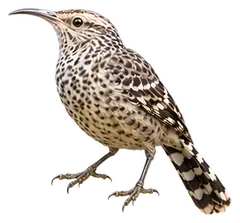 Grey-barred WrenCampylorhynchus megalopterus
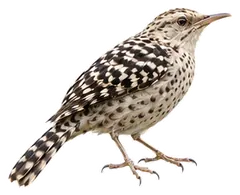 Stripe-backed WrenCampylorhynchus nuchalis
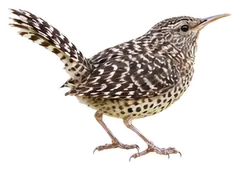 Fasciated WrenCampylorhynchus fasciatus
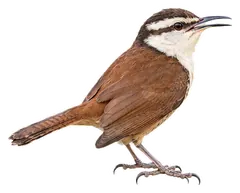 Giant WrenCampylorhynchus chiapensis
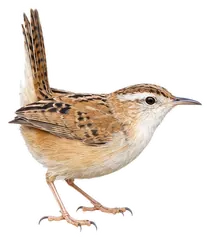
Download illustration
Free to use with credit: “Illustration: Bird Album (birdalbum.com)”. Drawn by AI from a reference photo by Juan Miguel Artigas Azas. ↗
Heard it but can't see it? Mingji identifies birds by sound and photo, on your phone.