 Bird Album
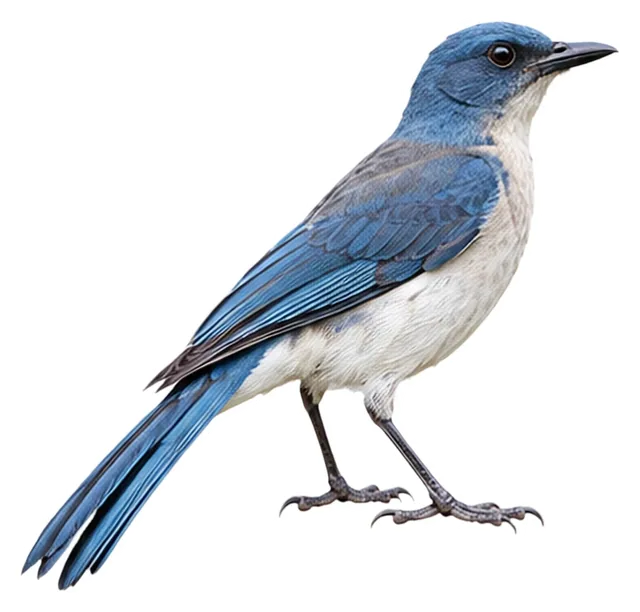
Mexican Jay
Aphelocoma wollweberi Kaup, 1855
113 gWeight
The Mexican jay (Aphelocoma wollweberi) formerly known as the gray-breasted jay, is a New World jay native to the Sierra Madre Oriental, Sierra Madre Occidental, and Central Plateau of Mexico and parts of the southwestern United States.
Busiest months: April–May · Most records: United States, Mexico
Where and when it's recorded

Mexican Jay has been recorded at 20 of the 8,171 birding hotspots we track, in 2 countries and regions.
Records by month Northern Hemisphere
Where it's recorded most
- Madera Canyon – Santa Rita LodgeUnited States31,759 records
- Ash Canyon Bird SanctuaryUnited States13,873 records
- Cave Creek Canyon – South ForkUnited States9,101 records
More places
- Ramsey Canyon PreserveUnited States8,901 records
- Portal – Cave Creek RanchUnited States5,952 records
- Madera Canyon – Proctor Rd.United States4,822 records
- Florida Canyon – lowerUnited States3,120 records
- PortalUnited States1,557 records
- Mt. Lemmon – Rose Canyon and LakeUnited States1,447 records
- Paton Center for HummingbirdsUnited States249 records
Countries and regions with the most records
eBird records via GBIF up to 2024-12-31. A record means someone listed it; more records partly mean more birders, not more birds.
About
The Mexican jay (Aphelocoma wollweberi) formerly known as the gray-breasted jay, is a New World jay native to the Sierra Madre Oriental, Sierra Madre Occidental, and Central Plateau of Mexico and parts of the southwestern United States. In May 2011, the American Ornithologists' Union voted to split the Mexican jay into two species, one retaining the common name Mexican jay and one called the Transvolcanic jay. The Mexican jay is a medium-sized jay with blue upper parts and pale gray underparts.
Excerpt from Wikipedia, CC BY-SA 4.0 · authors · Read more on Wikipedia
Questions
How big is the Mexican Jay?
The Mexican Jay weighs around 113 g.
Where does the Mexican Jay live?
Its breeding range: North America, Middle America: southwestern USA to central Mexico. It is most often recorded in United States and Mexico.
When is the best time to see the Mexican Jay?
At the hotspots we track, it is recorded most in April and May (Northern Hemisphere).
Is the Mexican Jay endangered?
The IUCN Red List classifies the Mexican Jay as Least Concern.
What does the Mexican Jay eat?
Main food: Omnivore.
What family is the Mexican Jay in?
It belongs to the family Crows, Jays (Corvidae), order Passerines (Passeriformes).
At a glance
- Weight
- 113 g
- Habitat
- Forest
- Diet
- Omnivore
- Lifestyle
- Varied
- Migration
- Resident (barely migrates)
- Conservation
- Least Concern
More measurements
- Wing
- 161 mm
- Tail
- 129 mm
- Bill
- 31 mm
- Tarsus
- 40 mm
Averages from the AVONET dataset; length from field guides where available.
Range
North America, Middle America: southwestern USA to central Mexico
Breeding range, IOC World Bird List 15.2
Classification
- Order
- Passerines Passeriformes
- Family
- Crows, Jays Corvidae
- Genus
- Aphelocoma
Other birds in the genus Aphelocoma
 Transvolcanic JayAphelocoma ultramarina
 Unicolored JayAphelocoma unicolor
 California Scrub JayAphelocoma californica
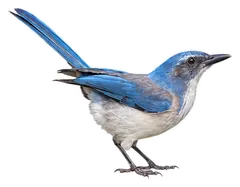 Woodhouse's Scrub JayAphelocoma woodhouseii
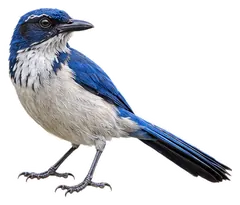 Island Scrub JayAphelocoma insularis
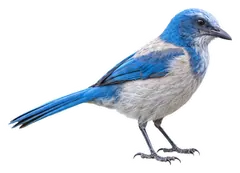 Florida Scrub JayAphelocoma coerulescens
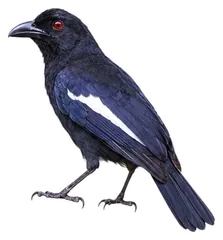 Malayan Black MagpiePlatysmurus leucopterus
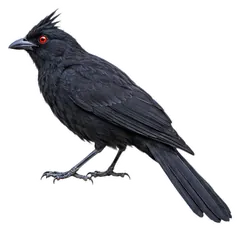 Bornean Black MagpiePlatysmurus aterrimus
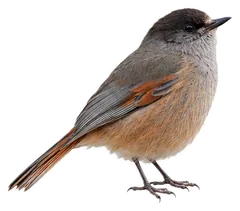 Siberian JayPerisoreus infaustus
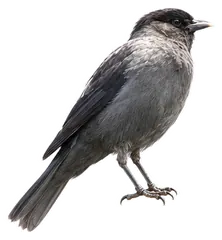 Sichuan JayPerisoreus internigrans
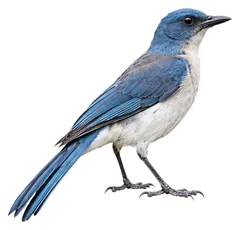
Download illustration
Free to use with credit: “Illustration: Bird Album (birdalbum.com)”. Drawn by AI from a reference photo by Lee Hoy. ↗
Heard it but can't see it? Mingji identifies birds by sound and photo, on your phone.