 Bird Album
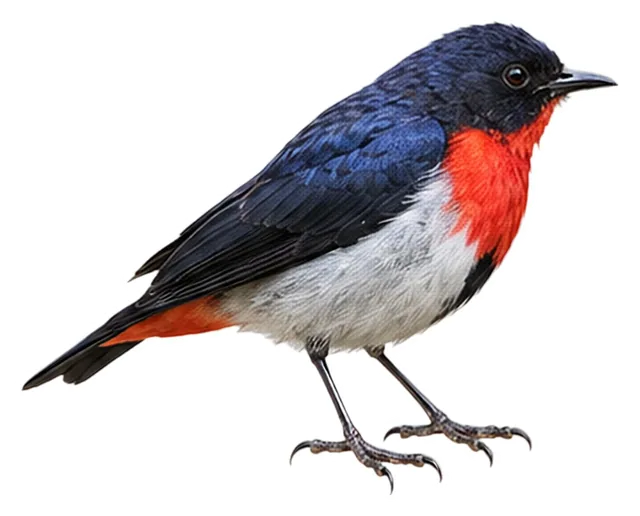
Mistletoebird
Dicaeum hirundinaceum (Shaw, 1792)
9–10 cmLength9 gWeight
Busiest months: October · Most records: Australia
Where and when it's recorded

Mistletoebird has been recorded at 199 of the 8,171 birding hotspots we track, in 1 country or region.
Records by month Southern Hemisphere
Where it's recorded most
- Broome Bird ObservatoryAustralia3,610 records
- Oxley Creek CommonAustralia3,104 records
- Bowra Wildlife SanctuaryAustralia2,205 records
More places
- Sandy Camp Road WetlandsAustralia2,107 records
- Townsville Town Common Conservation ParkAustralia1,918 records
- Cattana WetlandsAustralia1,382 records
- Lake Samsonvale – Golds Scrub LaneAustralia1,325 records
- Gemmill Swamp Wildlife ReserveAustralia1,103 records
- Keatings Lagoon Conservation ParkAustralia949 records
- Royal ParkAustralia872 records
Countries and regions with the most records
eBird records via GBIF up to 2024-12-31. A record means someone listed it; more records partly mean more birders, not more birds.
About
The mistletoebird (Dicaeum hirundinaceum), also known as the mistletoe flowerpecker, is a species of flowerpecker native to most of Australia (though absent from Tasmania and the driest desert areas) and also to the eastern Maluku Islands of Indonesia in the Arafura Sea between Australia and New Guinea. The mistletoebird eats mainly the berries of the parasitic mistletoe and is a vector for the spread of the mistletoe's seeds through its digestive system.
Excerpt from Wikipedia, CC BY-SA 4.0 · authors · Read more on Wikipedia
Questions
How big is the Mistletoebird?
The Mistletoebird is about 9–10 cm long and weighs around 9 g.
Where does the Mistletoebird live?
Its breeding range: Australasia: Aru Islands (southwest of New Guinea) and Australia (except Tasmania). It is most often recorded in Australia.
When is the best time to see the Mistletoebird?
At the hotspots we track, it is recorded most in October (Southern Hemisphere).
Is the Mistletoebird endangered?
The IUCN Red List classifies the Mistletoebird as Least Concern.
What does the Mistletoebird eat?
Main food: Insects & other invertebrates.
What family is the Mistletoebird in?
It belongs to the family Flowerpeckers (Dicaeidae), order Passerines (Passeriformes).
At a glance
- Length
- 9–10 cm
- Weight
- 9 g
- Habitat
- Forest
- Diet
- Insects & other invertebrates
- Lifestyle
- Perches in trees
- Migration
- Partial migrant
- Conservation
- Least Concern
More measurements
- Wing
- 60 mm
- Tail
- 31 mm
- Bill
- 11 mm
- Tarsus
- 13 mm
Averages from the AVONET dataset; length from field guides where available.
Range
Australasia: Aru Islands (southwest of New Guinea) and Australia (except Tasmania)
Breeding range, IOC World Bird List 15.2
Classification
- Order
- Passerines Passeriformes
- Family
- Flowerpeckers Dicaeidae
- Genus
- Dicaeum
Other birds in the genus Dicaeum
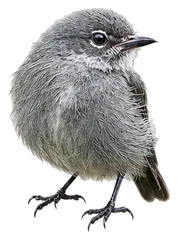 Spectacled FlowerpeckerDicaeum dayakorum
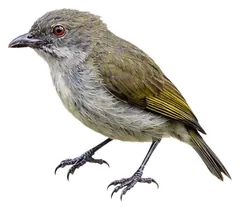 Golden-rumped FlowerpeckerDicaeum annae
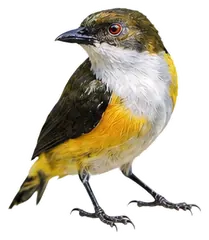 Yellow-sided FlowerpeckerDicaeum aureolimbatum
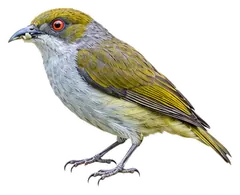 Olive-capped FlowerpeckerDicaeum nigrilore
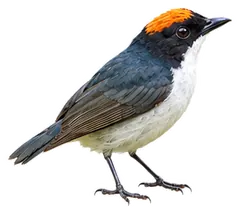 Yellow-crowned FlowerpeckerDicaeum anthonyi
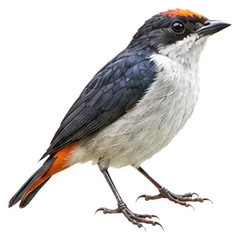 Flame-crowned FlowerpeckerDicaeum kampalili
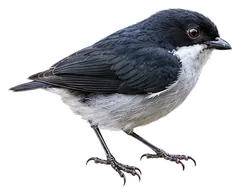 Bicolored FlowerpeckerDicaeum bicolor
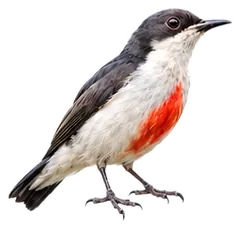 Red-keeled FlowerpeckerDicaeum australe
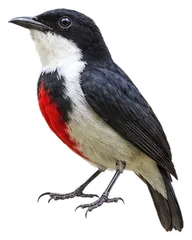 Black-belted FlowerpeckerDicaeum haematostictum
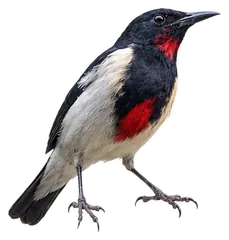 Scarlet-collared FlowerpeckerDicaeum retrocinctum
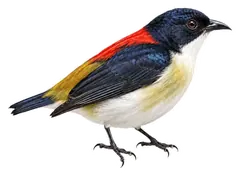 Cebu FlowerpeckerDicaeum quadricolor
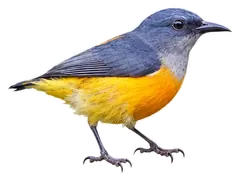 Orange-bellied FlowerpeckerDicaeum trigonostigma
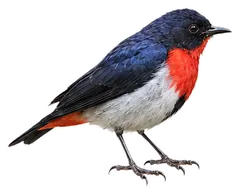
Download illustration
Free to use with credit: “Illustration: Bird Album (birdalbum.com)”. Drawn by AI from a reference photo by anthonypaul. ↗
Heard it but can't see it? Mingji identifies birds by sound and photo, on your phone.
In other languages
- EnglishMistletoebird
- 简体中文澳洲啄花鸟
- 繁體中文槲啄花
- 日本語ヤドリギハナドリ
- DeutschRotsteiß-Mistelfresser
- FrançaisDicée hirondelle
- EspañolPicaflores golondrina
- Portuguêspica-flor-australiano
- ItalianoBeccafiore del vischio
- NederlandsRoodstuithoningvogel
- РусскийЛасточковый цветоед
- Svenskamistelblomsterpickare
- DanskMistelfugl
- Polskikwiatówka różowa