 Bird Album
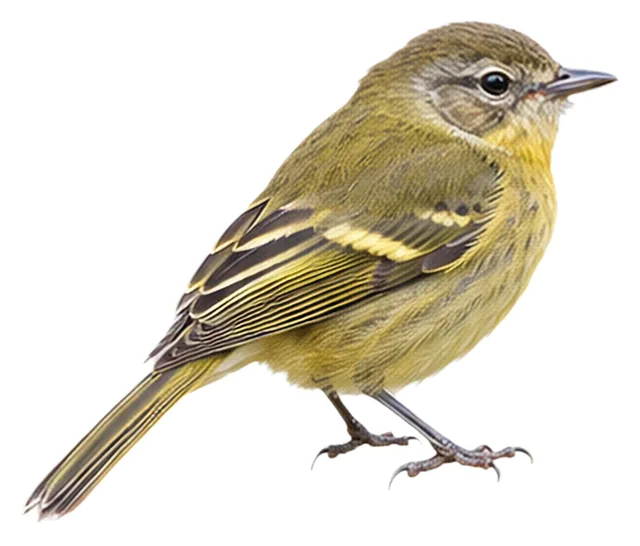
Mottle-cheeked Tyrannulet
Phylloscartes ventralis (Temminck, 1824)
12 cmLength8.3 gWeight
The mottle-cheeked tyrannulet (Phylloscartes ventralis) is a generally common, small species of bird in the family Tyrannidae, the tyrant flycatchers.
Busiest months: October · Most records: Argentina, Brazil, Peru
Where and when it's recorded
Busiest months: October · Most records: Argentina, Brazil, Peru

Mottle-cheeked Tyrannulet has been recorded at 145 of the 8,276 birding hotspots we track, in 6 countries and regions.
Records by month Southern Hemisphere
Where it's recorded most
- Reserva Ribera NorteArgentina491 records
- Paso Centurión – ÁreaUruguay462 records
- ACP Abra Patricia – Owlet LodgePeru424 records
More places
- PN do Itatiaia – Agulhas Negras RoadBrazil383 records
- Reserva Natural Privada Eco-Portal de PiedraArgentina350 records
- Reserva Kaetés - PCSABrazil317 records
- PE IntervalesBrazil301 records
- Santuário do Caraça – apenas para listas históricasBrazil256 records
- Proyecto Seamos BosquesArgentina244 records
- PP Urugua-í – Seccional UruzúArgentina241 records
Countries and regions with the most records
eBird records via GBIF up to 2024-12-31. A record means someone listed it; more records partly mean more birders, not more birds.
About
The mottle-cheeked tyrannulet (Phylloscartes ventralis) is a generally common, small species of bird in the family Tyrannidae, the tyrant flycatchers. It is found in Argentina, Bolivia, Brazil, Paraguay, Peru, and Uruguay.
Excerpt from Wikipedia, CC BY-SA 4.0 · authors · Read more on Wikipedia
Questions
How big is the Mottle-cheeked Tyrannulet?
The Mottle-cheeked Tyrannulet is about 12 cm long and weighs around 8.3 g.
Where does the Mottle-cheeked Tyrannulet live?
Its breeding range: South America: southeastern, Peru to northwestern Argentina. It is most often recorded in Argentina, Brazil and Peru.
When is the best time to see the Mottle-cheeked Tyrannulet?
At the hotspots we track, it is recorded most in October (Southern Hemisphere).
Is the Mottle-cheeked Tyrannulet endangered?
The IUCN Red List classifies the Mottle-cheeked Tyrannulet as Least Concern.
What does the Mottle-cheeked Tyrannulet eat?
Main food: Insects & other invertebrates.
What family is the Mottle-cheeked Tyrannulet in?
It belongs to the family Tyrant Flycatchers, Calyptura (Tyrannidae), order Passerines (Passeriformes).
At a glance
- Length
- 12 cm
- Weight
- 8.3 g
- Habitat
- Forest
- Diet
- Insects & other invertebrates
- Lifestyle
- Perches in trees
- Migration
- Resident (barely migrates)
- Conservation
- Least Concern
More measurements
- Wing
- 53 mm
- Tail
- 53 mm
- Bill
- 13 mm
- Tarsus
- 19 mm
Averages from the AVONET dataset; length from field guides where available.
Range
South America: southeastern, Peru to northwestern Argentina
Breeding range, IOC World Bird List 15.2
Classification
- Order
- Passerines Passeriformes
- Family
- Tyrant Flycatchers, Calyptura Tyrannidae
- Genus
- Phylloscartes
Other birds in the genus Phylloscartes
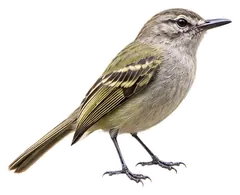 Alagoas TyrannuletPhylloscartes ceciliae
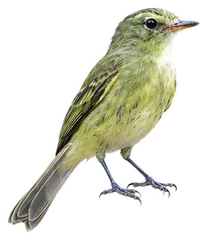 Restinga TyrannuletPhylloscartes kronei
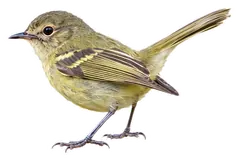 Bahia TyrannuletPhylloscartes beckeri
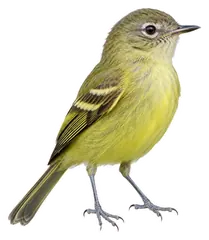 Panama TyrannuletPhylloscartes flavovirens
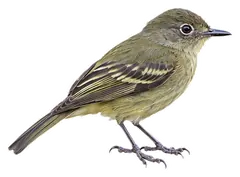 Olive-green TyrannuletPhylloscartes virescens
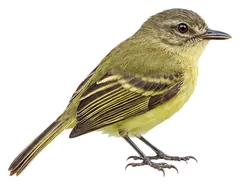 Ecuadorian TyrannuletPhylloscartes gualaquizae
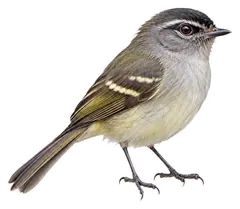 Black-fronted TyrannuletPhylloscartes nigrifrons
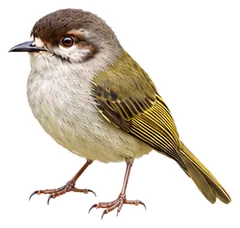 Rufous-browed TyrannuletPhylloscartes superciliaris
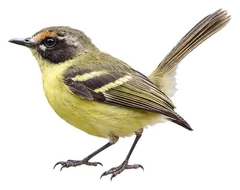 Rufous-lored TyrannuletPhylloscartes flaviventris
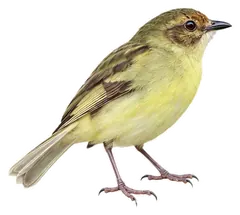 Cinnamon-faced TyrannuletPhylloscartes parkeri
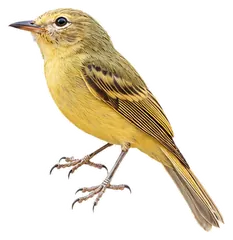 Minas Gerais TyrannuletPhylloscartes roquettei
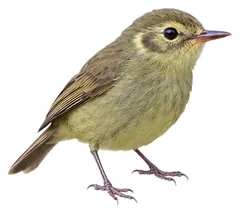 Oustalet's TyrannuletPhylloscartes oustaleti
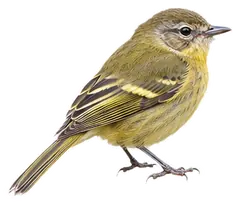
Download illustration
Free to use with credit: “Illustration: Bird Album (birdalbum.com)”. Drawn by AI from a reference photo by Jorge Schlemmer. ↗
Heard it but can't see it? Mingji identifies birds by sound and photo, on your phone.
In other languages
- EnglishMottle-cheeked Tyrannulet
- 简体中文点颊姬霸鹟
- 繁體中文點頰姬霸鶲
- 日本語コバシハエトリ
- DeutschOlivgelb-Laubtyrann
- FrançaisTyranneau ventru
- EspañolOrejerito oliváceo
- Portuguêsborboletinha-do-mato
- ItalianoTirannetto guancemacchiate
- NederlandsVlekwanglooftiran
- РусскийЛесной каричи
- Svenskafläckkindad lövtyrann
- DanskLøvhangsbørstetyran
- Polskityrańczyk skromny