 Bird Album
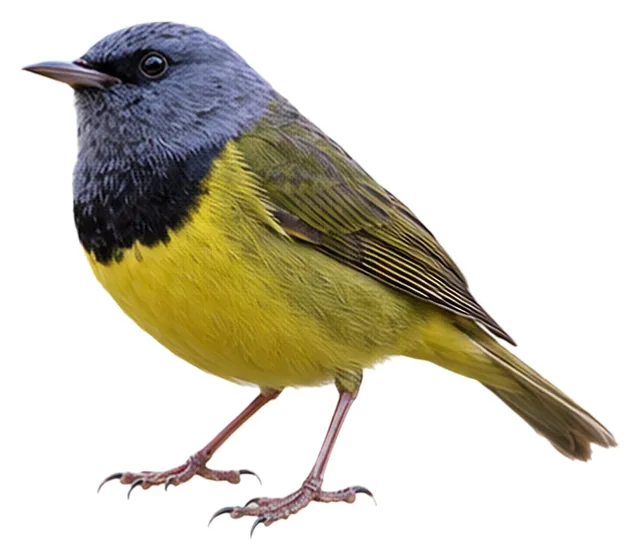
Mourning Warbler
Geothlypis philadelphia (Wilson, A, 1810)
10–15 cmLength12 gWeight
The mourning warbler (Geothlypis philadelphia) is a small songbird of the New World warbler family.
Busiest months: May · Most records: United States, Canada, Costa Rica
Where and when it's recorded

Mourning Warbler has been recorded at 796 of the 8,171 birding hotspots we track, in 19 countries and regions.
Records by month Northern Hemisphere
Where it's recorded most
- Montrose Point Bird Sanctuary, Lincoln Park, ChicagoUnited States4,518 records
- Magee Marsh – BoardwalkUnited States4,404 records
- Point Pelee National ParkCanada2,495 records
More places
- RNF du Cap-TourmenteCanada2,086 records
- Tawas Point SPUnited States1,414 records
- Rancho NaturalistaCosta Rica1,188 records
- Schlitz Audubon Nature CenterUnited States1,056 records
- Magee MarshUnited States935 records
- Rondeau Provincial ParkCanada839 records
- Jackson Park, Chicago – Wooded Island/Bobolink Meadow areaUnited States820 records
Countries and regions with the most records
eBird records via GBIF up to 2024-12-31. A record means someone listed it; more records partly mean more birders, not more birds.
About
The mourning warbler (Geothlypis philadelphia) is a small songbird of the New World warbler family. Mourning warblers are neotropical migrants native to eastern and central North America and wintering in Central and South America. They tend to be found in dense second growth forests.
Excerpt from Wikipedia, CC BY-SA 4.0 · authors · Read more on Wikipedia
Questions
How big is the Mourning Warbler?
The Mourning Warbler is about 10–15 cm long and weighs around 12 g.
Where does the Mourning Warbler live?
Its breeding range: North America: central Canada to southeastern Canada and northeastern USA. It is most often recorded in United States, Canada and Costa Rica.
When is the best time to see the Mourning Warbler?
At the hotspots we track, it is recorded most in May (Northern Hemisphere).
Is the Mourning Warbler endangered?
The IUCN Red List classifies the Mourning Warbler as Least Concern.
What does the Mourning Warbler eat?
Main food: Insects & other invertebrates.
What family is the Mourning Warbler in?
It belongs to the family New World Warblers (Parulidae), order Passerines (Passeriformes).
At a glance
- Length
- 10–15 cm
- Weight
- 12 g
- Habitat
- Forest
- Diet
- Insects & other invertebrates
- Lifestyle
- Perches in trees
- Migration
- Migratory
- Conservation
- Least Concern
More measurements
- Wing
- 59 mm
- Tail
- 48 mm
- Bill
- 12 mm
- Tarsus
- 22 mm
Averages from the AVONET dataset; length from field guides where available.
Range
North America: central Canada to southeastern Canada and northeastern USA
Breeding range, IOC World Bird List 15.2
Classification
- Order
- Passerines Passeriformes
- Family
- New World Warblers Parulidae
- Genus
- Geothlypis
Other birds in the genus Geothlypis
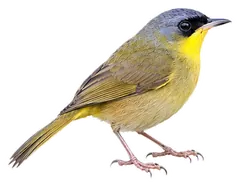 Grey-crowned YellowthroatGeothlypis poliocephala
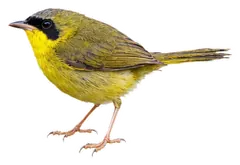 Masked YellowthroatGeothlypis aequinoctialis
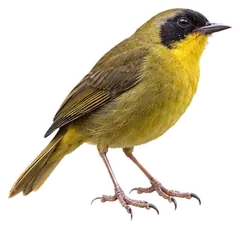 Chiriqui YellowthroatGeothlypis chiriquensis
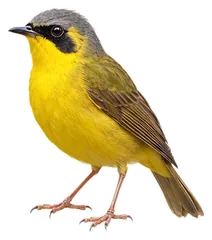 Black-lored YellowthroatGeothlypis auricularis
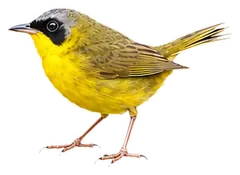 Southern YellowthroatGeothlypis velata
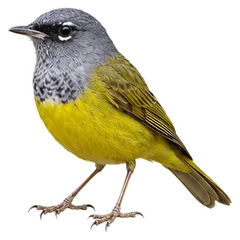 MacGillivray's WarblerGeothlypis tolmiei
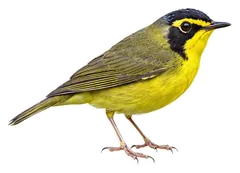 Kentucky WarblerGeothlypis formosa
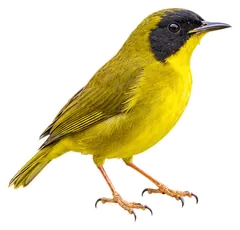 Olive-crowned YellowthroatGeothlypis semiflava
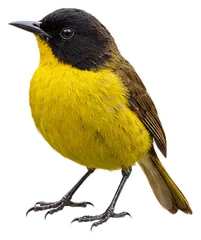 Black-polled YellowthroatGeothlypis speciosa
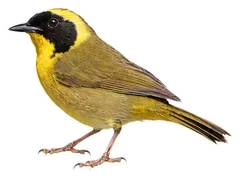 Belding's YellowthroatGeothlypis beldingi
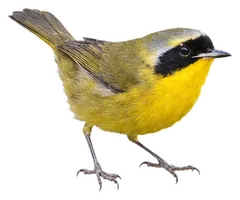 Bahama YellowthroatGeothlypis rostrata
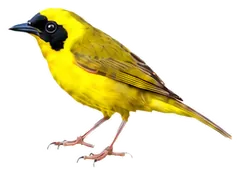 Altamira YellowthroatGeothlypis flavovelata
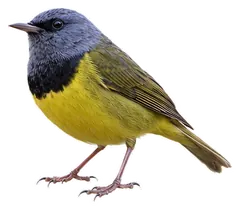
Download illustration
Free to use with credit: “Illustration: Bird Album (birdalbum.com)”. Drawn by AI from a reference photo by Tom Benson. ↗
Heard it but can't see it? Mingji identifies birds by sound and photo, on your phone.
In other languages
- EnglishMourning Warbler
- 简体中文黑胸地莺
- 繁體中文污黑黃喉地鶯
- 日本語ノドグロアメリカムシクイ
- DeutschGraukopf-Waldsänger
- FrançaisParuline triste
- EspañolReinita plañidera
- Portuguêsmariquita-de-capuz-azulado
- ItalianoParula piangente
- NederlandsGrijskopzanger
- РусскийЧерногорлая хвойница
- Svenskasorgskogssångare
- DanskSørgesanger
- Polskicytrynka czarnopierśna