 Bird Album
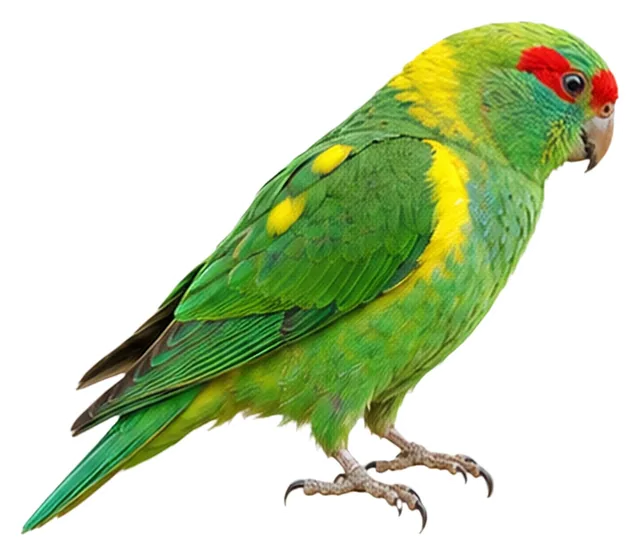
Musk Lorikeet
Glossopsitta concinna (Shaw, 1791)
22 cmLength70 gWeight
The musk lorikeet (Trichoglossus concinnus) is a species of bird in the parrot family Psittaculidae.
Busiest months: January and March–May · Most records: Australia
Where and when it's recorded

Musk Lorikeet has been recorded at 142 of the 8,171 birding hotspots we track, in 1 country or region.
Records by month Southern Hemisphere
Where it's recorded most
- Royal ParkAustralia2,528 records
- Banyule Flats ReserveAustralia1,410 records
- Goulds Lagoon Wildlife SanctuaryAustralia1,136 records
More places
- La Trobe University Bundoora CampusAustralia1,107 records
- La Trobe University Bundoora – Nangak Tamboree Wildlife SanctuaryAustralia1,074 records
- Wollongong Botanic GardenAustralia982 records
- Jells ParkAustralia965 records
- Bushy Park WetlandsAustralia866 records
- SeymourAustralia812 records
- Shepherds BushAustralia791 records
Countries and regions with the most records
eBird records via GBIF up to 2024-12-31. A record means someone listed it; more records partly mean more birders, not more birds.
About
The musk lorikeet (Trichoglossus concinnus) is a species of bird in the parrot family Psittaculidae. It inhabits south-central/eastern Australia.
Excerpt from Wikipedia, CC BY-SA 4.0 · authors · Read more on Wikipedia
Questions
How big is the Musk Lorikeet?
The Musk Lorikeet is about 22 cm long and weighs around 70 g.
Where does the Musk Lorikeet live?
Its breeding range: Australasia: east-central, southeastern Australia. It is most often recorded in Australia.
When is the best time to see the Musk Lorikeet?
At the hotspots we track, it is recorded most in January, March, April and May (Southern Hemisphere).
Is the Musk Lorikeet endangered?
The IUCN Red List classifies the Musk Lorikeet as Least Concern.
What does the Musk Lorikeet eat?
Main food: Omnivore.
What family is the Musk Lorikeet in?
It belongs to the family Old World Parrots (Psittaculidae), order Parrot (Psittaciformes).
At a glance
- Length
- 22 cm
- Weight
- 70 g
- Habitat
- Woodland
- Diet
- Omnivore
- Lifestyle
- Perches in trees
- Migration
- Resident (barely migrates)
- Conservation
- Least Concern
More measurements
- Wing
- 125 mm
- Tail
- 91 mm
- Bill
- 18 mm
- Tarsus
- 15 mm
Averages from the AVONET dataset; length from field guides where available.
Range
Australasia: east-central, southeastern Australia
Breeding range, IOC World Bird List 15.2
Classification
- Order
- Parrot Psittaciformes
- Family
- Old World Parrots Psittaculidae
- Genus
- Glossopsitta
More from the family Old World Parrots
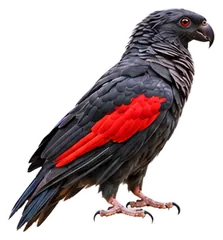 Pesquet's ParrotPsittrichas fulgidus
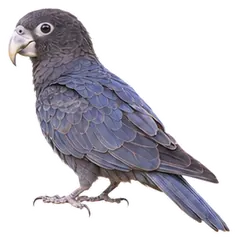 Greater Vasa ParrotCoracopsis vasa
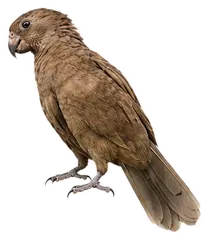 Seychelles Black ParrotCoracopsis barklyi
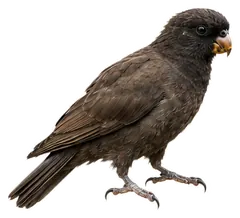 Comoro Black ParrotCoracopsis sibilans
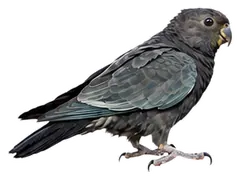 Lesser Vasa ParrotCoracopsis nigra
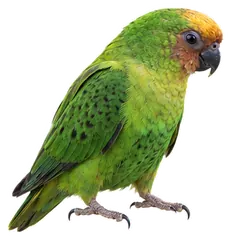 Yellow-capped Pygmy ParrotMicropsitta keiensis
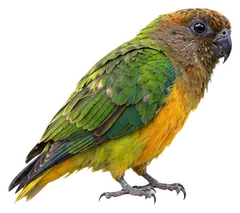 Geelvink Pygmy ParrotMicropsitta geelvinkiana
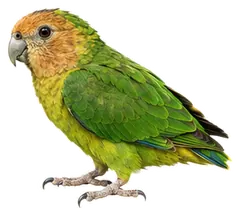 Buff-faced Pygmy ParrotMicropsitta pusio
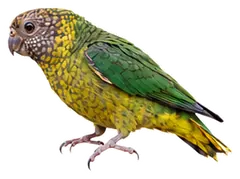 Meek's Pygmy ParrotMicropsitta meeki
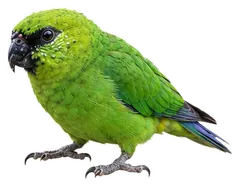 Finsch's Pygmy ParrotMicropsitta finschii
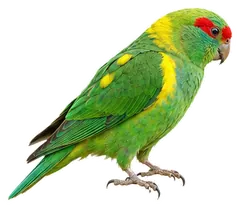
Download illustration
Free to use with credit: “Illustration: Bird Album (birdalbum.com)”. Drawn by AI from a reference photo by patrickkavanagh. ↗
Heard it but can't see it? Mingji identifies birds by sound and photo, on your phone.