 Bird Album
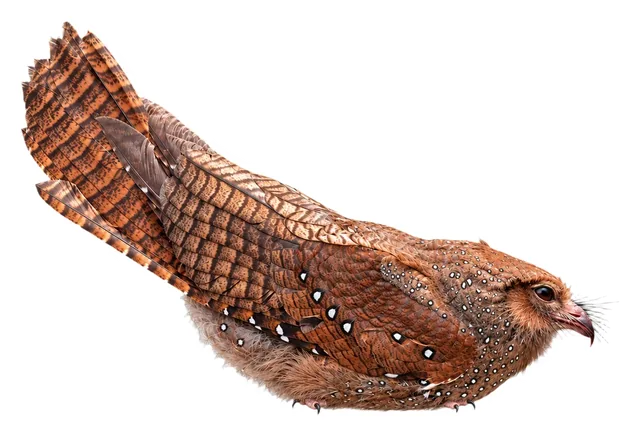
Oilbird
Steatornis caripensis Humboldt, 1817
408 gWeight
The oilbird (Steatornis caripensis), locally known as the guácharo, is a bird species found in the northern areas of South America including the Caribbean island of Trinidad.
Busiest months: December–February · Most records: Trinidad & Tobago, Colombia, Ecuador
Where and when it's recorded

Oilbird has been recorded at 117 of the 8,171 birding hotspots we track, in 10 countries and regions.
Records by month Northern Hemisphere
Where it's recorded most
- Asa Wright Nature CenterTrinidad & Tobago1,477 records
- RN Cañon del Río ClaroColombia684 records
- Curi-Cancha Refugio de Vida SilvestreCosta Rica53 records
More places
- El Pangán ProAves reserveColombia39 records
- Bellavista Cloud Forest LodgeEcuador29 records
- Cabañas San IsidroEcuador29 records
- Yanayacu Biological StationEcuador27 records
- Refugio Paz de las AvesEcuador25 records
- Sendero La HerreraColombia24 records
- Reserva Biológica Bosque Nuboso MonteverdeCosta Rica24 records
Countries and regions with the most records
eBird records via GBIF up to 2024-12-31. A record means someone listed it; more records partly mean more birders, not more birds.
About
The oilbird (Steatornis caripensis), locally known as the guácharo, is a bird species found in the northern areas of South America including the Caribbean island of Trinidad. It is the only living species in the genus Steatornis, the family Steatornithidae, and the order Steatornithiformes. Nesting in colonies in caves, oilbirds are nocturnal feeders on the fruits of the oil palm and tropical laurels.
Excerpt from Wikipedia, CC BY-SA 4.0 · authors · Read more on Wikipedia
Questions
How big is the Oilbird?
The Oilbird weighs around 408 g.
Where does the Oilbird live?
Its breeding range: South America: Panama to northern, northwestern. It is most often recorded in Trinidad & Tobago, Colombia and Ecuador.
When is the best time to see the Oilbird?
At the hotspots we track, it is recorded most in January, February and December (Northern Hemisphere).
Is the Oilbird endangered?
The IUCN Red List classifies the Oilbird as Least Concern.
What does the Oilbird eat?
Main food: Fruit.
What family is the Oilbird in?
It belongs to the family Oilbird (Steatornithidae), order Steatornithiformes.
At a glance
- Weight
- 408 g
- Habitat
- Forest
- Diet
- Fruit
- Lifestyle
- Perches in trees
- Migration
- Resident (barely migrates)
- Conservation
- Least Concern
More measurements
- Wing
- 308 mm
- Tail
- 200 mm
- Bill
- 36 mm
- Tarsus
- 19 mm
Averages from the AVONET dataset; length from field guides where available.
Range
South America: Panama to northern, northwestern
Breeding range, IOC World Bird List 15.2
Classification
- Order
- Steatornithiformes
- Family
- Oilbird Steatornithidae
- Genus
- Steatornis
Download illustration
Free to use with credit: “Illustration: Bird Album (birdalbum.com)”. Drawn by AI from reference photos. ↗
Heard it but can't see it? Mingji identifies birds by sound and photo, on your phone.