 Bird Album
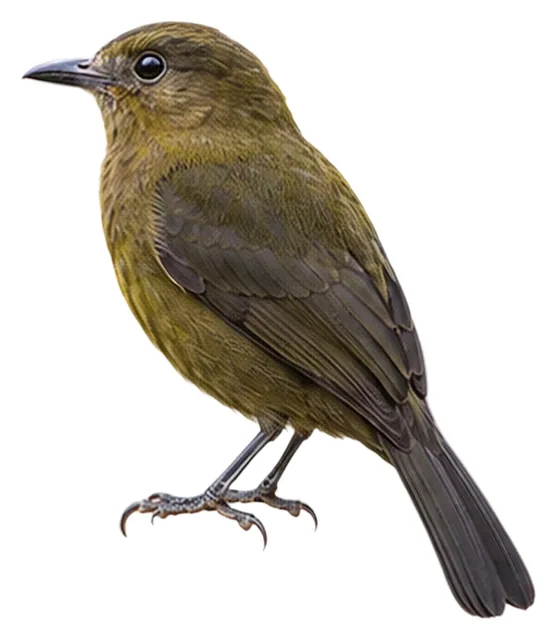
Olivaceous Piha
Snowornis cryptolophus (Sclater, PL & Salvin, 1877)
23–24 cmLength74 gWeight
The olivaceous piha (Snowornis cryptolophus) is a species of bird in the family Cotingidae, the cotingas.
Busiest months: January–February and November · Most records: Colombia, Ecuador, Peru
Where and when it's recorded
Busiest months: January–February and November · Most records: Colombia, Ecuador, Peru

Olivaceous Piha has been recorded at 53 of the 8,276 birding hotspots we track, in 3 countries and regions.
Records by month Northern Hemisphere
Where it's recorded most
- Refugio Paz de las AvesEcuador744 records
- Las Tangaras ProAves ReserveColombia632 records
- Camino Montezuma – Los CajonesColombia315 records
More places
- PNN Tatamá – Camino MontezumaColombia313 records
- RNA Las Tangaras – SendasColombia275 records
- Cordillera Guacamayos – Sendero JumandyEcuador145 records
- Camino Montezuma – La ClaritaColombia142 records
- Tandayapa Bird LodgeEcuador137 records
- El Pangán ProAves reserveColombia71 records
- Reserva Mashpi-AmagusaEcuador55 records
Countries and regions with the most records
eBird records via GBIF up to 2024-12-31. A record means someone listed it; more records partly mean more birders, not more birds.
About
The olivaceous piha (Snowornis cryptolophus) is a species of bird in the family Cotingidae, the cotingas. It is found in Colombia, Ecuador, and Peru.
Excerpt from Wikipedia, CC BY-SA 4.0 · authors · Read more on Wikipedia
Questions
How big is the Olivaceous Piha?
The Olivaceous Piha is about 23–24 cm long and weighs around 74 g.
Where does the Olivaceous Piha live?
Its breeding range: South America: Colombia to Peru. It is most often recorded in Colombia, Ecuador and Peru.
When is the best time to see the Olivaceous Piha?
At the hotspots we track, it is recorded most in January, February and November (Northern Hemisphere).
Is the Olivaceous Piha endangered?
The IUCN Red List classifies the Olivaceous Piha as Least Concern.
What does the Olivaceous Piha eat?
Main food: Omnivore.
What family is the Olivaceous Piha in?
It belongs to the family Cotingas (Cotingidae), order Passerines (Passeriformes).
At a glance
- Length
- 23–24 cm
- Weight
- 74 g
- Habitat
- Forest
- Diet
- Omnivore
- Lifestyle
- Perches in trees
- Migration
- Resident (barely migrates)
- Conservation
- Least Concern
More measurements
- Wing
- 127 mm
- Tail
- 98 mm
- Bill
- 25 mm
- Tarsus
- 24 mm
Averages from the AVONET dataset; length from field guides where available.
Range
South America: Colombia to Peru
Breeding range, IOC World Bird List 15.2
Classification
- Order
- Passerines Passeriformes
- Family
- Cotingas Cotingidae
- Genus
- Snowornis
Other birds in the genus Snowornis
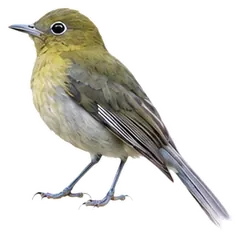 Grey-tailed PihaSnowornis subalaris
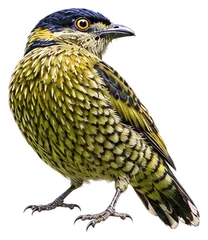 Scaled FruiteaterAmpelioides tschudii
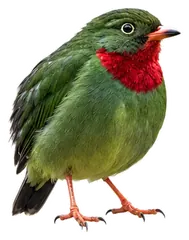 Fiery-throated FruiteaterPipreola chlorolepidota
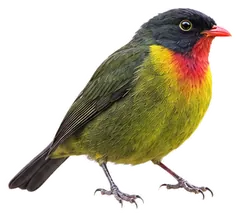 Scarlet-breasted FruiteaterPipreola frontalis
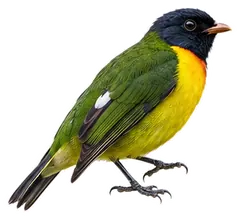 Handsome FruiteaterPipreola formosa
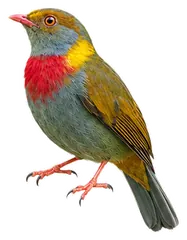 Red-banded FruiteaterPipreola whitelyi
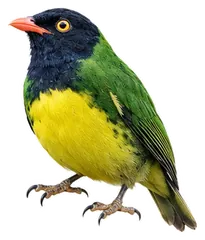 Black-chested FruiteaterPipreola lubomirskii
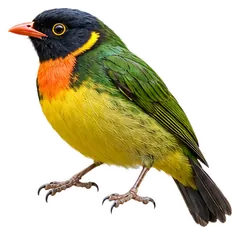 Orange-breasted FruiteaterPipreola jucunda
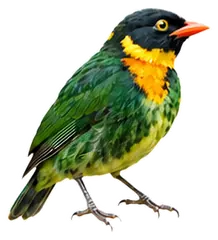 Masked FruiteaterPipreola pulchra
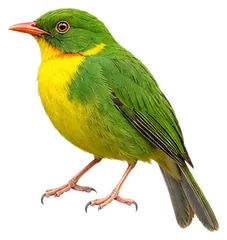 Golden-breasted FruiteaterPipreola aureopectus
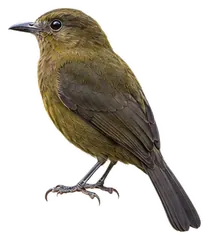
Download illustration
Free to use with credit: “Illustration: Bird Album (birdalbum.com)”. Drawn by AI from a reference photo by Aaron Hulsey. ↗
Heard it but can't see it? Mingji identifies birds by sound and photo, on your phone.