 Bird Album
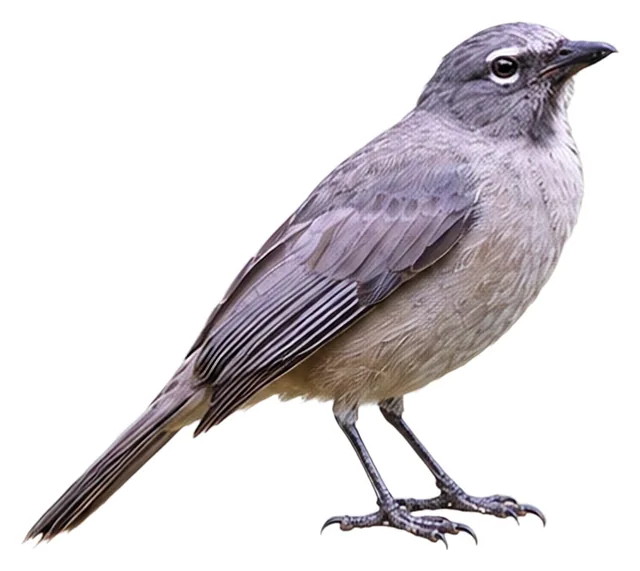
Olive-grey Saltator
Saltator olivascens Cabanis, 1849
55 gWeight
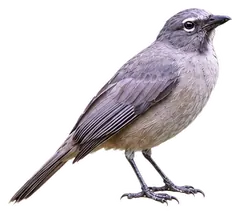
The olive-grey saltator (Saltator olivascens), also known as the Caribbean grey saltator, is a quiet, grey-colored passerine bird in the tanager family Thraupidae, native to Colombia, Venezuela, the Guianas, far northern Brazil, and Trinidad.
Busiest months: February–May · Most records: Venezuela, Colombia, Trinidad & Tobago
Where and when it's recorded
Busiest months: February–May · Most records: Venezuela, Colombia, Trinidad & Tobago

Olive-grey Saltator has been recorded at 163 of the 8,276 birding hotspots we track, in 7 countries and regions.
Records by month Northern Hemisphere
Where it's recorded most
- Posada El GalloVenezuela2,627 records
- Parque del EsteVenezuela1,294 records
- Parque Tematico Cafetero Finca La Pedregoza, San Antonio del TequendamaColombia1,094 records
More places
- Palermo – Camino Km 4Colombia1,082 records
- Qta. San José, (acceso restringido) Carrizal, Miranda, VenezuelaVenezuela804 records
- Hacienda El Escobal, TolimaColombia750 records
- Asa Wright Nature CenterTrinidad & Tobago738 records
- TarataraVenezuela696 records
- villa de vista hermosaVenezuela640 records
- Represa CameguaduaColombia615 records
Countries and regions with the most records
eBird records via GBIF up to 2024-12-31. A record means someone listed it; more records partly mean more birders, not more birds.
About
The olive-grey saltator (Saltator olivascens), also known as the Caribbean grey saltator, is a quiet, grey-colored passerine bird in the tanager family Thraupidae, native to Colombia, Venezuela, the Guianas, far northern Brazil, and Trinidad. It was formerly considered conspecific with the greyish saltator (Saltator coerulescens), but was split as a distinct species by the IOC in 2021. The olive-grey saltator includes the subspecies brewsteri and plumbeus.
Excerpt from Wikipedia, CC BY-SA 4.0 · authors · Read more on Wikipedia
Questions
How big is the Olive-grey Saltator?
The Olive-grey Saltator weighs around 55 g.
Where does the Olive-grey Saltator live?
Its breeding range: South America: northern Colombia to Trinidad and northern Brazil. It is most often recorded in Venezuela, Colombia and Trinidad & Tobago.
When is the best time to see the Olive-grey Saltator?
At the hotspots we track, it is recorded most in February, March, April and May (Northern Hemisphere).
Is the Olive-grey Saltator endangered?
The IUCN Red List classifies the Olive-grey Saltator as Least Concern.
What does the Olive-grey Saltator eat?
Main food: Omnivore.
What family is the Olive-grey Saltator in?
It belongs to the family Tanagers & Allies (Thraupidae), order Passerines (Passeriformes).
At a glance
- Weight
- 55 g
- Habitat
- Towns & farmland
- Diet
- Omnivore
- Lifestyle
- Perches in trees
- Migration
- Resident (barely migrates)
- Conservation
- Least Concern
More measurements
- Wing
- 98 mm
- Tail
- 99 mm
- Bill
- 22 mm
- Tarsus
- 26 mm
Averages from the AVONET dataset; length from field guides where available.
Range
South America: northern Colombia to Trinidad and northern Brazil
Breeding range, IOC World Bird List 15.2
Classification
- Order
- Passerines Passeriformes
- Family
- Tanagers & Allies Thraupidae
- Genus
- Saltator
Other birds in the genus Saltator
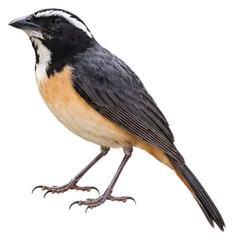 Orinoco SaltatorSaltator orenocensis
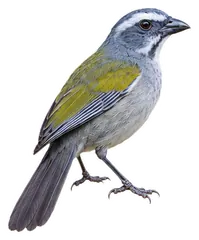 Green-winged SaltatorSaltator similis
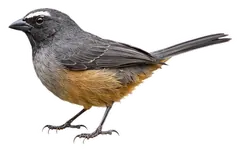 Cinnamon-bellied SaltatorSaltator grandis
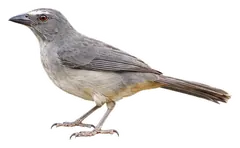 Bluish-grey SaltatorSaltator coerulescens
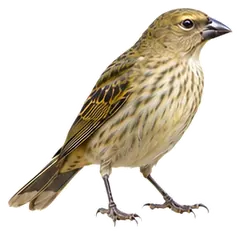 Streaked SaltatorSaltator striatipectus
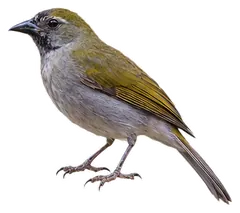 Lesser Antillean SaltatorSaltator albicollis
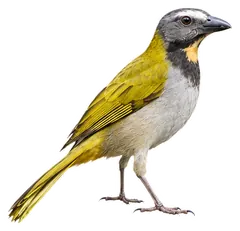 Buff-throated SaltatorSaltator maximus
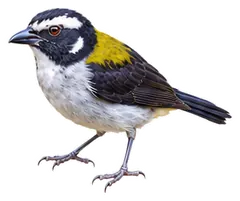 Black-winged SaltatorSaltator atripennis
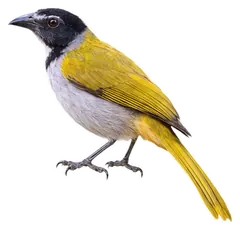 Black-headed SaltatorSaltator atriceps
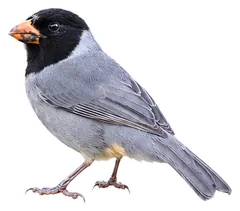 Black-cowled SaltatorSaltator nigriceps
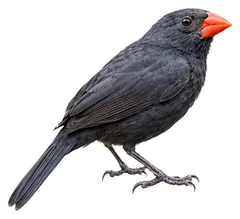 Black-throated GrosbeakSaltator fuliginosus
 Slate-colored GrosbeakSaltator grossus
Download illustration
Free to use with credit: “Illustration: Bird Album (birdalbum.com)”. Drawn by AI from reference photos. ↗
Heard it but can't see it? Mingji identifies birds by sound and photo, on your phone.