 Bird Album
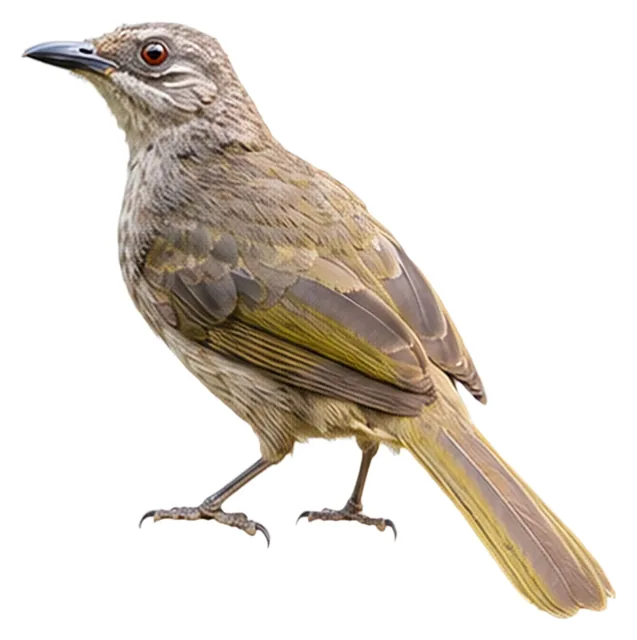
Olive-winged Bulbul
Pycnonotus plumosus Blyth, 1845
35 gWeight
The olive-winged bulbul (Pycnonotus plumosus) is a member of the bulbul family of passerine birds.
Busiest months: March–April and July–August · Most records: Singapore, Malaysia, Thailand
Where and when it's recorded
Busiest months: March–April and July–August · Most records: Singapore, Malaysia, Thailand

Olive-winged Bulbul has been recorded at 204 of the 8,276 birding hotspots we track, in 5 countries and regions.
Records by month Northern Hemisphere
Where it's recorded most
- Dairy Farm Nature ParkSingapore2,057 records
- Sepilok – Rainforest Discovery CenterMalaysia1,373 records
- Pulau UbinSingapore1,217 records
More places
- Singapore Botanic GardensSingapore1,014 records
- Central Catchment Nature ReserveSingapore903 records
- Gunung Panti Recreational Forest – Panti Bird Sanctuary and North AreaMalaysia733 records
- Taman Botani Negara Shah AlamMalaysia577 records
- Air Hitam Dalam Educational ForestMalaysia540 records
- MacRitchie Reservoir ParkSingapore517 records
- Taman Alam Kuala SelangorMalaysia504 records
Countries and regions with the most records
eBird records via GBIF up to 2024-12-31. A record means someone listed it; more records partly mean more birders, not more birds.
About
The olive-winged bulbul (Pycnonotus plumosus) is a member of the bulbul family of passerine birds.
Excerpt from Wikipedia, CC BY-SA 4.0 · authors · Read more on Wikipedia
Questions
How big is the Olive-winged Bulbul?
The Olive-winged Bulbul weighs around 35 g.
Where does the Olive-winged Bulbul live?
Its breeding range: Oriental: southern Myanmar and southern Thailand, Malay Peninsula, Greater Sundas. It is most often recorded in Singapore, Malaysia and Thailand.
When is the best time to see the Olive-winged Bulbul?
At the hotspots we track, it is recorded most in March, April, July and August (Northern Hemisphere).
Is the Olive-winged Bulbul endangered?
The IUCN Red List classifies the Olive-winged Bulbul as Least Concern.
What does the Olive-winged Bulbul eat?
Main food: Fruit.
What family is the Olive-winged Bulbul in?
It belongs to the family Bulbuls (Pycnonotidae), order Passerines (Passeriformes).
At a glance
- Weight
- 35 g
- Habitat
- Shrubland
- Diet
- Fruit
- Lifestyle
- Perches in trees
- Migration
- Resident (barely migrates)
- Conservation
- Least Concern
More measurements
- Wing
- 83 mm
- Tail
- 72 mm
- Bill
- 17 mm
- Tarsus
- 20 mm
Averages from the AVONET dataset; length from field guides where available.
Range
Oriental: southern Myanmar and southern Thailand, Malay Peninsula, Greater Sundas
Breeding range, IOC World Bird List 15.2
Classification
- Order
- Passerines Passeriformes
- Family
- Bulbuls Pycnonotidae
- Genus
- Pycnonotus
Other birds in the genus Pycnonotus
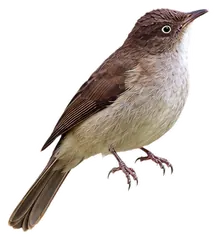 Cream-vented BulbulPycnonotus simplex
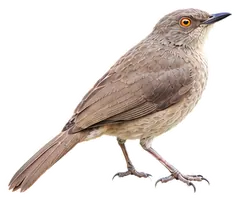 Asian Red-eyed BulbulPycnonotus brunneus
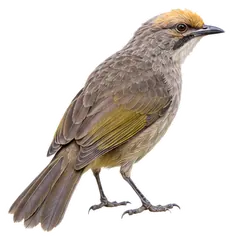 Straw-headed BulbulPycnonotus zeylanicus
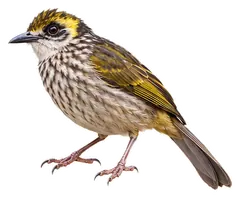 Spot-necked BulbulPycnonotus tympanistrigus
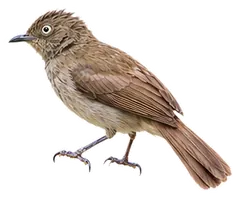 Cream-eyed BulbulPycnonotus pseudosimplex
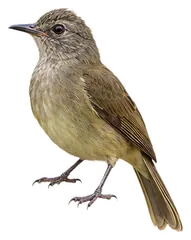 Ashy-fronted BulbulPycnonotus cinereifrons
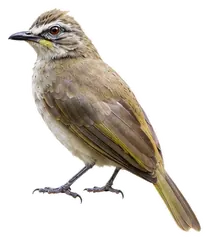 White-browed BulbulPycnonotus luteolus
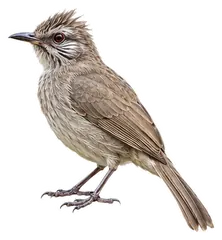 Ayeyarwady BulbulPycnonotus blanfordi
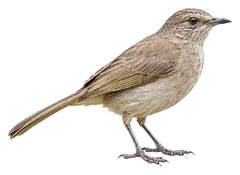 Streak-eared BulbulPycnonotus conradi
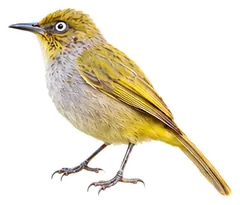 Pale-eyed BulbulPycnonotus davisoni
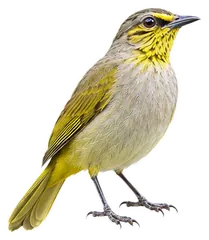 Stripe-throated BulbulPycnonotus finlaysoni
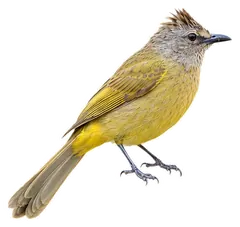 Flavescent BulbulPycnonotus flavescens
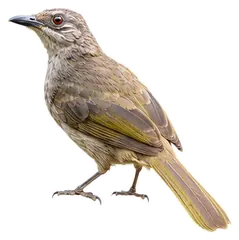
Download illustration
Free to use with credit: “Illustration: Bird Album (birdalbum.com)”. Drawn by AI from a reference photo by JJ Harrison. ↗
Heard it but can't see it? Mingji identifies birds by sound and photo, on your phone.