 Bird Album
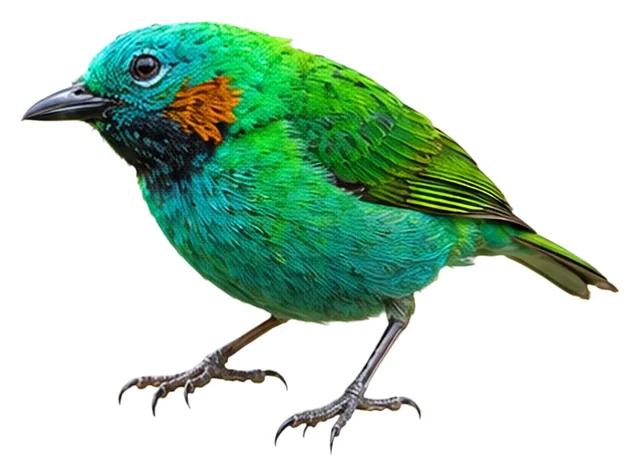
Orange-eared Tanager
Chlorochrysa calliparaea (Tschudi, 1844)
17 gWeight
The orange-eared tanager (Chlorochrysa calliparaea) is a species of bird in the family Thraupidae.
Busiest months: August and October–November · Most records: Ecuador, Peru, Colombia
Where and when it's recorded
Busiest months: August and October–November · Most records: Ecuador, Peru, Colombia

Orange-eared Tanager has been recorded at 33 of the 8,276 birding hotspots we track, in 5 countries and regions.
Records by month Southern Hemisphere
Where it's recorded most
- Cock-of-the-Rock Lodge & Manu Paradise LodgePeru1,099 records
- WildSumaco LodgeEcuador896 records
- PN Podocarpus – Sector Río BombuscaroEcuador659 records
More places
- Bosque de Protección Alto Mayo – Llanteria/Afluente vicinityPeru229 records
- Sumaco RoadEcuador206 records
- Flor de Café/PlataformaPeru204 records
- Copalinga LodgeEcuador185 records
- Cordillera Guacamayos – Sendero JumandyEcuador140 records
- Río Quijos EcoLodgeEcuador75 records
- Vereda CampucanaColombia72 records
Countries and regions with the most records
eBird records via GBIF up to 2024-12-31. A record means someone listed it; more records partly mean more birders, not more birds.
About
The orange-eared tanager (Chlorochrysa calliparaea) is a species of bird in the family Thraupidae.
Excerpt from Wikipedia, CC BY-SA 4.0 · authors · Read more on Wikipedia
Questions
How big is the Orange-eared Tanager?
The Orange-eared Tanager weighs around 17 g.
Where does the Orange-eared Tanager live?
Its breeding range: South America: Colombia to Bolivia. It is most often recorded in Ecuador, Peru and Colombia.
When is the best time to see the Orange-eared Tanager?
At the hotspots we track, it is recorded most in August, October and November (Southern Hemisphere).
Is the Orange-eared Tanager endangered?
The IUCN Red List classifies the Orange-eared Tanager as Least Concern.
What does the Orange-eared Tanager eat?
Main food: Fruit.
What family is the Orange-eared Tanager in?
It belongs to the family Tanagers & Allies (Thraupidae), order Passerines (Passeriformes).
At a glance
- Weight
- 17 g
- Habitat
- Forest
- Diet
- Fruit
- Lifestyle
- Perches in trees
- Migration
- Resident (barely migrates)
- Conservation
- Least Concern
More measurements
- Wing
- 70 mm
- Tail
- 43 mm
- Bill
- 15 mm
- Tarsus
- 19 mm
Averages from the AVONET dataset; length from field guides where available.
Range
South America: Colombia to Bolivia
Breeding range, IOC World Bird List 15.2
Classification
- Order
- Passerines Passeriformes
- Family
- Tanagers & Allies Thraupidae
- Genus
- Chlorochrysa
Other birds in the genus Chlorochrysa
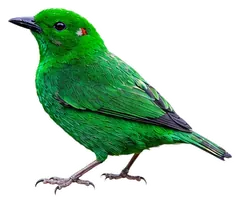 Glistening-green TanagerChlorochrysa phoenicotis
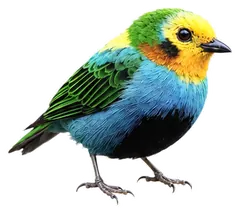 Multicolored TanagerChlorochrysa nitidissima
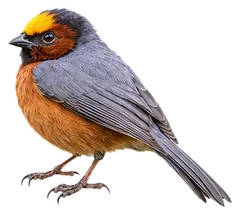 PlushcapCatamblyrhynchus diadema
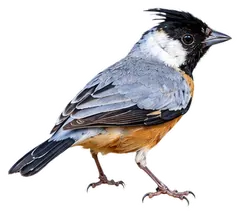 Coal-crested FinchCharitospiza eucosma
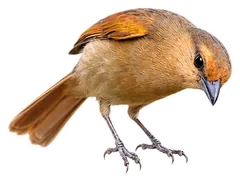 Brown TanagerOrchesticus abeillei
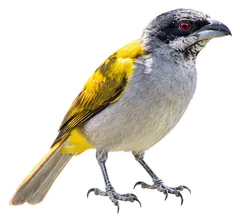 Yellow-shouldered GrosbeakParkerthraustes humeralis
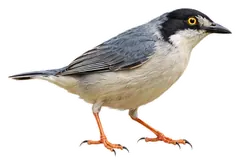 Hooded TanagerNemosia pileata
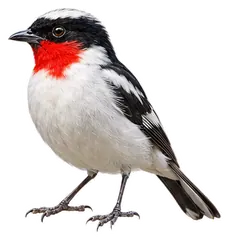 Cherry-throated TanagerNemosia rourei
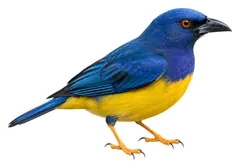 Blue-backed TanagerCyanicterus cyanicterus
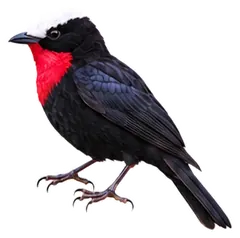 White-capped TanagerSericossypha albocristata
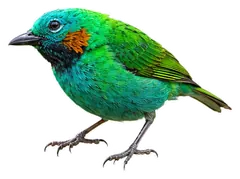
Download illustration
Free to use with credit: “Illustration: Bird Album (birdalbum.com)”. Drawn by AI from a reference photo by Juan Torres Tavera. ↗
Heard it but can't see it? Mingji identifies birds by sound and photo, on your phone.
In other languages
- EnglishOrange-eared Tanager
- 简体中文橙耳绿雀
- 繁體中文橙耳綠雀
- 日本語ホオアカエメラルドフウキンチョウ
- DeutschSchwarzkehl-Bunttangare
- FrançaisTangara de Tschudi
- EspañolTangara orejinaranja
- Portuguêssaí-de-orelha-laranja
- ItalianoTanagra guancearancio
- NederlandsOranjeoortangare
- РусскийКаштановоухая танагра
- Svenskaorangeörad tangara
- DanskDiademorganist
- Polskiszmaragdotanagra czarnogardła