 Bird Album
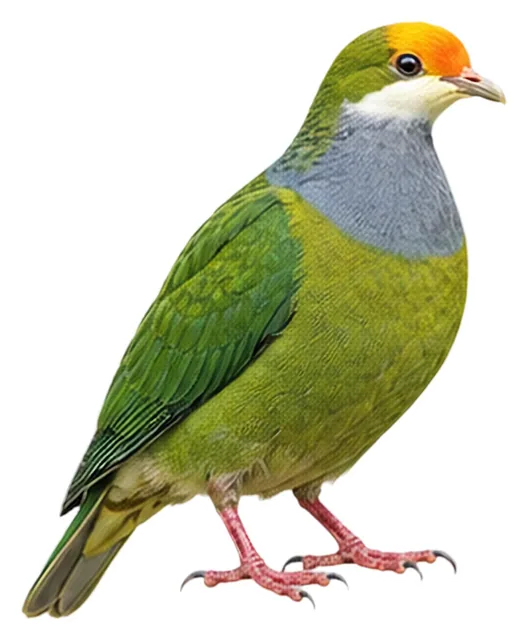
Orange-fronted Fruit Dove
Ptilinopus aurantiifrons Gray, GR, 1858
22–23 cmLength152 gWeight
The orange-fronted fruit dove (Ptilinopus aurantiifrons) is a species of bird in the family Columbidae, measuring 22–23 cm (8.7–9.1 in) in length and weighing approximately 136 g (4.8 oz).
Busiest months: July–August · Most records: Papua New Guinea, Indonesia
Where and when it's recorded

Orange-fronted Fruit Dove has been recorded at 24 of the 8,171 birding hotspots we track, in 2 countries and regions.
Records by month Southern Hemisphere
Where it's recorded most
- Pacific Adventist UniversityPapua New Guinea282 records
- Sorong MangrovesIndonesia220 records
- GaruahiPapua New Guinea87 records
More places
- PorotonaPapua New Guinea61 records
- Varirata National ParkPapua New Guinea36 records
- Boystown Road – Bowerbird HillPapua New Guinea19 records
- Elevala River – between Fly River and Ketu RiverPapua New Guinea15 records
- MalagufukIndonesia10 records
- Brown River/Vanapa River lowlandsPapua New Guinea8 records
- Elevala RiverPapua New Guinea6 records
Countries and regions with the most records
eBird records via GBIF up to 2024-12-31. A record means someone listed it; more records partly mean more birders, not more birds.
About
P. aurantiifrons is characterized by a dull green body, a distinctive bright orange forehead, and a gray collar encircling the neck. The female displays duller coloration, and juvenile P. aurantiifrons have not been described.
Excerpt from Wikipedia, CC BY-SA 4.0 · authors · Read more on Wikipedia
Questions
How big is the Orange-fronted Fruit Dove?
The Orange-fronted Fruit Dove is about 22–23 cm long and weighs around 152 g.
Where does the Orange-fronted Fruit Dove live?
Its breeding range: Australasia: New Guinea (except Huon Peninsula) and many satellites. It is most often recorded in Papua New Guinea and Indonesia.
When is the best time to see the Orange-fronted Fruit Dove?
At the hotspots we track, it is recorded most in July and August (Southern Hemisphere).
Is the Orange-fronted Fruit Dove endangered?
The IUCN Red List classifies the Orange-fronted Fruit Dove as Least Concern.
What does the Orange-fronted Fruit Dove eat?
Main food: Fruit.
What family is the Orange-fronted Fruit Dove in?
It belongs to the family Pigeons, Doves (Columbidae), order Columbiformes.
At a glance
- Length
- 22–23 cm
- Weight
- 152 g
- Habitat
- Forest
- Diet
- Fruit
- Lifestyle
- Perches in trees
- Migration
- Resident (barely migrates)
- Conservation
- Least Concern
More measurements
- Wing
- 128 mm
- Tail
- 61 mm
- Bill
- 19 mm
- Tarsus
- 23 mm
Averages from the AVONET dataset; length from field guides where available.
Range
Australasia: New Guinea (except Huon Peninsula) and many satellites
Breeding range, IOC World Bird List 15.2
Classification
- Order
- Columbiformes
- Family
- Pigeons, Doves Columbidae
- Genus
- Ptilinopus
Other birds in the genus Ptilinopus
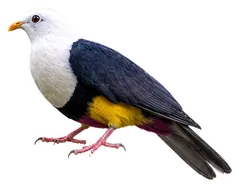 Banded Fruit DovePtilinopus cinctus
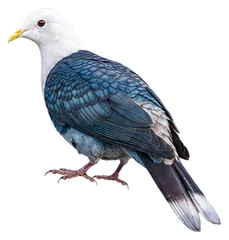 Black-banded Fruit DovePtilinopus alligator
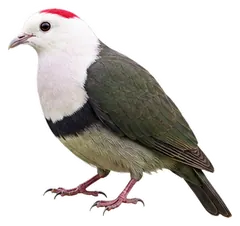 Red-naped Fruit DovePtilinopus dohertyi
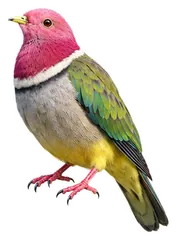 Pink-headed Fruit DovePtilinopus porphyreus
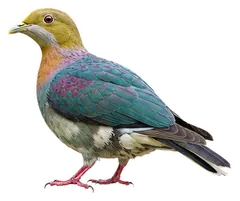 Pink-spotted Fruit DovePtilinopus perlatus
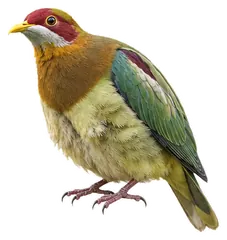 Ornate Fruit DovePtilinopus ornatus
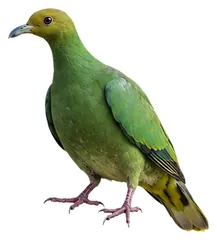 Tanna Fruit DovePtilinopus tannensis
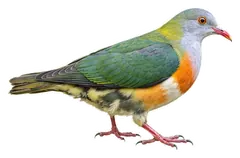 Wallace's Fruit DovePtilinopus wallacii
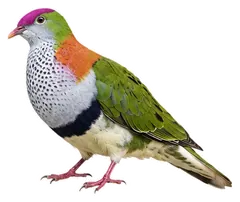 Superb Fruit DovePtilinopus superbus
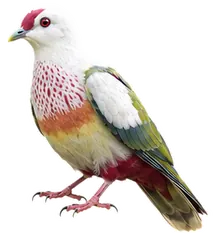 Many-colored Fruit DovePtilinopus perousii
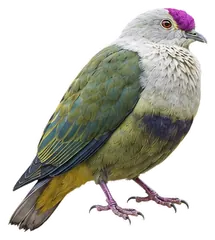 Crimson-crowned Fruit DovePtilinopus porphyraceus
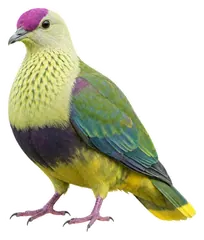 Purple-capped Fruit DovePtilinopus ponapensis
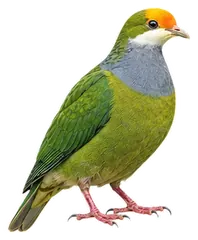
Download illustration
Free to use with credit: “Illustration: Bird Album (birdalbum.com)”. Drawn by AI from a reference photo by Markus Lilje. ↗
Heard it but can't see it? Mingji identifies birds by sound and photo, on your phone.
In other languages
- EnglishOrange-fronted Fruit Dove
- 简体中文橙额果鸠
- 繁體中文橙額果鳩
- 日本語キビタイヒメアオバト
- DeutschGoldstirn-Fruchttaube
- FrançaisPtilope à front d’or
- EspañolTilopo frentiáureo
- Portuguêspombo-frugívoro-de-testa-laranja
- ItalianoTortora beccafrutta frontearancio
- NederlandsGoudvoorhoofdjufferduif
- РусскийЗолотистолобый фруктовый голубь
- Svenskaorangepannad fruktduva
- DanskOrangepandet Frugtdue
- Polskiowocożer złotoczelny