 Bird Album
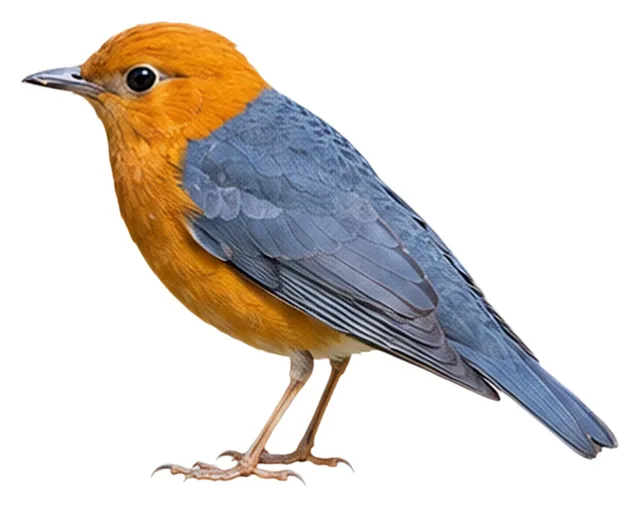
Orange-headed Thrush
Geokichla citrina (Latham, 1790)
≈21 cmLength53 gWeight
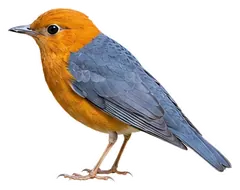
The male has an orange head and underparts and gray upperparts, and is shy, often turning over leaf litter in the understory.
Busiest months: February · Most records: India, Thailand, China
How to identify
Field marks
- Male has an entirely orange head and underparts
- Male has uniformly gray upperparts and wings
- Adult male of nominate subspecies has white tips to the median coverts and white undertail-coverts
- Distinct white stripes on the underwing
Male, female and young
Female and juvenile have more rufous upperparts; some older females are almost identical to males.
Voice
Calls include a soft “chuk” and a piercing “teer-teer-teer”; song is clear and melodious, but it is usually rather quiet.
Where and when it's recorded
Busiest months: February · Most records: India, Thailand, China

Orange-headed Thrush has been recorded at 480 of the 8,276 birding hotspots we track, in 14 countries and regions.
Records by month Northern Hemisphere
Where it's recorded most
- Rabindra SarovarIndia1,337 records
- Wildlife Institute of IndiaIndia815 records
- Nandi HillsIndia788 records
More places
- Thattekkad Bird SanctuaryIndia756 records
- Kanha NP – Mukki ZoneIndia744 records
- Ananthagiri Hills, VikarabadIndia736 records
- Bondla Wildlife SanctuaryIndia641 records
- Bharatpur – Keoladeo Ghana NPIndia615 records
- Kerala Agricultural University – Botanical GardenIndia517 records
- Chidyatapu Biological ParkIndia439 records
Countries and regions with the most records
eBird records via GBIF up to 2024-12-31. A record means someone listed it; more records partly mean more birders, not more birds.
Questions
How big is the Orange-headed Thrush?
The Orange-headed Thrush is about ≈21 cm long and weighs around 53 g.
Where does the Orange-headed Thrush live?
Its breeding range: Oriental: widespread. It is most often recorded in India, Thailand and China.
When is the best time to see the Orange-headed Thrush?
At the hotspots we track, it is recorded most in February (Northern Hemisphere).
Is the Orange-headed Thrush endangered?
The IUCN Red List classifies the Orange-headed Thrush as Least Concern.
What does the Orange-headed Thrush eat?
Main food: Omnivore.
What family is the Orange-headed Thrush in?
It belongs to the family Thrushes (Turdidae), order Passerines (Passeriformes).
At a glance
- Length
- ≈21 cm
- Weight
- 53 g
- Habitat
- Forest
- Diet
- Omnivore
- Lifestyle
- Varied
- Migration
- Migratory
- Conservation
- Least Concern
More measurements
- Wing
- 118 mm
- Tail
- 73 mm
- Bill
- 22 mm
- Tarsus
- 31 mm
Averages from the AVONET dataset; length from field guides where available.
Range
Oriental: widespread
Breeding range, IOC World Bird List 15.2
Subspecies · 4
- Geokichla citrina innotata e Myanmar and extreme s China to s Indochina
- Geokichla citrina melli s China
- Geokichla citrina courtoisi e China
- Geokichla citrina aurimacula Hainan I. (off se China) and ne, c Indochina
Classification
- Order
- Passerines Passeriformes
- Family
- Thrushes Turdidae
- Genus
- Geokichla
Other birds in the genus Geokichla
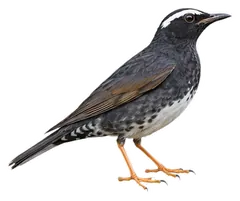 Siberian ThrushGeokichla sibirica
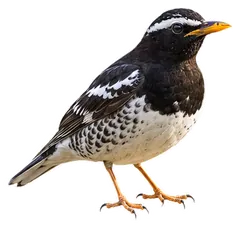 Pied ThrushGeokichla wardii
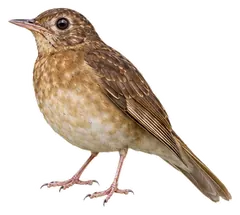 Grey Ground ThrushGeokichla princei
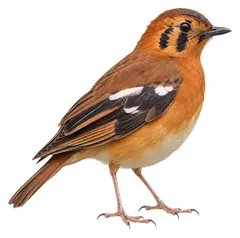 Black-eared Ground ThrushGeokichla camaronensis
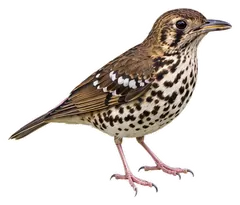 Spotted Ground ThrushGeokichla guttata
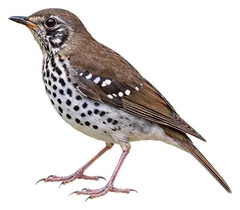 Spot-winged ThrushGeokichla spiloptera
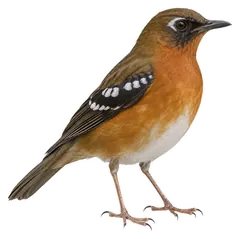 Crossley's Ground ThrushGeokichla crossleyi
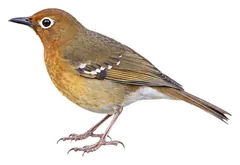 Abyssinian Ground ThrushGeokichla piaggiae
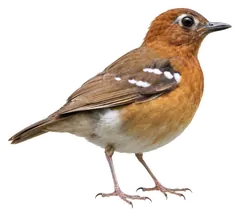 Oberländer's Ground ThrushGeokichla oberlaenderi
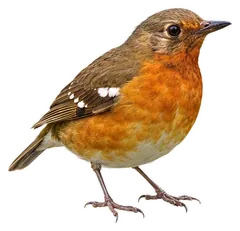 Orange Ground ThrushGeokichla gurneyi
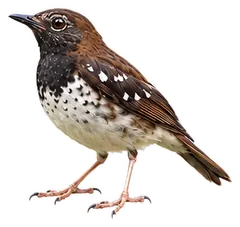 Buru ThrushGeokichla dumasi
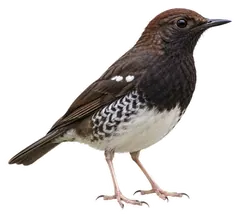 Seram ThrushGeokichla joiceyi
Download illustration
Free to use with credit: “Illustration: Bird Album (birdalbum.com)”. Drawn by AI from a reference photo by JJ Harrison (https://www.jjharrison.com.au/). ↗

Heard it but can't see it? Mingji identifies birds by sound and photo, on your phone.