 Bird Album
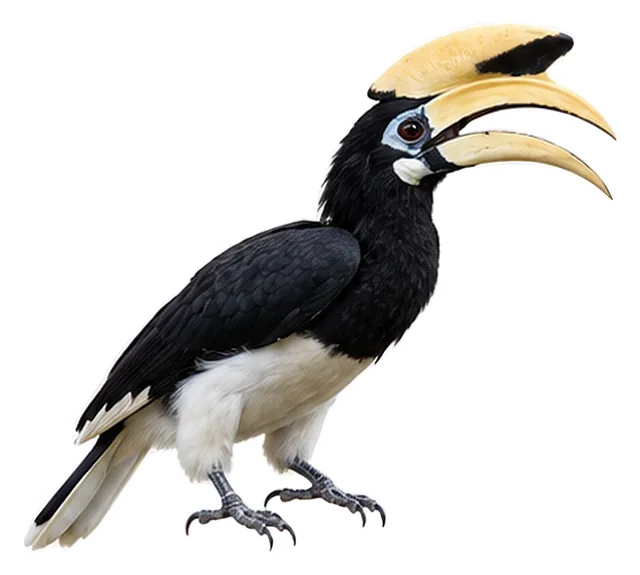
Oriental Pied Hornbill
Anthracoceros albirostris (Shaw, 1808)
≈79 cmLength893 gWeight
Adults have black-and-white plumage and a laterally flattened casque on the bill.
Busiest months: February–March · Most records: Thailand, Malaysia, Singapore
How to identify
Field marks
- Head, neck, back and upper breast black
- White bare skin around the eye
- Tail feathers white-tipped except for the central feathers
- Laterally flattened casque in adults
Male, female and young
Juveniles have an undeveloped casque and a smaller bill, and their black feathers lack the green metallic gloss of adults.
Voice
Crow-like calls, also harsh crackling calls and shrieks.
Where and when it's recorded

Oriental Pied Hornbill has been recorded at 363 of the 8,171 birding hotspots we track, in 13 countries and regions.
Records by month Northern Hemisphere
To protect this bird from disturbance, we don't list exact sites.
Countries and regions with the most records
eBird records via GBIF up to 2024-12-31. A record means someone listed it; more records partly mean more birders, not more birds.
About
The oriental pied hornbill (Anthracoceros albirostris) is an Indo-Malayan pied hornbill, a large canopy-dwelling bird belonging to the family Bucerotidae. Two other common names for this species are Sunda pied hornbill (convexus) and Malaysian pied hornbill.
Excerpt from Wikipedia, CC BY-SA 4.0 · authors · Read more on Wikipedia
Questions
How big is the Oriental Pied Hornbill?
The Oriental Pied Hornbill is about ≈79 cm long and weighs around 893 g.
Where does the Oriental Pied Hornbill live?
Its breeding range: Oriental: widespread. It is most often recorded in Thailand, Malaysia and Singapore.
When is the best time to see the Oriental Pied Hornbill?
At the hotspots we track, it is recorded most in February and March (Northern Hemisphere).
Is the Oriental Pied Hornbill endangered?
The IUCN Red List classifies the Oriental Pied Hornbill as Least Concern.
What does the Oriental Pied Hornbill eat?
Main food: Fruit.
What family is the Oriental Pied Hornbill in?
It belongs to the family Hornbills (Bucerotidae), order Bucerotiformes.
At a glance
- Length
- ≈79 cm
- Weight
- 893 g
- Habitat
- Forest
- Diet
- Fruit
- Lifestyle
- Perches in trees
- Migration
- Resident (barely migrates)
- Conservation
- Least Concern
More measurements
- Wing
- 285 mm
- Tail
- 295 mm
- Bill
- 160 mm
- Tarsus
- 58 mm
Averages from the AVONET dataset; length from field guides where available.
Range
Oriental: widespread
Breeding range, IOC World Bird List 15.2
Subspecies · 1
- Anthracoceros albirostris albirostris India to s China, Indochina and n Malay Pen.
Classification
- Order
- Bucerotiformes
- Family
- Hornbills Bucerotidae
- Genus
- Anthracoceros
Other birds in the genus Anthracoceros
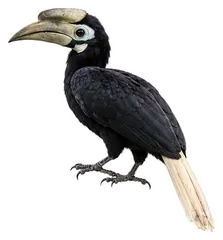 Palawan HornbillAnthracoceros marchei
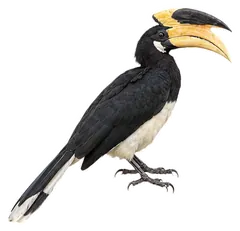 Malabar Pied HornbillAnthracoceros coronatus
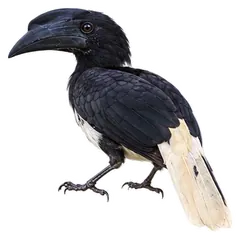 Sulu HornbillAnthracoceros montani
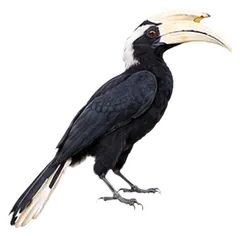 Black HornbillAnthracoceros malayanus
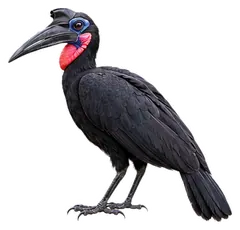 Abyssinian Ground HornbillBucorvus abyssinicus
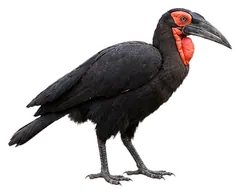 Southern Ground HornbillBucorvus leadbeateri
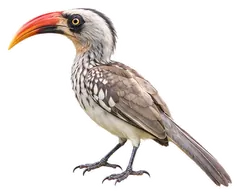 Tanzanian Red-billed HornbillTockus ruahae
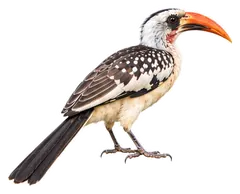 Western Red-billed HornbillTockus kempi
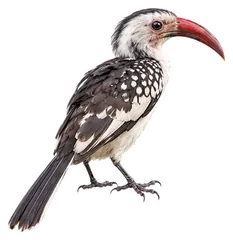 Damara Red-billed HornbillTockus damarensis
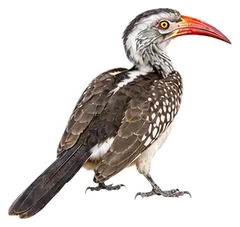 Southern Red-billed HornbillTockus rufirostris
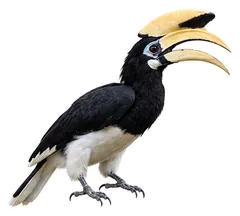
Download illustration
Free to use with credit: “Illustration: Bird Album (birdalbum.com)”. Drawn by AI from a reference photo by Hong Wenyang. ↗
Heard it but can't see it? Mingji identifies birds by sound and photo, on your phone.
In other languages
- EnglishOriental Pied Hornbill
- 简体中文冠斑犀鸟
- 繁體中文斑犀鳥
- 日本語キタカササギサイチョウ
- DeutschOrienthornvogel
- FrançaisCalao pie
- EspañolCálao cariblanco
- Portuguêscalau-oriental
- ItalianoBucero bianconero orientale
- NederlandsIndische Neushoornvogel
- РусскийБелоклювая птица-носорог
- Svenskaorientnäshornsfågel
- DanskBroget Næsehornsfugl
- Polskidzioborożec białobrzuchy