 Bird Album
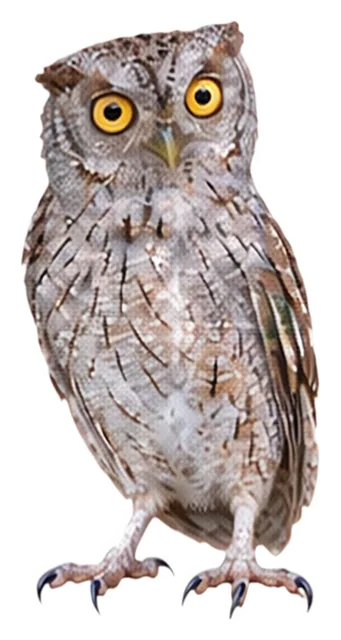
Pacific Screech Owl
Megascops cooperi (Ridgway, 1878)
23–26 cmLength150 gWeight
The Pacific screech owl (Megascops cooperi) is a species of owl in the family Strigidae.
Busiest months: January–March · Most records: Costa Rica, Nicaragua, Honduras
Where and when it's recorded
Busiest months: January–March · Most records: Costa Rica, Nicaragua, Honduras

Pacific Screech Owl has been recorded at 53 of the 8,276 birding hotspots we track, in 5 countries and regions.
Records by month Northern Hemisphere
Where it's recorded most
- Refugio mixto Caño NegroCosta Rica1,753 records
- Ensenada Lodge [Área General]Costa Rica1,143 records
- Carretera hacia CofradiaNicaragua217 records
More places
- Cerro LodgeCosta Rica203 records
- Reserva Privada Concepción de MaríaNicaragua134 records
- PN Palo VerdeCosta Rica89 records
- Entrada Los Chiles (El Parque) hasta Caño NegroCosta Rica82 records
- Zamorano Univ. – Campus Farms and River 740-815 maslHonduras80 records
- Reserva Privada MontibelliNicaragua79 records
- Reserva Privada QuelantaroNicaragua60 records
Countries and regions with the most records
eBird records via GBIF up to 2024-12-31. A record means someone listed it; more records partly mean more birders, not more birds.
About
The Pacific screech owl (Megascops cooperi) is a species of owl in the family Strigidae. It is found in Costa Rica, El Salvador, Guatemala, Honduras, Mexico, and Nicaragua. The Pacific screech owl has sometimes been treated as a race of western screech owl (Megascops kennicottii) or eastern screech owl (M. asio) but its vocalizations are distinct from theirs.
Excerpt from Wikipedia, CC BY-SA 4.0 · authors · Read more on Wikipedia
Questions
How big is the Pacific Screech Owl?
The Pacific Screech Owl is about 23–26 cm long and weighs around 150 g.
Where does the Pacific Screech Owl live?
Its breeding range: Middle America: southern Mexico to northwestern Costa Rica. It is most often recorded in Costa Rica, Nicaragua and Honduras.
When is the best time to see the Pacific Screech Owl?
At the hotspots we track, it is recorded most in January, February and March (Northern Hemisphere).
Is the Pacific Screech Owl endangered?
The IUCN Red List classifies the Pacific Screech Owl as Least Concern.
What does the Pacific Screech Owl eat?
Main food: Insects & other invertebrates.
What family is the Pacific Screech Owl in?
It belongs to the family Owls (Strigidae), order Strigiformes.
At a glance
- Length
- 23–26 cm
- Weight
- 150 g
- Habitat
- Woodland
- Diet
- Insects & other invertebrates
- Lifestyle
- Perches in trees
- Migration
- Resident (barely migrates)
- Conservation
- Least Concern
More measurements
- Wing
- 176 mm
- Tail
- 81 mm
- Bill
- 24 mm
- Tarsus
- 39 mm
Averages from the AVONET dataset; length from field guides where available.
Range
Middle America: southern Mexico to northwestern Costa Rica
Breeding range, IOC World Bird List 15.2
Classification
- Order
- Strigiformes
- Family
- Owls Strigidae
- Genus
- Megascops
Other birds in the genus Megascops
 Whiskered Screech OwlMegascops trichopsis
 Bare-shanked Screech OwlMegascops clarkii
 White-throated Screech OwlMegascops albogularis
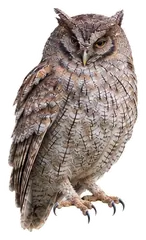 Tropical Screech OwlMegascops choliba
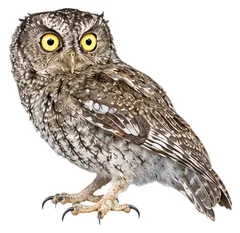 Bearded Screech OwlMegascops barbarus
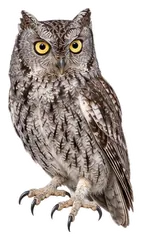 Western Screech OwlMegascops kennicottii
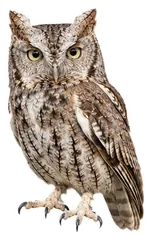 Eastern Screech OwlMegascops asio
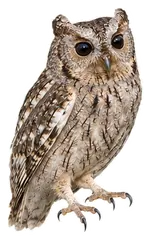 Balsas Screech OwlMegascops seductus
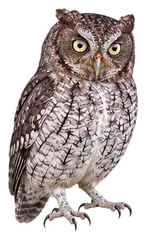 Middle American Screech OwlMegascops guatemalae
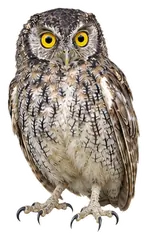 Koepcke's Screech OwlMegascops koepckeae
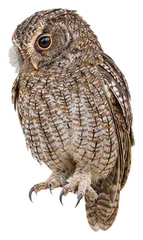 Rufescent Screech OwlMegascops ingens
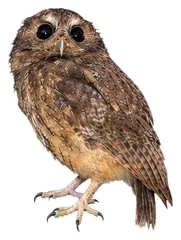 Cinnamon Screech OwlMegascops petersoni
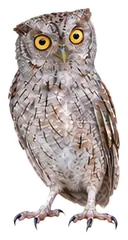
Download illustration
Free to use with credit: “Illustration: Bird Album (birdalbum.com)”. Drawn by AI from reference photos. ↗
Heard it but can't see it? Mingji identifies birds by sound and photo, on your phone.
In other languages
- EnglishPacific Screech Owl
- 简体中文太平洋角鸮
- 繁體中文太平洋鳴角鴞
- 日本語クーパーオオコノハズク
- DeutschMangrovekreischeule
- FrançaisPetit-duc de Cooper
- EspañolAutillo de manglar
- Portuguêscorujinha-do-pacífico
- ItalianoAssiolo del Pacifico
- NederlandsMangroveschreeuwuil
- РусскийЦентральноамериканская совка
- Svenskakustskrikuv
- DanskPacifik Kystdværghornugle
- Polskisyczoń namorzynowy