 Bird Album
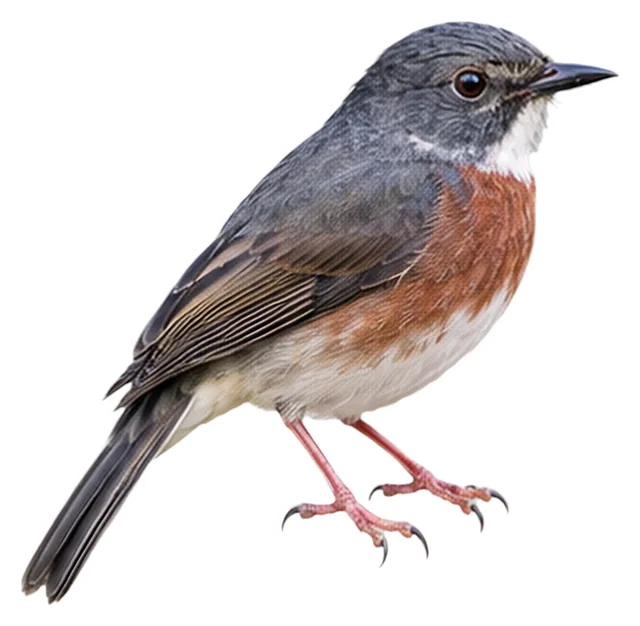
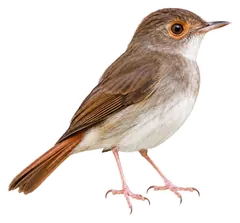
Pale-chinned Flycatcher
Cyornis poliogenys Brooks, WE, 1880
16–18 cmLength16 gWeight
It has a whitish throat and rufous breast, and the male lacks the vivid blue of many flycatchers in the same genus.
Busiest months: April · Most records: India, Nepal, Bangladesh
How to identify
Field marks
- Dull blue-gray upperparts
- Rufous breast
- Whitish throat and white belly
- Medium-sized flycatcher with a body length of 15.5–18 cm
Male, female and young
Sexes similar.
Where and when it's recorded

Pale-chinned Flycatcher has been recorded at 54 of the 8,171 birding hotspots we track, in 6 countries and regions.
Records by month Northern Hemisphere
Where it's recorded most
- Garbhanga Reserve ForestIndia362 records
- Manas NP – BanasbariIndia194 records
- Dihing Patkai NP – SoraipungIndia191 records
More places
- Nameri National Park & SurroundingsIndia172 records
- Chitwan National ParkNepal149 records
- Dihing Patkai NP – SoraipungIndia101 records
- Satchari NPBangladesh100 records
- Muraichara - Sagarnal Road TrailBangladesh88 records
- Chitwan National Park - SaurahaNepal87 records
- Kaziranga NP & Surroundings – Eastern RangeIndia87 records
Countries and regions with the most records
eBird records via GBIF up to 2024-12-31. A record means someone listed it; more records partly mean more birders, not more birds.
About
The pale-chinned flycatcher (Cyornis poliogenys) is a species of bird in the family Muscicapidae. It has also been known in the past as pale-chinned blue flycatcher (on the IOC World Bird List up to 2023), and Brook's flycatcher.
Excerpt from Wikipedia, CC BY-SA 4.0 · authors · Read more on Wikipedia
Questions
How big is the Pale-chinned Flycatcher?
The Pale-chinned Flycatcher is about 16–18 cm long and weighs around 16 g.
Where does the Pale-chinned Flycatcher live?
Its breeding range: Oriental: Himalayas to southern Myanmar and east-central India. It is most often recorded in India, Nepal and Bangladesh.
When is the best time to see the Pale-chinned Flycatcher?
At the hotspots we track, it is recorded most in April (Northern Hemisphere).
Is the Pale-chinned Flycatcher endangered?
The IUCN Red List classifies the Pale-chinned Flycatcher as Least Concern.
What does the Pale-chinned Flycatcher eat?
Main food: Insects & other invertebrates.
What family is the Pale-chinned Flycatcher in?
It belongs to the family Chats, Old World Flycatchers (Muscicapidae), order Passerines (Passeriformes).
At a glance
- Length
- 16–18 cm
- Weight
- 16 g
- Habitat
- Shrubland
- Diet
- Insects & other invertebrates
- Lifestyle
- Perches in trees
- Migration
- Resident (barely migrates)
- Conservation
- Least Concern
More measurements
- Wing
- 70 mm
- Tail
- 60 mm
- Bill
- 14 mm
- Tarsus
- 19 mm
Averages from the AVONET dataset; length from field guides where available.
Range
Oriental: Himalayas to southern Myanmar and east-central India
Breeding range, IOC World Bird List 15.2
Subspecies · 2
- Cyornis poliogenys cachariensis e Himalayas to sc China and n Myanmar
- Cyornis poliogenys laurentei s China
Classification
- Order
- Passerines Passeriformes
- Family
- Chats, Old World Flycatchers Muscicapidae
- Genus
- Cyornis
Other birds in the genus Cyornis
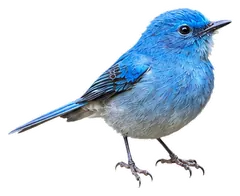 Pale Blue FlycatcherCyornis unicolor
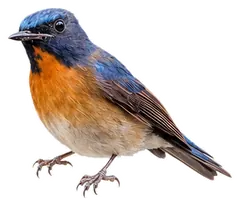 Chinese Blue FlycatcherCyornis glaucicomans
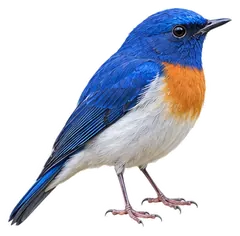 Blue-throated Blue FlycatcherCyornis rubeculoides
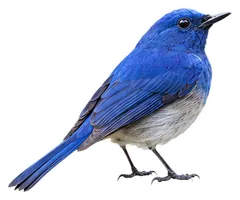 Hainan Blue FlycatcherCyornis hainanus
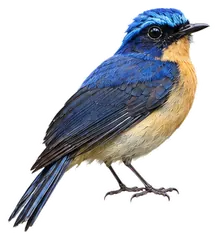 Bornean Blue FlycatcherCyornis superbus
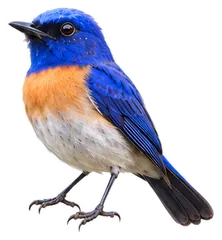 Malaysian Blue FlycatcherCyornis turcosus
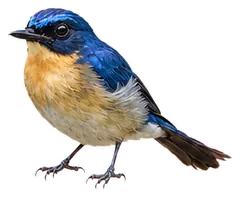 Palawan Blue FlycatcherCyornis lemprieri
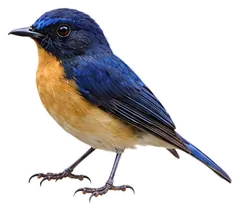 Sunda Blue FlycatcherCyornis caerulatus
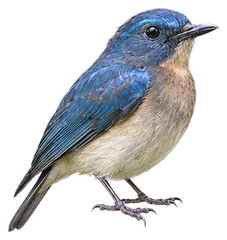 Blue-breasted Blue FlycatcherCyornis herioti
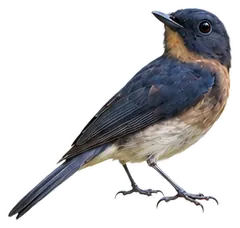 Rufous-breasted Blue FlycatcherCyornis camarinensis
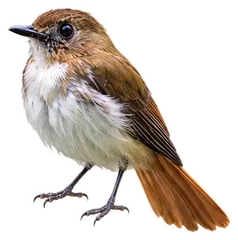 Philippine Jungle FlycatcherCyornis ruficauda
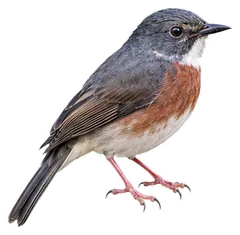
 Sulu Jungle FlycatcherCyornis ocularis
Download illustration
Free to use with credit: “Illustration: Bird Album (birdalbum.com)”. Drawn by AI from a reference photo by Rejoice Gassah. ↗
Heard it but can't see it? Mingji identifies birds by sound and photo, on your phone.
In other languages
- EnglishPale-chinned Flycatcher
- 简体中文灰颊仙鹟
- 繁體中文灰頰仙鶲
- 日本語メスガタヒメアオヒタキ
- DeutschGraublauschnäpper
- FrançaisGobemouche de Brooks
- EspañolPapamoscas de Brooks
- Portuguêspapa-moscas-de-queixo-branco
- Italianopigliamosche mentochiaro
- NederlandsBrooks' Niltava
- РусскийСерощёкая нильтава
- Svenskagråkindad flugsnappare
- DanskHvidstrubet Niltava
- Polskidżunglówka blada