 Bird Album
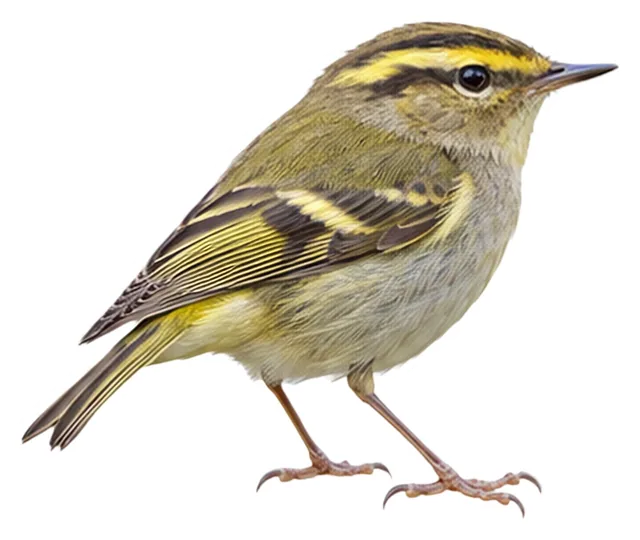
Pallas's Leaf Warbler
Phylloscopus proregulus (Pallas, 1811)
9–10 cmLength6 gWeight
This small leaf warbler has a large head, a short tail, a yellow supercilium and crown-stripe, and a lemon-yellow rump.
Busiest months: April, October and December · Most records: China, Thailand, United Kingdom
Looks like Buff-barred Warbler, Brooks's Leaf Warbler, Ashy-throated Warbler
How to identify
Field marks
- Green upperparts; white underparts
- Two pale yellow wing-bars
- Bright yellow supercilium and median crown-stripe
- Lemon-yellow rump, conspicuous in low vegetation or when hovering
Male, female and young
Sexes similar; juvenile has a rufous tinge to the upperparts, grayish-white underparts and a duller supercilium.
Voice
Call is a short, soft “dju-ee”; song is strong and sustained, consisting of whistles.
Similar species
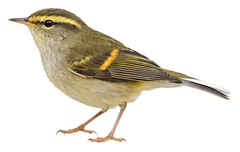
Larger, with darker green upperparts, less conspicuous markings than Pallas's Leaf Warbler, and buff rather than yellow wing-bars.
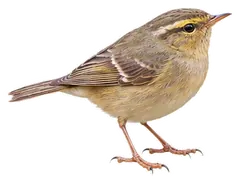
Larger, with dark green upperparts, less distinct markings than Pallas's Leaf Warbler, and white rather than yellow wing-bars.
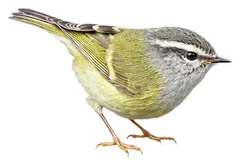
Gray-tinged head, face and throat; pale yellow underparts.
Where and when it's recorded

Pallas's Leaf Warbler has been recorded at 1,140 of the 8,171 birding hotspots we track, in 37 countries and regions.
Records by month Northern Hemisphere
Where it's recorded most
- Tai Po Kau Nature ReserveHong Kong (China)1,003 records
- Yeliu IBATaiwan (China)746 records
- Nanhui DongtanChina618 records
More places
- Po ToiHong Kong (China)601 records
- Doi Pha Hom Pok NP – Doi Lang (W), AKA Doi San JuThailand570 records
- Kinmen – Doumen Hiking TrailChina502 records
- Mai Po Nature ReserveHong Kong (China)466 records
- Pak Sha OHong Kong (China)441 records
- Nanyan ParkChina400 records
- Century ParkChina400 records
Countries and regions with the most records
eBird records via GBIF up to 2024-12-31. A record means someone listed it; more records partly mean more birders, not more birds.
About
Pallas's leaf warbler (Phylloscopus proregulus) or Pallas's warbler is a bird that breeds in mountain forests from southern Siberia east to northern Mongolia and northeast China. It is named after the German zoologist Peter Simon Pallas, who first formally described it. This leaf warbler is strongly migratory, wintering mainly in south China and adjacent areas of southeast Asia, although in recent decades increasing numbers have been found in Europe in autumn.
Excerpt from Wikipedia, CC BY-SA 4.0 · authors · Read more on Wikipedia
Questions
How big is the Pallas's Leaf Warbler?
The Pallas's Leaf Warbler is about 9–10 cm long and weighs around 6 g.
Where does the Pallas's Leaf Warbler live?
Its breeding range: Palearctic: southern Russia and northern Mongolia to eastern Russia and northeastern China. It is most often recorded in China, Thailand and United Kingdom.
When is the best time to see the Pallas's Leaf Warbler?
At the hotspots we track, it is recorded most in April, October and December (Northern Hemisphere).
Is the Pallas's Leaf Warbler endangered?
The IUCN Red List classifies the Pallas's Leaf Warbler as Least Concern.
What does the Pallas's Leaf Warbler eat?
Main food: Insects & other invertebrates.
What family is the Pallas's Leaf Warbler in?
It belongs to the family Leaf Warblers (Phylloscopidae), order Passerines (Passeriformes).
At a glance
- Length
- 9–10 cm
- Weight
- 6 g
- Habitat
- Forest
- Diet
- Insects & other invertebrates
- Lifestyle
- Perches in trees
- Migration
- Migratory
- Conservation
- Least Concern
More measurements
- Wing
- 51 mm
- Tail
- 38 mm
- Bill
- 10 mm
- Tarsus
- 16 mm
Averages from the AVONET dataset; length from field guides where available.
Range
Palearctic: southern Russia and northern Mongolia to eastern Russia and northeastern China
Breeding range, IOC World Bird List 15.2
Classification
- Order
- Passerines Passeriformes
- Family
- Leaf Warblers Phylloscopidae
- Genus
- Phylloscopus
Other birds in the genus Phylloscopus
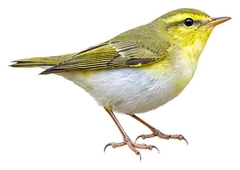 Wood WarblerPhylloscopus sibilatrix
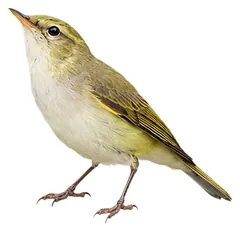 Western Bonelli's WarblerPhylloscopus bonelli
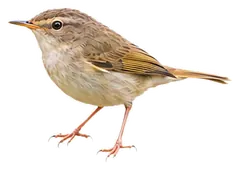 Eastern Bonelli's WarblerPhylloscopus orientalisBuff-barred WarblerPhylloscopus pulcherAshy-throated WarblerPhylloscopus maculipennis
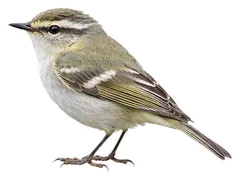 Hume's Leaf WarblerPhylloscopus humei
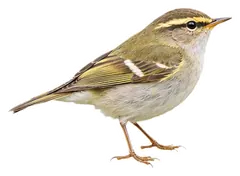 Yellow-browed WarblerPhylloscopus inornatusBrooks's Leaf WarblerPhylloscopus subviridis
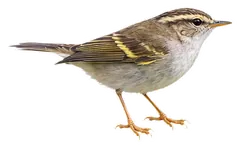 Chinese Leaf WarblerPhylloscopus yunnanensis
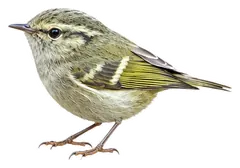 Lemon-rumped WarblerPhylloscopus chloronotus
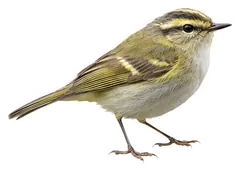 Sichuan Leaf WarblerPhylloscopus forresti
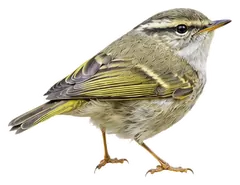 Gansu Leaf WarblerPhylloscopus kansuensis
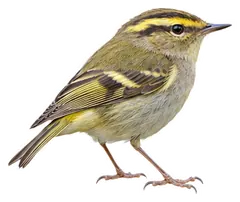
Download illustration
Free to use with credit: “Illustration: Bird Album (birdalbum.com)”. Drawn by AI from a reference photo by fedotova_elena. ↗

Heard it but can't see it? Mingji identifies birds by sound and photo, on your phone.
In other languages
- EnglishPallas's Leaf Warbler
- 简体中文黄腰柳莺
- 繁體中文黃腰柳鶯
- 日本語カラフトムシクイ
- 한국어노랑허리솔새
- DeutschGoldhähnchen-Laubsänger
- FrançaisPouillot de Pallas
- EspañolMosquitero de Pallas
- Portuguêsfelosa-de-sobrancelha-dourada
- ItalianoLuì di Pallas
- NederlandsPallas' Boszanger
- РусскийКорольковая пеночка
- Svenskakungsfågelsångare
- DanskFuglekongesanger
- Polskiświstunka złotawa