 Bird Album
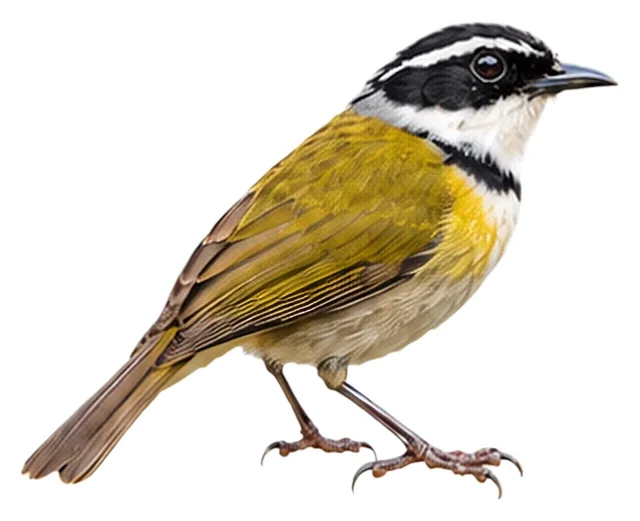
Pectoral Sparrow
Arremon taciturnus (Hermann, 1783)
15 cmLength25 gWeight
The pectoral sparrow (Arremon taciturnus) is a small species of New World sparrow first described in 1779 by Georges-Louis Leclerc.
Most records: Colombia, Peru, Brazil
Where and when it's recorded
Most records: Colombia, Peru, Brazil

Pectoral Sparrow has been recorded at 95 of the 8,276 birding hotspots we track, in 8 countries and regions.
Records by month Southern Hemisphere
Where it's recorded most
- Bosque BavariaColombia647 records
- RN Rancho CamanáColombia396 records
- Manu BiolodgePeru313 records
More places
- RPPN Pedra D'AntasBrazil302 records
- PN de Boa Nova – Mata do CharmeBrazil265 records
- El Jaguar ProAves reserveColombia204 records
- Jardín de Colibries y Mirador Pico de HozPeru198 records
- Sadiri LodgeBolivia175 records
- Amazonía LodgePeru174 records
- Senda Mitú CachiveraColombia167 records
Countries and regions with the most records
eBird records via GBIF up to 2024-12-31. A record means someone listed it; more records partly mean more birders, not more birds.
About
The pectoral sparrow (Arremon taciturnus) is a small species of New World sparrow first described in 1779 by Georges-Louis Leclerc. It has two subspecies. Like other sparrows in its family Arremon, it has pale green-to-olive wings, a distinctive black band going across its breast (in subspecies nigrirostris the band is not continuous and instead breaks in the center).
Excerpt from Wikipedia, CC BY-SA 4.0 · authors · Read more on Wikipedia
Questions
How big is the Pectoral Sparrow?
The Pectoral Sparrow is about 15 cm long and weighs around 25 g.
Where does the Pectoral Sparrow live?
Its breeding range: South America: northwestern South America, Amazonia. It is most often recorded in Colombia, Peru and Brazil.
Is the Pectoral Sparrow endangered?
The IUCN Red List classifies the Pectoral Sparrow as Least Concern.
What does the Pectoral Sparrow eat?
Main food: Omnivore.
What family is the Pectoral Sparrow in?
It belongs to the family New World Sparrows (Passerellidae), order Passerines (Passeriformes).
At a glance
- Length
- 15 cm
- Weight
- 25 g
- Habitat
- Forest
- Diet
- Omnivore
- Lifestyle
- Perches in trees
- Migration
- Resident (barely migrates)
- Conservation
- Least Concern
More measurements
- Wing
- 72 mm
- Tail
- 61 mm
- Bill
- 15 mm
- Tarsus
- 24 mm
Averages from the AVONET dataset; length from field guides where available.
Range
South America: northwestern South America, Amazonia
Breeding range, IOC World Bird List 15.2
Classification
- Order
- Passerines Passeriformes
- Family
- New World Sparrows Passerellidae
- Genus
- Arremon
Other birds in the genus Arremon
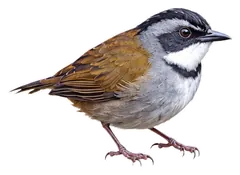 Sierra Nevada BrushfinchArremon basilicus
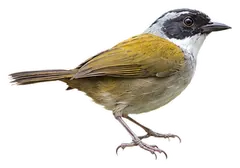 Perija BrushfinchArremon perijanus
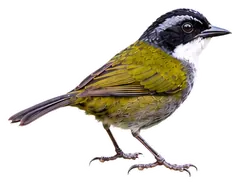 Costa Rican BrushfinchArremon costaricensis
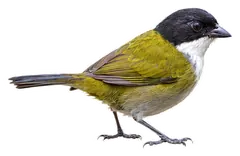 Black-headed BrushfinchArremon atricapillus
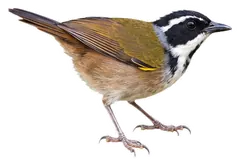 Caracas BrushfinchArremon phaeopleurus
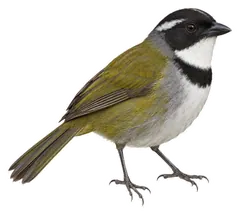 Paria BrushfinchArremon phygas
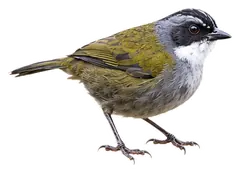 Grey-browed BrushfinchArremon assimilis
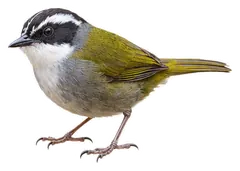 White-browed BrushfinchArremon torquatus
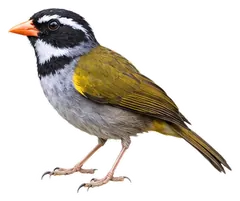 Orange-billed SparrowArremon aurantiirostris
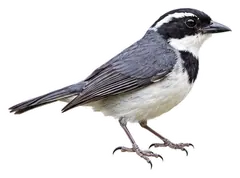 Black-capped SparrowArremon abeillei
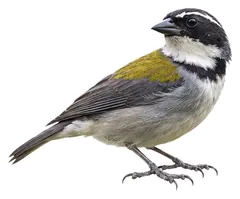 Maranon SparrowArremon nigriceps
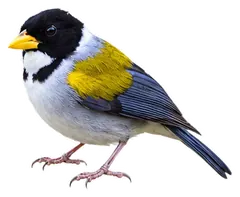 Golden-winged SparrowArremon schlegeli
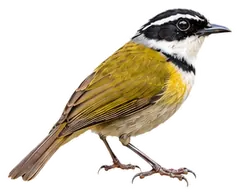
Download illustration
Free to use with credit: “Illustration: Bird Album (birdalbum.com)”. Drawn by AI from a reference photo by eduardovieira17. ↗
Heard it but can't see it? Mingji identifies birds by sound and photo, on your phone.