 Bird Album
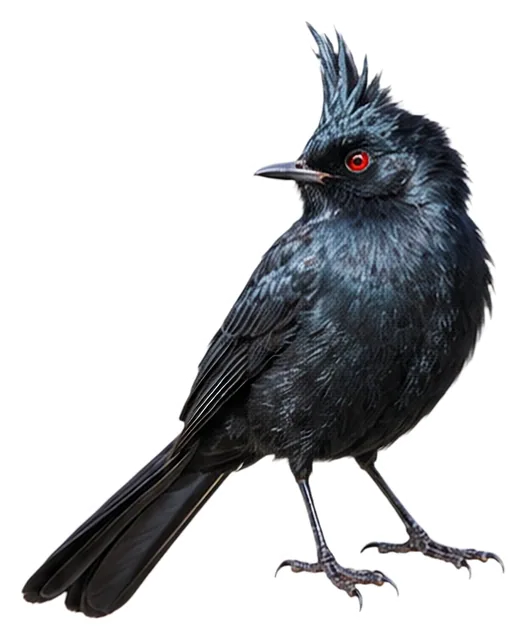
Phainopepla
Phainopepla nitens (Swainson, 1838)
22 gWeight
The phainopepla or northern phainopepla (Phainopepla nitens) is the most northerly representative of the mainly tropical Central American family Ptiliogonatidae, the silky flycatchers.
Busiest months: April–May · Most records: United States, Mexico
Where and when it's recorded

Phainopepla has been recorded at 104 of the 8,171 birding hotspots we track, in 2 countries and regions.
Records by month Northern Hemisphere
Where it's recorded most
- Big Morongo Canyon Preserve & Covington ParkUnited States8,044 records
- Paton Center for HummingbirdsUnited States7,511 records
- Desert NWR – Corn CreekUnited States7,411 records
More places
- Sweetwater WetlandsUnited States6,440 records
- Anza Trail – TubacUnited States5,973 records
- Agua Caliente ParkUnited States5,553 records
- Sabino Dam and downstream riparianUnited States5,384 records
- Boyce Thompson ArboretumUnited States4,876 records
- Catalina SPUnited States4,606 records
- Hassayampa River PreserveUnited States4,030 records
Countries and regions with the most records
eBird records via GBIF up to 2024-12-31. A record means someone listed it; more records partly mean more birders, not more birds.
About
The phainopepla or northern phainopepla (Phainopepla nitens) is the most northerly representative of the mainly tropical Central American family Ptiliogonatidae, the silky flycatchers. Its name is from the Greek phain pepla meaning "shining robe" in reference to the male's plumage.
Excerpt from Wikipedia, CC BY-SA 4.0 · authors · Read more on Wikipedia
Questions
How big is the Phainopepla?
The Phainopepla weighs around 22 g.
Where does the Phainopepla live?
Its breeding range: North America, Middle America: southwestern USA to north-central, northwestern Mexico. It is most often recorded in United States and Mexico.
When is the best time to see the Phainopepla?
At the hotspots we track, it is recorded most in April and May (Northern Hemisphere).
Is the Phainopepla endangered?
The IUCN Red List classifies the Phainopepla as Least Concern.
What does the Phainopepla eat?
Main food: Fruit.
What family is the Phainopepla in?
It belongs to the family Silky-flycatchers (Ptiliogonatidae), order Passerines (Passeriformes).
At a glance
- Weight
- 22 g
- Habitat
- Shrubland
- Diet
- Fruit
- Lifestyle
- Perches in trees
- Migration
- Resident (barely migrates)
- Conservation
- Least Concern
More measurements
- Wing
- 93 mm
- Tail
- 93 mm
- Bill
- 13 mm
- Tarsus
- 21 mm
Averages from the AVONET dataset; length from field guides where available.
Range
North America, Middle America: southwestern USA to north-central, northwestern Mexico
Breeding range, IOC World Bird List 15.2
Classification
- Order
- Passerines Passeriformes
- Family
- Silky-flycatchers Ptiliogonatidae
- Genus
- Phainopepla
More from the family Silky-flycatchers
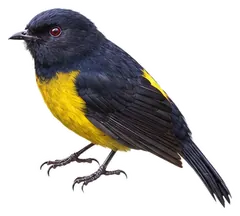 Black-and-yellow PhainoptilaPhainoptila melanoxantha
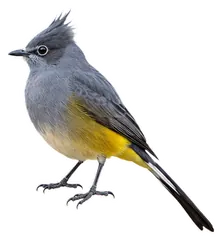 Grey Silky-flycatcherPtiliogonys cinereus
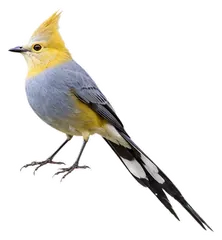 Long-tailed Silky-flycatcherPtiliogonys caudatus
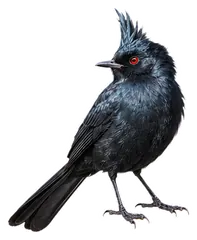
Download illustration
Free to use with credit: “Illustration: Bird Album (birdalbum.com)”. Drawn by AI from a reference photo by Lee Hoy. ↗
Heard it but can't see it? Mingji identifies birds by sound and photo, on your phone.
In other languages
- EnglishPhainopepla
- 简体中文黑丝鹟
- 繁體中文亮絲鶲
- 日本語レンジャクモドキ
- DeutschTrauerseidenschnäpper
- FrançaisPhénopèple luisant
- EspañolCapulinero negro
- Portuguêspapa-moscas-sedoso-preto
- ItalianoFainopepla
- NederlandsZwarte Zijdevliegenvanger
- РусскийЧёрный шелкохвост
- Svenskasvart silkesflugsnappare
- DanskSort Silkemonark
- Polskiatłasowiec czarny