 Bird Album
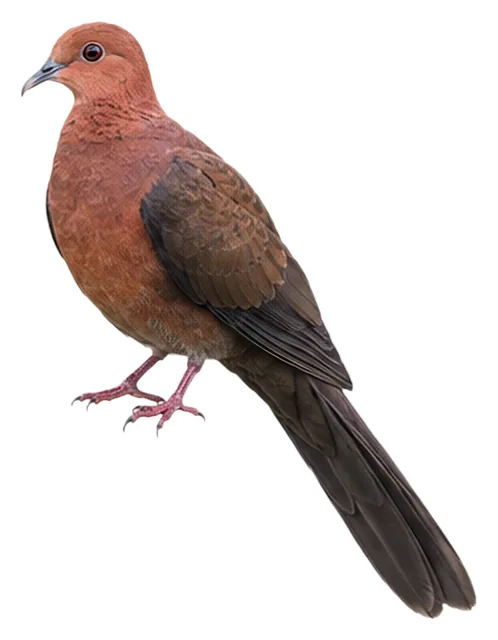
Philippine Cuckoo-Dove
Macropygia tenuirostris Bonaparte, 1854
38 cmLength177 gWeight
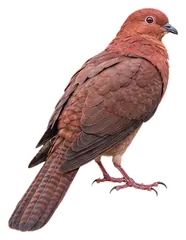
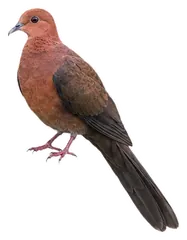
It is a large, shy cuckoo-dove with a rufous head and bright red legs and feet, often foraging in dense forest.
Busiest months: March · Most records: Philippines, Malaysia
How to identify
Field marks
- Head cinnamon-rufous
- Nape and sides of breast with pinkish-purple metallic gloss and black spots
- Iris red; bill rufous
- Legs and feet bright red
Male, female and young
Female has a pale yellowish-rufous nape with black markings and barring; juvenile resembles female, with more barring.
Where and when it's recorded
Busiest months: March · Most records: Philippines, Malaysia

Philippine Cuckoo-Dove has been recorded at 59 of the 8,276 birding hotspots we track, in 2 countries and regions.
Records by month Northern Hemisphere
Where it's recorded most
- Mt. Tagubud, New BataanPhilippines368 records
- Jariel's Peak – Restaurant, Bgy. Magsaysay, InfantaPhilippines292 records
- Lake HolonPhilippines229 records
More places
- Mt. Kitanglad Range Natural Park – Mid-level TrailsPhilippines118 records
- Mt. Kitanglad Range Natural Park – Del Monte LodgePhilippines89 records
- Mt. Talomo – 1200masl, Davao CityPhilippines88 records
- Mt. Kitanglad Range Natural Park – SumilaoPhilippines87 records
- Pasonanca Natural Park, Zamboanga City – BalunoPhilippines85 records
- Balinsasayao Twin Lakes Natural Park, SibulanPhilippines78 records
- Palo Alto, BarasPhilippines77 records
Countries and regions with the most records
eBird records via GBIF up to 2024-12-31. A record means someone listed it; more records partly mean more birders, not more birds.
About
The Philippine cuckoo-dove (Macropygia tenuirostris) is a species of bird in the family Columbidae. It is found in the Philippines and Taiwan (China) and is rated as a species of least concern on the International Union for Conservation of Nature Red List of Endangered Species.
Excerpt from Wikipedia, CC BY-SA 4.0 · authors · Read more on Wikipedia
Questions
How big is the Philippine Cuckoo-Dove?
The Philippine Cuckoo-Dove is about 38 cm long and weighs around 177 g.
Where does the Philippine Cuckoo-Dove live?
Its breeding range: Oriental: Philippines; Borneo. It is most often recorded in Philippines and Malaysia.
When is the best time to see the Philippine Cuckoo-Dove?
At the hotspots we track, it is recorded most in March (Northern Hemisphere).
Is the Philippine Cuckoo-Dove endangered?
The IUCN Red List classifies the Philippine Cuckoo-Dove as Least Concern.
What does the Philippine Cuckoo-Dove eat?
Main food: Fruit.
What family is the Philippine Cuckoo-Dove in?
It belongs to the family Pigeons, Doves (Columbidae), order Columbiformes.
At a glance
- Length
- 38 cm
- Weight
- 177 g
- Habitat
- Forest
- Diet
- Fruit
- Lifestyle
- Perches in trees
- Migration
- Resident (barely migrates)
- Conservation
- Least Concern
More measurements
- Wing
- 176 mm
- Tail
- 187 mm
- Bill
- 20 mm
- Tarsus
- 22 mm
Averages from the AVONET dataset; length from field guides where available.
Range
Oriental: Philippines; Borneo
Breeding range, IOC World Bird List 15.2
Subspecies · 1
- Macropygia tenuirostris septentrionalis Batan, Itbayat and Sabtang (far n Philippines); Lanyu (Taiwan (China))
Classification
- Order
- Columbiformes
- Family
- Pigeons, Doves Columbidae
- Genus
- Macropygia
Other birds in the genus Macropygia
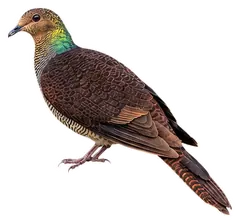 Barred Cuckoo-DoveMacropygia unchall
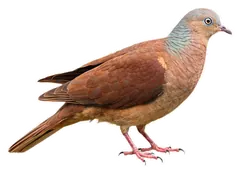 Amboyna Cuckoo-DoveMacropygia amboinensis
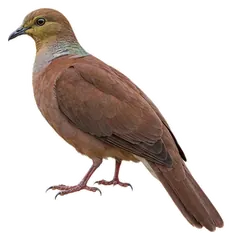 Sultan's Cuckoo-DoveMacropygia doreya
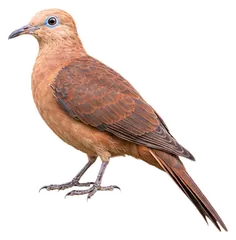 Ruddy Cuckoo-DoveMacropygia emiliana
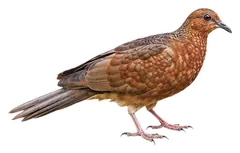 Enggano Cuckoo-DoveMacropygia cinnamomea
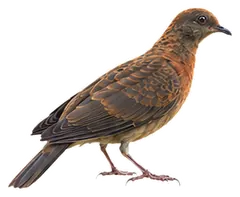 Barusan Cuckoo-DoveMacropygia modiglianii
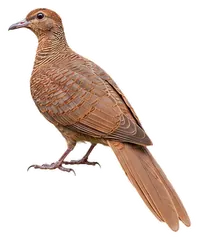 Timor Cuckoo-DoveMacropygia magna
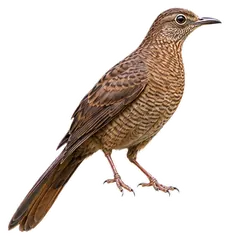 Tanimbar Cuckoo-DoveMacropygia timorlaoensis
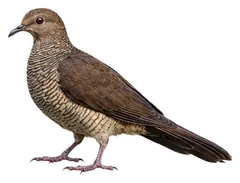 Flores Sea Cuckoo-DoveMacropygia macassariensis
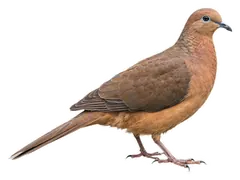 Brown Cuckoo-DoveMacropygia phasianella
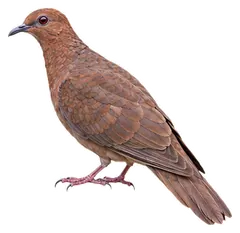 Andaman Cuckoo-DoveMacropygia rufipennis
 Bar-tailed Cuckoo-DoveMacropygia nigrirostris
Download illustration
Free to use with credit: “Illustration: Bird Album (birdalbum.com)”. Drawn by AI from a reference photo by JD. ↗
Heard it but can't see it? Mingji identifies birds by sound and photo, on your phone.
In other languages
- EnglishPhilippine Cuckoo-Dove
- 简体中文菲律宾鹃鸠
- 繁體中文菲律賓鵑鳩
- 日本語オナガバト
- DeutschPhilippinentaube
- FrançaisPhasianelle des Philippines
- EspañolTórtola cuco filipina
- Portuguêsrola-cuco-filipina
- ItalianoTortora cuculo delle Filippine
- NederlandsFilipijnse Koekoeksduif
- РусскийФилиппинская кукушковая горлица
- Svenskafilippingökduva
- DanskFilippinsk Gøgedue
- Polskikasztanówka filipińska