 Bird Album
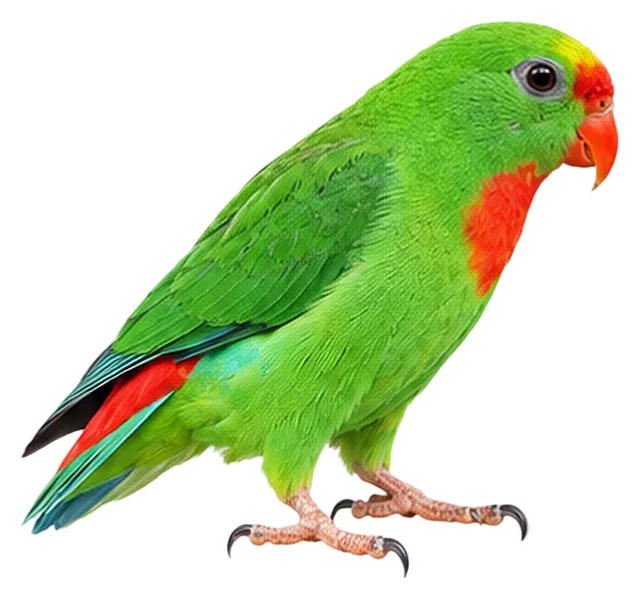
Philippine Hanging Parrot
Loriculus philippensis (Müller, PLS, 1776)
35 gWeight
The Philippine hanging parrot (Loriculus philippensis), also commonly known as the colasisi from its local Tagalog name "kulasisi", is a small psittaculid parrot species endemic to the Philippines.
Busiest months: February–March · Most records: Philippines
Where and when it's recorded

Philippine Hanging Parrot has been recorded at 43 of the 8,171 birding hotspots we track, in 1 country or region.
Records by month Northern Hemisphere
Where it's recorded most
- Subic Bay – Nabasan TrailPhilippines480 records
- Jariel's Peak – Restaurant, Bgy. Magsaysay, InfantaPhilippines350 records
- Lake HolonPhilippines330 records
More places
- Mt. Tagubud, New BataanPhilippines299 records
- UP Diliman – CampusPhilippines289 records
- Palo Alto, BarasPhilippines284 records
- Mt. Makiling Forest Reserve – TrailPhilippines244 records
- La Mesa Eco Park, Quezon CityPhilippines238 records
- Mt. Kitanglad Range Natural Park – Del Monte LodgePhilippines200 records
- Subic BayPhilippines193 records
Countries and regions with the most records
eBird records via GBIF up to 2024-12-31. A record means someone listed it; more records partly mean more birders, not more birds.
About
The Philippine hanging parrot (Loriculus philippensis), also commonly known as the colasisi from its local Tagalog name "kulasisi", is a small psittaculid parrot species endemic to the Philippines. It includes about 9 subspecies but formerly included the Camiguin hanging parrot and the Black-billed hanging parrot which have seen been recognized as distinct species. While it is listed as Least Concern in IUCN, some subspecies, such as L. p. chyrsonotus of Cebu and L. p. siquijorensis of Siquijor, may already be extinct.
Excerpt from Wikipedia, CC BY-SA 4.0 · authors · Read more on Wikipedia
Questions
How big is the Philippine Hanging Parrot?
The Philippine Hanging Parrot weighs around 35 g.
Where does the Philippine Hanging Parrot live?
Its breeding range: Oriental: Philippines (except Palawan group). It is most often recorded in Philippines.
When is the best time to see the Philippine Hanging Parrot?
At the hotspots we track, it is recorded most in February and March (Northern Hemisphere).
Is the Philippine Hanging Parrot endangered?
The IUCN Red List classifies the Philippine Hanging Parrot as Least Concern.
What does the Philippine Hanging Parrot eat?
Main food: Omnivore.
What family is the Philippine Hanging Parrot in?
It belongs to the family Old World Parrots (Psittaculidae), order Parrot (Psittaciformes).
At a glance
- Weight
- 35 g
- Habitat
- Forest
- Diet
- Omnivore
- Lifestyle
- Perches in trees
- Migration
- Resident (barely migrates)
- Conservation
- Least Concern
More measurements
- Wing
- 92 mm
- Tail
- 39 mm
- Bill
- 17 mm
- Tarsus
- 11 mm
Averages from the AVONET dataset; length from field guides where available.
Range
Oriental: Philippines (except Palawan group)
Breeding range, IOC World Bird List 15.2
Classification
- Order
- Parrot Psittaciformes
- Family
- Old World Parrots Psittaculidae
- Genus
- Loriculus
Other birds in the genus Loriculus
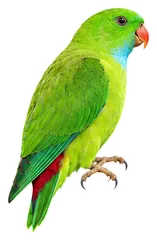 Vernal Hanging ParrotLoriculus vernalis
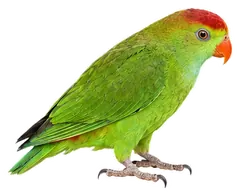 Sri Lanka Hanging ParrotLoriculus beryllinus
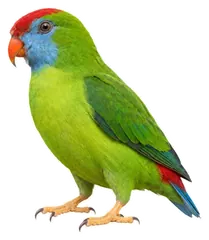 Camiguin Hanging ParrotLoriculus camiguinensis
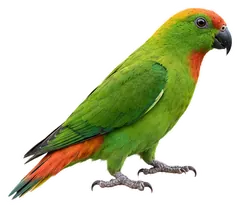 Black-billed Hanging ParrotLoriculus bonapartei
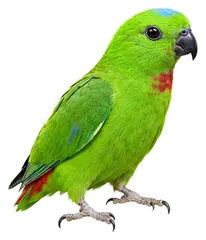 Blue-crowned Hanging ParrotLoriculus galgulus
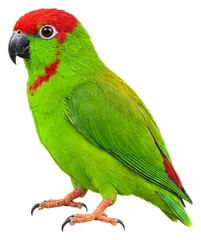 Great Hanging ParrotLoriculus stigmatus
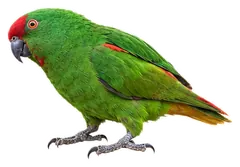 Moluccan Hanging ParrotLoriculus amabilis
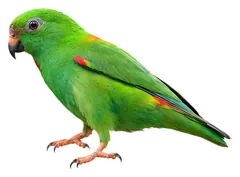 Sula Hanging ParrotLoriculus sclateri
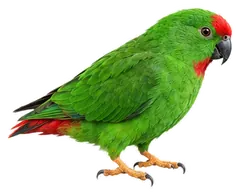 Sangihe Hanging ParrotLoriculus catamene
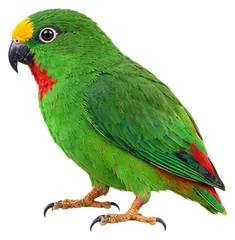 Orange-fronted Hanging ParrotLoriculus aurantiifrons
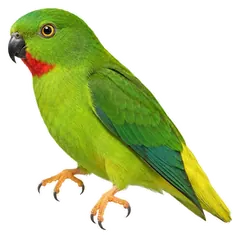 Bismarck Hanging ParrotLoriculus tener
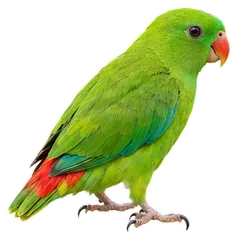 Pygmy Hanging ParrotLoriculus exilis
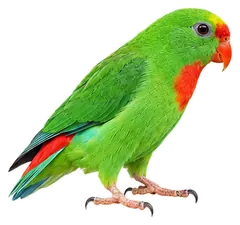
Download illustration
Free to use with credit: “Illustration: Bird Album (birdalbum.com)”. Drawn by AI from reference photos. ↗
Heard it but can't see it? Mingji identifies birds by sound and photo, on your phone.
In other languages
- EnglishPhilippine Hanging Parrot
- 简体中文菲律宾短尾鹦鹉
- 繁體中文菲律賓短尾鸚鵡
- 日本語シュバシサトウチョウ
- DeutschPhilippinenpapageichen
- FrançaisCoryllis des Philippines
- EspañolLorículo filipino
- Portuguêslorito-filipino
- ItalianoPappagallo acrobata delle Filippine
- NederlandsFilipijnse Vleermuisparkiet
- РусскийФилиппинский лорикулюс
- Svenskafilippinhängpapegoja
- DanskFilippinsk Flagermuspapegøje
- Polskizwisogłówka czerwonoczelna