 Bird Album
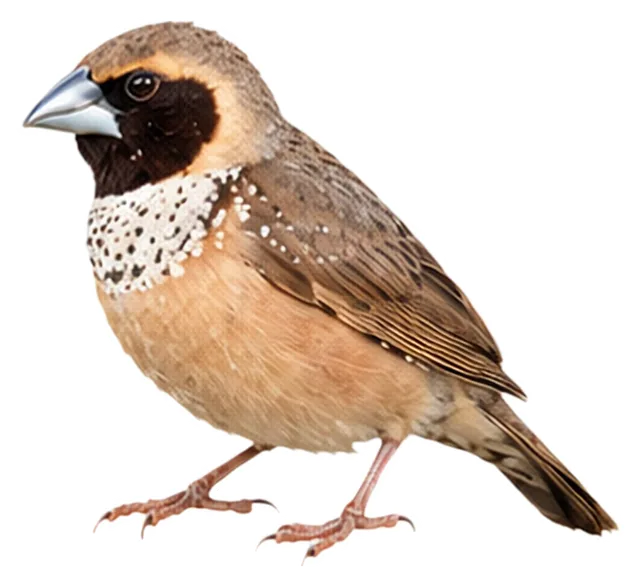
Pictorella Mannikin
Heteromunia pectoralis (Gould, 1841)
15 gWeight
The pictorella mannikin, pictorella munia, or pictorella finch (Heteromunia pectoralis) is small brown and grey finch with a grey bill and distinctive scaly white breast plate which is endemic to northern Australia.
Most records: Australia
Where and when it's recorded
Most records: Australia

Pictorella Mannikin has been recorded at 5 of the 8,276 birding hotspots we track, in 1 country or region.
Records by month Southern Hemisphere
Where it's recorded most
- Cumberland DamAustralia12 records
- Taylors LagoonAustralia5 records
- Roebuck Plains StationAustralia5 records
More places
- Broome Bird ObservatoryAustralia4 records
- Muirhead bushlandAustralia2 records
Countries and regions with the most records
eBird records via GBIF up to 2024-12-31. A record means someone listed it; more records partly mean more birders, not more birds.
About
The pictorella mannikin, pictorella munia, or pictorella finch (Heteromunia pectoralis) is small brown and grey finch with a grey bill and distinctive scaly white breast plate which is endemic to northern Australia. It is a seed-eater found in pairs and small flocks in dry savannah and subtropical or tropical dry lowland grassland.
Excerpt from Wikipedia, CC BY-SA 4.0 · authors · Read more on Wikipedia
Questions
How big is the Pictorella Mannikin?
The Pictorella Mannikin weighs around 15 g.
Where does the Pictorella Mannikin live?
Its breeding range: Australasia: northern Western Australia to east-central Queensland (northern Australia). It is most often recorded in Australia.
Is the Pictorella Mannikin endangered?
The IUCN Red List classifies the Pictorella Mannikin as Least Concern.
What does the Pictorella Mannikin eat?
Main food: Seeds.
What family is the Pictorella Mannikin in?
It belongs to the family Waxbills, Munias & Allies (Estrildidae), order Passerines (Passeriformes).
At a glance
- Weight
- 15 g
- Habitat
- Grassland
- Diet
- Seeds
- Lifestyle
- Active on the ground
- Migration
- Resident (barely migrates)
- Conservation
- Least Concern
More measurements
- Wing
- 59 mm
- Tail
- 40 mm
- Bill
- 14 mm
- Tarsus
- 14 mm
Averages from the AVONET dataset; length from field guides where available.
Range
Australasia: northern Western Australia to east-central Queensland (northern Australia)
Breeding range, IOC World Bird List 15.2
Classification
- Order
- Passerines Passeriformes
- Family
- Waxbills, Munias & Allies Estrildidae
- Genus
- Heteromunia
More from the family Waxbills, Munias & Allies
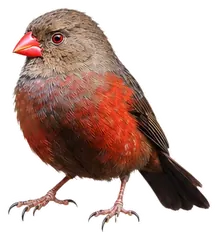 Mountain FiretailOreostruthus fuliginosus
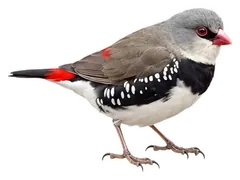 Diamond FiretailStagonopleura guttata
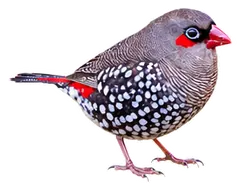 Red-eared FiretailStagonopleura oculata
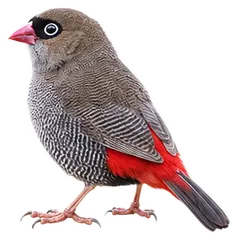 Beautiful FiretailStagonopleura bella
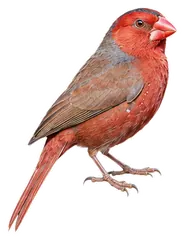 Crimson FinchNeochmia phaeton
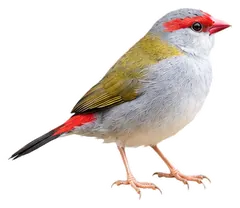 Red-browed FinchNeochmia temporalis
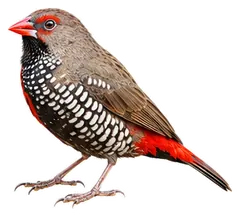 Painted FinchEmblema pictum
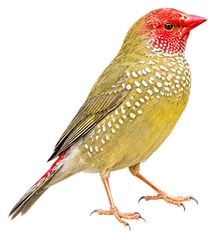 Star FinchEmblema ruficauda
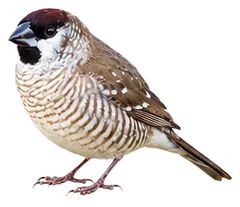 Plum-headed FinchEmblema modesta
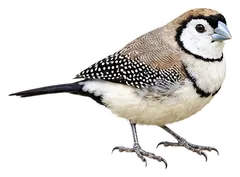 Double-barred FinchStizoptera bichenovii
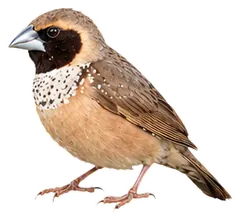
Download illustration
Free to use with credit: “Illustration: Bird Album (birdalbum.com)”. Drawn by AI from a reference photo by Alan Bell. ↗
Heard it but can't see it? Mingji identifies birds by sound and photo, on your phone.
In other languages
- EnglishPictorella Mannikin
- 简体中文斑胸文鸟
- 繁體中文皮克托拉文鳥
- 日本語ムナジロシマコキン
- DeutschWeißbrustnonne
- FrançaisCapucin à poitrine blanche
- EspañolDiamante pectoral
- Portuguêsdiamante-de-peito-branco
- ItalianoMunia pettorale
- NederlandsWitborstrietvink
- РусскийЖемчужногрудая муния
- Svenskafjällbröstad astrild
- DanskHvidbrystet Sivfinke
- Polskipastelarka