 Bird Album
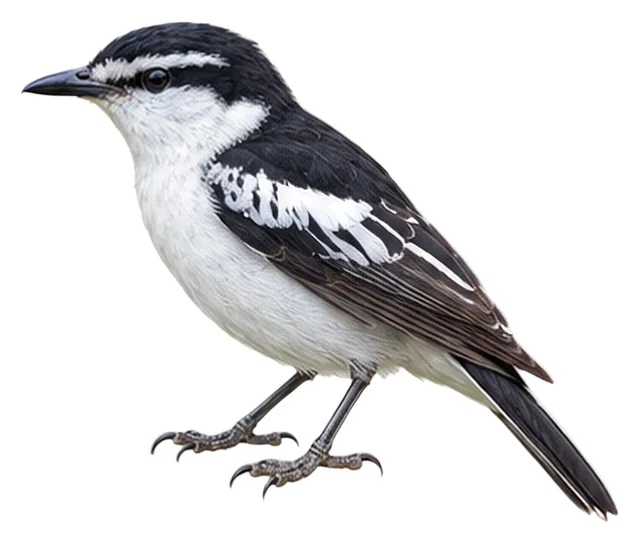
Polynesian Triller
Lalage maculosa (Peale, 1849)
15–16 cmLength30 gWeight
The Polynesian triller (Lalage maculosa) is a passerine bird belonging to the triller genus Lalage in the cuckoo-shrike family Campephagidae.
Busiest months: August–September · Most records: Fiji, Samoa, Tonga
Where and when it's recorded
Busiest months: August–September · Most records: Fiji, Samoa, Tonga

Polynesian Triller has been recorded at 40 of the 8,276 birding hotspots we track, in 5 countries and regions.
Records by month Southern Hemisphere
Where it's recorded most
- Colo-I-Suva Forest ParkFiji115 records
- Taveuni – Des Voeux PeakFiji107 records
- Des Veoux Peak – Mount ManukaFiji82 records
More places
- Colo-i-Suva Rainforest LodgeFiji79 records
- Garden of the Sleeping GiantFiji73 records
- Savura Creek – WaterButt to ReservoirFiji71 records
- Malolo'lelei Watershed ReserveSamoa67 records
- ApiaSamoa61 records
- Kadavu Island - Papageno ResortFiji60 records
- Nakobelevu – Waterbutt to PylonFiji47 records
Countries and regions with the most records
eBird records via GBIF up to 2024-12-31. A record means someone listed it; more records partly mean more birders, not more birds.
About
The Polynesian triller (Lalage maculosa) is a passerine bird belonging to the triller genus Lalage in the cuckoo-shrike family Campephagidae. It has numerous subspecies distributed across the islands of the south-west Pacific.
Excerpt from Wikipedia, CC BY-SA 4.0 · authors · Read more on Wikipedia
Questions
How big is the Polynesian Triller?
The Polynesian Triller is about 15–16 cm long and weighs around 30 g.
Where does the Polynesian Triller live?
Its breeding range: Australasia, Pacific Ocean: Temotu (=Santa Cruz Islands, southeastern Solomon Islands), northern, central Vanuatu, Fiji, Tonga and western Samoa (western, central Polynesia). It is most often recorded in Fiji, Samoa and Tonga.
When is the best time to see the Polynesian Triller?
At the hotspots we track, it is recorded most in August and September (Southern Hemisphere).
Is the Polynesian Triller endangered?
The IUCN Red List classifies the Polynesian Triller as Least Concern.
What does the Polynesian Triller eat?
Main food: Insects & other invertebrates.
What family is the Polynesian Triller in?
It belongs to the family Cuckooshrikes (Campephagidae), order Passerines (Passeriformes).
At a glance
- Length
- 15–16 cm
- Weight
- 30 g
- Habitat
- Shrubland
- Diet
- Insects & other invertebrates
- Lifestyle
- Perches in trees
- Migration
- Resident (barely migrates)
- Conservation
- Least Concern
More measurements
- Wing
- 93 mm
- Tail
- 64 mm
- Bill
- 19 mm
- Tarsus
- 24 mm
Averages from the AVONET dataset; length from field guides where available.
Range
Australasia, Pacific Ocean: Temotu (=Santa Cruz Islands, southeastern Solomon Islands), northern, central Vanuatu, Fiji, Tonga and western Samoa (western, central Polynesia)
Breeding range, IOC World Bird List 15.2
Classification
- Order
- Passerines Passeriformes
- Family
- Cuckooshrikes Campephagidae
- Genus
- Lalage
Other birds in the genus Lalage
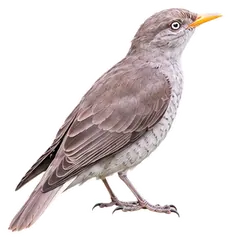 Samoan TrillerLalage sharpei
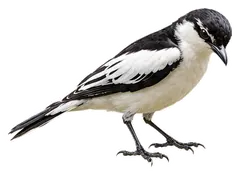 White-shouldered TrillerLalage sueurii
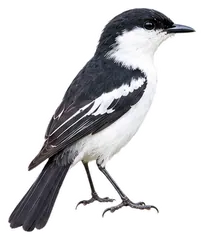 Long-tailed TrillerLalage leucopyga
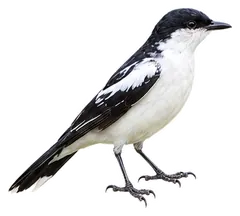 White-winged TrillerLalage tricolor
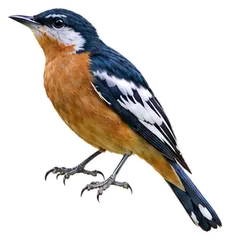 Rufous-bellied TrillerLalage aurea
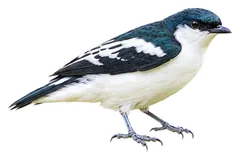 Black-browed TrillerLalage atrovirens
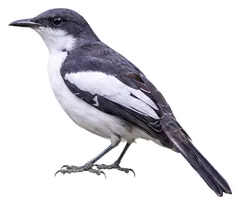 Biak TrillerLalage leucoptera
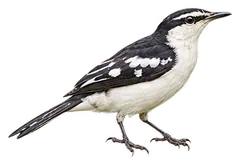 White-browed TrillerLalage moesta
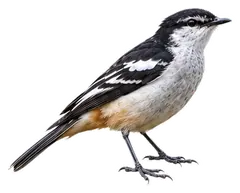 Varied TrillerLalage leucomela
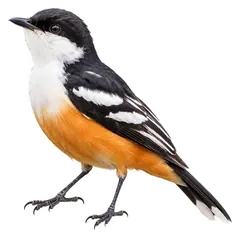 Mussau TrillerLalage conjuncta
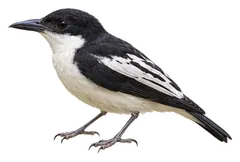 Black-and-white TrillerLalage melanoleuca
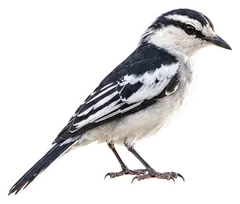 Pied TrillerLalage nigra
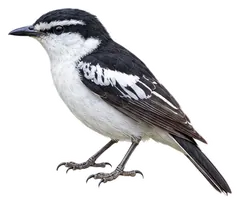
Download illustration
Free to use with credit: “Illustration: Bird Album (birdalbum.com)”. Drawn by AI from a reference photo by David J Barton. ↗
Heard it but can't see it? Mingji identifies birds by sound and photo, on your phone.
In other languages
- EnglishPolynesian Triller
- 简体中文斑鸣鹃鵙
- 繁體中文斑原鵑鵙
- 日本語ポリネシアナキサンショウクイ
- DeutschSüdsee-Raupenfänger
- FrançaisÉchenilleur de Polynésie
- EspañolOruguero polinesio
- Portuguêslagarteirinho-polinésio
- ItalianoTrillatore di Polinesia
- NederlandsGevlekte Triller
- РусскийПятнистый личинкоед-свистун
- Svenskasöderhavsdrillfågel
- DanskPolynesisk Triller
- Polskigąsienicojad polinezyjski